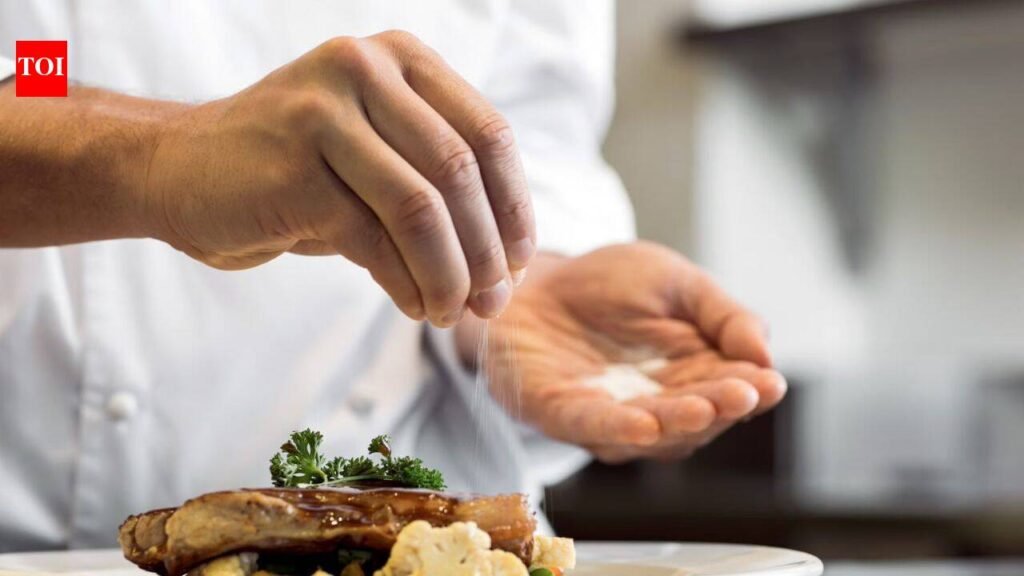

When cooking at home it is common to add salt once, stir everything together and move on. However, chefs use a different method, seasoning their food at different points in the cooking process. Adding salt at different stages has a significant effect on the final product, allowing for greater control over the seasoning.
Salt acts as a flavormaker, not just a savoury additive
When it comes to seasoning, many chefs are careful about how much salt they use for a dish. This is because the right amount can enhance other flavours, making food less bitter and allowing sweet, sour, savoury and aromatic qualities to shine through; but a larger amount can quickly overwhelm the dish.Furthermore, as the dish’s volume changes during cooking (due to water evaporation or sauce reduction), food that tasted perfectly seasoned halfway through can become too salty by the end. Chefs use several methods to ensure their dishes are seasoned and balanced to their liking. Some add salt in the beginning of cooking, others wait until the end, and some do a little of both.
Why the time of adding salt matters
There are various reasons for adding salt at different times during cooking. When adding salt earlier, it has more time to dissolve, flavour the dish and even draw moisture out of ingredients (which can affect how food browns). On the other hand, adding salt immediately before cooking can ruin the browning process by removing surface moisture.However, for dishes such as soups, curries, sauces and dals, some chefs season during cooking and again at the end, to account for the reduced volume of the dish as it is reduced.Chef Chantelle Nicholson, quoted by The Great British Chefs, explains that salt has different uses depending on when it is added. She notes that chefs use salt “at the beginning of cooking a dish, during it and then at the end,” using it not only for seasoning but also for techniques such as brining and altering the texture of ingredients.Nicholson also points out that the type of salt can matter. While crystal salt can be useful when the salt needs to dissolve during cooking, flaked sea salt can work well as a finishing salt, particularly in salads or dishes that are served soon after seasoning.
Why chefs often add salt in stages
There is no hard-and-fast rule when it comes to the timing of salting, but there are some general guidelines.For instance, meat can benefit from being seasoned well ahead of being cooked, while vegetables can be salted before, during or after cooking depending on the desired effectSoups and curries are generally seasoned while being cooked and then again at the end, to account for the reduced volume of the dish as it is reduced. On the other hand, pasta is generally salted in its cooking water, while sauces are generally seasoned towards the end of cooking, as they can become overly salty during the reduction process. Salads are likewise seasoned at the end, when the ingredients are not being cooked down and the salt is more noticeable.Also read:Woman loses 70 kg to donate kidney to husband, then gives it to a stranger in a paired exchange that saves two livesNoida man finds cab driver too tired to drive to Lucknow, takes over wheel himself: ‘No point getting angry’
Adding salt at the end has another advantage – it has a stronger presence on the tongue
The earlier salt is added to a dish, the more diluted it will be as the liquid content of the dish changes. As such, a little bit of salt added towards the end of cooking can have the same effect as a larger amount added at the beginning.However, this isn’t always an advantage. If a dish was completely unsalted until the end, seasoning it heavily at the end will simply make the salt more noticeable on the surface of the food, rather than it having been properly incorporated into the dish as a whole. As such, the best approach is to build up seasoning gradually, tasting as you go.There is also a health reason for being careful about the amount of salt added. FSSAI’s guidance encourages consumers to gradually reduce their salt consumption, recommending that they limit their daily intake to no more than 5 grams.The World Health Organization also recommends that adults consume less than 5 grams of salt per day on average, with an upper limit of 2 grams of sodium. They also note that sodium can be present in hidden sources, such as processed foods, sauces and other condiments.Seasoning in stages and tasting as you go can limit the risk of a dish becoming overly salty.The next time you see a chef seasoning a dish more than once, remember that it isn’t just unnecessary fussiness, different points in the cooking process can lend themselves to different seasoning effects. Instead of worrying about when to add your salt, focus on what your dish needs at different stages of cookingA little bit of seasoning while a dish is being made, followed by a tasting and then some final seasoning, can allow for more control over the final product and help you save salt in the long run.Disclaimer: Cooking methods may vary by dish and personal preference. Salt intake should be adjusted according to individual dietary needs and health advice.