Commentary
There are images circulating online from a music festival in Europe that look almost apocalyptic.
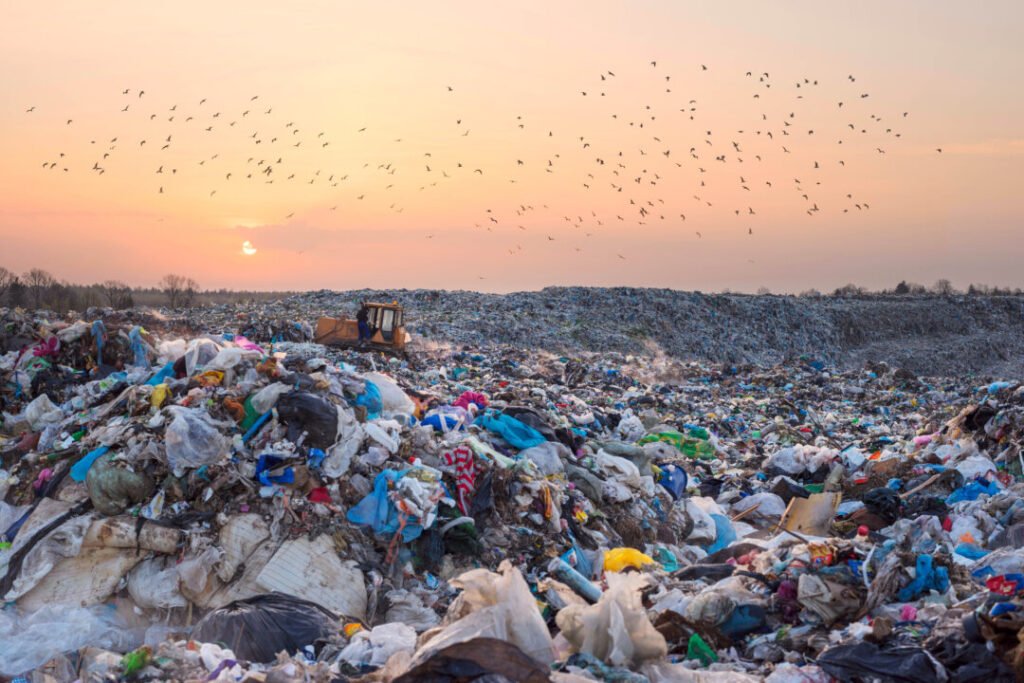
From above, an enormous campground is littered with abandoned tents, coolers, sleeping bags, clothes, inflatable mattresses, and all the other things people needed badly enough to buy a few days earlier but apparently didn’t value enough to take home.
People are horrified by the waste, and understandably so. But when I saw the pictures, my first thought was: This isn’t new.
I worked at Coachella for years as a food vendor, and I watched some version of this happen every time. People would fly in from another state or another country, stop at Walmart or REI, buy everything they needed for the weekend, and then leave much of it behind.
There were camping tents everywhere after the festival. There were also coolers, chairs, and pop-up canopies—not camping tents, but those heavy shade structures you see at farmers’ markets and outdoor events. People would spend $100 or $200 on a canopy because they desperately wanted shade for three days in the California desert. By Monday, they didn’t want to drag a dirty tent or a heavy, bulky canopy onto an airplane.
Related Stories

At the end of the festival, the field would be full of both kinds.
I grew up in a family where we had a tent. Not a tent for a particular camping trip. A tent. We took it camping, brought it home, cleaned it, folded it up, and stored it until we needed it again. I think we used that same tent for close to 20 years.
At Coachella, we actually used to get excited when the festival ended because other people’s waste was valuable to us.
I owned multiple restaurants and did lots of catering events. If you’ve ever run a restaurant or catering operation, you know that a good cooler is practically currency. We were constantly transporting food, drinks, ice, and ingredients. You can almost never have too many coolers.
I didn’t have much use for camping tents, although I did take one home, and remarkably, I still have it. The pop-up canopies were another story. We could always find a use for those.
We would pick them up from the field after Coachella, bring them home, and sometimes bring those same abandoned canopies back to Coachella the following year. We used them to create shade over the fryer or our makeshift back kitchen behind the food-vending tent.
Others became shade for my children outside our RV or camping area. Today, structures just like them are useful for events in front of our farm store.
Think about that. Someone purchased a $100 or $200 canopy for one weekend, abandoned it, and a year later, it was back at the same festival working another job.
The person who bought a cooler, tent, or canopy on Friday saw garbage by Monday. I saw equipment I might use for another decade. In the case of that camping tent, apparently I actually did.
Then, somewhere along the way, Coachella stopped allowing us to do this. We were no longer permitted to go through the abandoned things and take what we could use. The festival handled the cleanup, and we couldn’t salvage what people had left behind.
I don’t know where everything ultimately went, and I don’t want to claim it all ended up in a landfill. I just remember how absurd it felt to stand near perfectly useful objects that had been abandoned, know exactly how we would use them, and be told we couldn’t take them.
It would be easy to look at today’s photographs and blame spoiled festivalgoers or “kids these days.” But then I look around my own house.
There is a pile of toys in the corner of the living room. There are toys overflowing from the kids’ toy chest and more accumulating in the guest bedroom. Eleven years of raising children have created an archaeological record of birthdays, Christmases, impulse purchases, and things my children absolutely had to have.
So many of them were thrilling for approximately five minutes.
I would never buy a tent and leave it in a field three days later. But how fundamentally different is the mountain of barely used stuff inside my own house? Maybe my version of the festival campground is simply accumulated over 11 years and hidden behind walls where nobody can take a drone photograph of it.
Farm life has begun changing my relationship with things again.
My husband will happily pay a little more for a product if one option comes in a good five-gallon bucket. That calculation makes perfect sense to him because he isn’t just buying whatever is inside. He’s buying the bucket too.
Five-gallon buckets are the coolers of farm life.
We use them for compost, animal feed, dog food, cat food, seeds, harvested greens, tools, food scraps, water, and a hundred other jobs. When the handle breaks, the bucket doesn’t necessarily get thrown away. It just gets demoted to a job that doesn’t require a handle.
It is surprisingly difficult to throw things away on a farm because almost everything appears capable of having another life. A piece of lumber might repair a chicken coop next month. An old gate might become part of a pig pen. A container isn’t packaging; it’s storage. Food scraps aren’t garbage; they’re animal food or compost.
This isn’t necessarily because farmers are more virtuous or environmentally enlightened. Much of it is simple practicality. When you constantly need to build, fix, carry, contain, feed and improvise, you become reluctant to throw away something that might solve tomorrow’s problem.
Maybe what we have lost is bigger than our ability to recycle. We have lost our relationship with objects.
For most of human history, things were expensive not simply in money but in human labor and resources. Clothes were patched. Shoes were resoled. Tools were sharpened. Jars were saved. Furniture was repaired. Children’s clothes were passed down among siblings and cousins. Things stayed in families long enough to acquire stories.
Now, we live in a world where a tent can cost less than checking an extra bag on an airplane. When that happens, disposability isn’t simply a character flaw. We have built the economics around it. Something can be incredibly costly in resources while being incredibly cheap in dollars, and throwing it away becomes the rational choice for the person who bought it.
The festival field simply allows us to see the cumulative result.
Thousands of individual decisions that felt inconsequential become shocking when photographed together. But perhaps our homes would look just as shocking if someone emptied all of our closets, garages, storage units, and children’s toy boxes into a single field.
Mine might.
So I don’t want to wag my finger at the people who left their tents behind. I want to ask what happened to all of us.
What happened between the world where my family kept the same tent for nearly 20 years and one where a tent can be a weekend purchase? When did possessions become consumables? When did replacing something become easier than repairing it? And when did we stop imagining the next life of the things we own?
My husband asks that question without realizing it when he chooses the product that comes in a five-gallon bucket. Years ago at Coachella, I was doing the same thing when I spotted an abandoned cooler or pop-up canopy.
Someone else saw trash.
I saw catering events, shade over a fryer at next year’s Coachella, a place for my children to escape the sun, or a canopy in front of a farm store that didn’t even exist yet.
Maybe that’s one small place to begin. Before buying something, we could ask not only “How much does this cost?” or “Do I need this?” but also “What happens to this thing when I’m done with it?”
Because a bucket isn’t necessarily packaging. A cooler isn’t necessarily garbage. A canopy isn’t necessarily a three-day purchase. A tent shouldn’t be disposable.
And neither should everything else.
Views expressed in this article are opinions of the author and do not necessarily reflect the views of The Epoch Times.