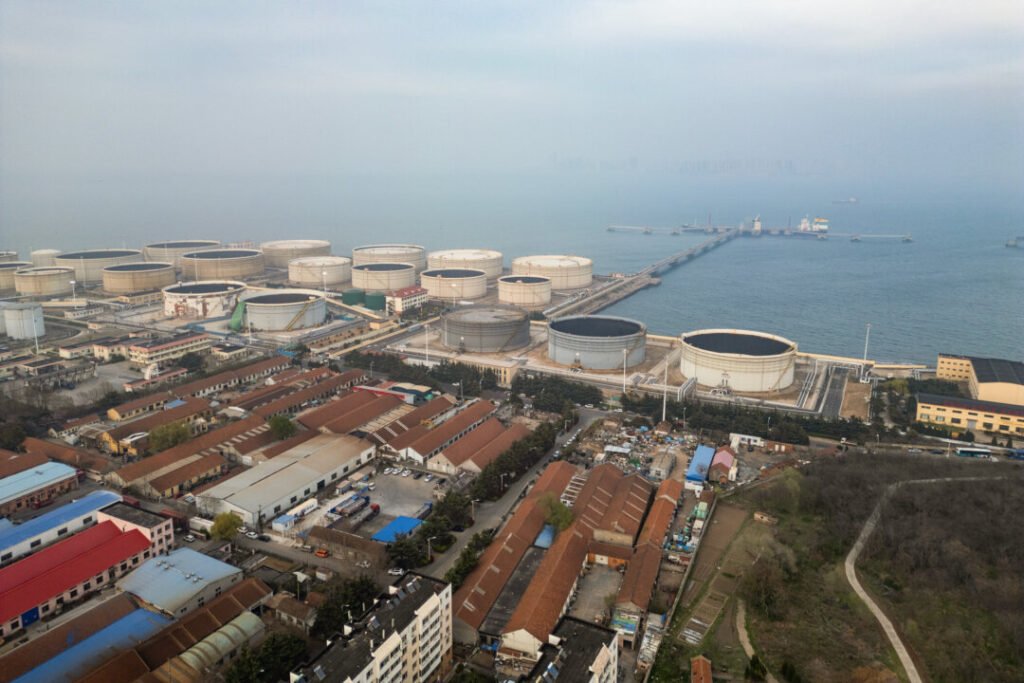

A group of oil tanks store imported crude oil at Qingdao Port Crude Oil Terminal in Qingdao, Shandong Province, China, on April 12, 2026. For decades, Beijing has purchased most of Iran’s sanctioned oil at heavy discounts. Iran has also provided China with a platform to conduct business in Chinese yuan, allowing it to bypass U.S. sanctions in the dollar system. Staff/Getty Images
The United States on Aug. 28 sanctioned another Hong Kong company that the Treasury Department says helped an Iranian exchange house launder money through an overseas financial network.
The Treasury Department’s Office of Foreign Assets Control (OFAC) said Hong Kong-based Kameng Trading Limited has allowed the sanctioned Iranian Pedram Pirouzan Exchange House, also known as Opal Exchange, to use it “to launder money for Iran.”
The OFAC said Kameng was designated for operating in Iran’s financial sector. Its property and interests in property subject to U.S. jurisdiction are blocked, and U.S. persons are generally prohibited from transactions involving the company.
On its website, Kameng describes itself as a supplier of heavy equipment, industrial machinery, and spare parts, with services including warehousing, freight forwarding, and customs clearance.
The website lists an address in Kwun Tong, Hong Kong, that also appears among the addresses OFAC has identified for the sanctioned company.
Kameng did not immediately respond to an Epoch Times request for comment.
Related Stories

The Aug. 24 sanctions package has already targeted multiple companies in Hong Kong and mainland China. Treasury said several Hong Kong firms facilitated payments through Iranian shadow banking networks, while others were involved in procurement or Iranian petroleum shipments.
Treasury Secretary Scott Bessent warned that companies and financial institutions continuing Iran-related business could face increased U.S. sanctions exposure.
Also on Aug. 28, Treasury’s Financial Crimes Enforcement Network (FinCEN) proposed a separate rule that would restrict U.S. correspondent banking access for five United Arab Emirates branches of Egypt’s Banque Misr. The proposal has not yet taken effect.
In the underlying proposal, FinCEN said Iran uses front companies registered in third country jurisdictions, including Hong Kong and the UAE, to obscure beneficial ownership and the origin of funds while gaining access to the international financial system.
The latest Hong Kong designation comes as Chinese officials and businesses assess how far Washington may extend sanctions pressure on entities involved in Iran-related trade.
Asked on Aug. 25 whether China would change its dealings with Iran or act against Chinese entities named by the Treasury, Chinese Foreign Ministry spokesman Lin Jian said China’s cooperation with Iran should not be disrupted and that Beijing would take measures to protect what he called its rights and interests.