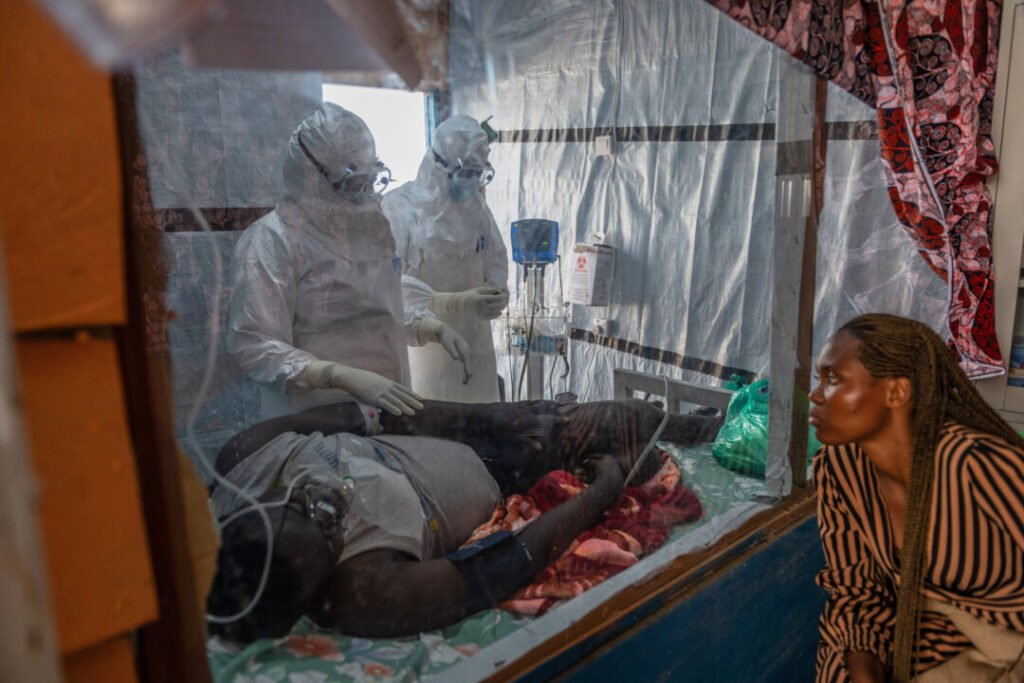

Health workers care for an Ebola patient in Ituri, Congo, on June 18, 2026. Moses Sawasawa/AP Photo
People from Ebola-affected countries will continue to be banned from entering Canada for an additional 30 days, extending the existing ban for a fourth consecutive month.
Individuals holding valid visas from these countries will also be barred from entering Canada, while Canadian citizens or permanent residents visiting any of the three African countries can return home but must undergo a 21-day quarantine upon arrival, the Public Health Agency of Canada said.
Immigration officials reported that 31,693 applications for permanent residency and 10,465 applications for temporary residency from overseas were on hold as of Aug. 12.
The residency documents of individuals who have been approved but are currently outside Canada have also been put on hold. Officials indicated that this affects 1,534 permanent residents and 23,415 temporary residents residing abroad.
The Public Health Agency of Canada has confirmed there are no domestic cases of the disease, but a spokesperson for the Public Health Agency of Canada said it is important to “remain vigilant” due to the severity of the disease and the potential consequences of delayed detection.
Related Stories

“Although the global public health risk remains low, the consequences for affected individuals are severe, given the seriousness of the disease and the absence of licensed vaccines or therapeutics,” the spokesperson said in a media statement.
There could be a vaccine in the near future, however. Health Canada gave biotechnology company Moderna the green light to start a clinical trial for a vaccine designed to combat the Bundibugyo strain of the Ebola virus earlier this month.
The authorization makes Canada the second country to authorize a Phase I clinical trial for a Bundibugyo virus vaccine candidate after the UK.
The Bundibugyo virus is the variant of Ebola responsible for the deadliest and fastest-growing Ebola outbreak in the history of the Democratic Republic of the Congo. There have been more than 5,700 cases since it began in May and nearly 2,800 deaths.
Although the outbreak is currently concentrated in the central African country, there have also been a small number of deaths in neighbouring Uganda as well.
Ebola is caused by a group of viruses that damage blood vessels and prevent blood from clotting normally. It spreads through bodily fluids like blood, vomit, and semen, and people are only infectious when they are symptomatic.
Canadian public health experts say these factors make the risk of an imported case low and manageable for Canada, but they present a significant challenge in the Democratic Republic of the Congo, where there are critical access issues related to health care and clean water, compounded by threats from rebel groups.
In the meantime, the public health agency said it is “actively monitoring” the outbreak in collaboration with its international partners.
The Canadian Press contributed to this report.