YORK, Pa.—Nine cities have the distinction of being the capital of the United States at various times. This elite list includes Philadelphia, Baltimore, Annapolis, Lancaster, Trenton, Princeton, New York City, Washington, and York. The last one may lead to some confusion, as this is not the one in Virginia—similarly named—where Gen. Cornwallis surrendered, effectively ending British control over America. Instead, it refers to York in south-central Pennsylvania, where, today, the city’s name is perhaps better known for the York Peppermint Pattie.
Nevertheless, history remembers York, Pennsylvania, as the temporary capital of America for nine months from Sept. 30, 1777, to June 27, 1778. During this time, Britain had occupied Philadelphia, where the Second Continental Congress was meeting. The colonies’ 64 delegates fled west, first to Lancaster, then to York, a small farming town of mostly German settlers.
Here, Congress oversaw the military activities against Britain and, despite their short tenure in York, was able to formalize the treaties cementing French alliance; proclaim the first national Thanksgiving for the Continental Army’s victory in the Battle of Saratoga; and, perhaps, most importantly, adopt the Articles of Confederation, which served as the first national constitution of the fledgling country.
Today, this piece of Revolutionary history may be little-known to the average American. York, around a two-hour drive from Philadelphia, is an easy day trip for those visiting the City of Brotherly Love.
Colonial Complex
Before heading out, purchase all-day tickets online to reserve your spot for the guided tour. This ticket also allows access to the York History Center and the Agricultural and Industrial Museum.
Start your time travel back to the 1700s with a brief history of how York became a town, how to own land at the time, and the materials used to build the half-timbered structures predominant in the area. The Golden Plough Tavern, which has withstood the test of time since 1741, is a rare example of this building style.

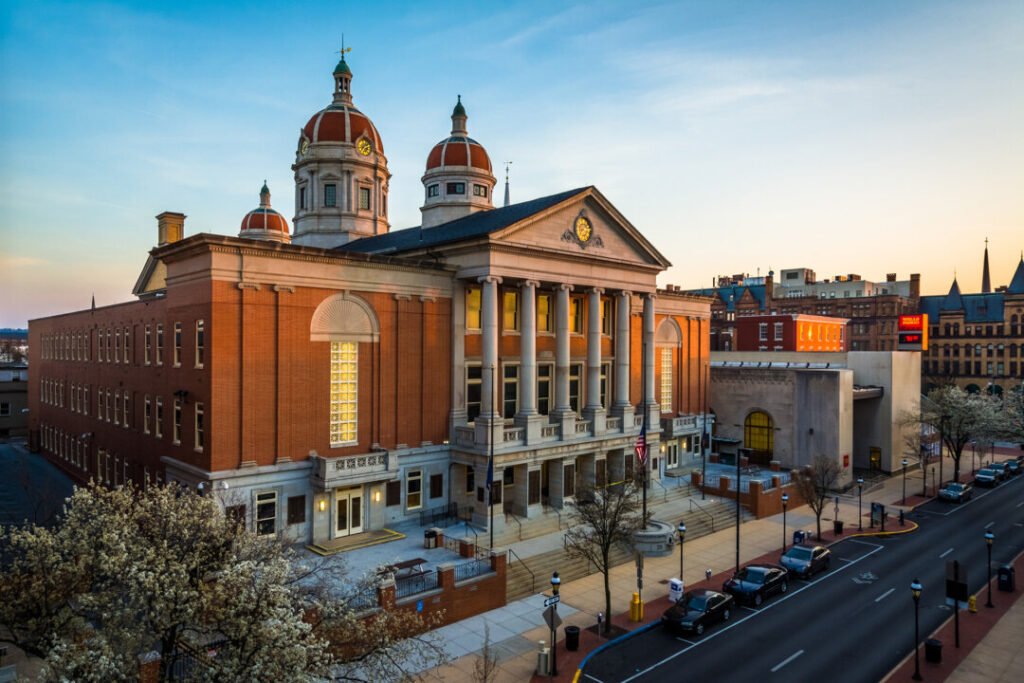
A replica of York’s 1754 Colonial Court House, where the Second Continental Congress met to govern the 13 colonies, adopt the Articles of Confederation, and forge an alliance with France. traveler1116/Getty Images

A view of the inside of the Court House where the Second Continental Congress met. The original was demolished but recreated in 1976 for America’s bicentennial celebrations. Lynn Topel
First built by German immigrant Martin Eichelberger as a family home, the brick-and-timber structure is conveniently situated on what was once called the Monocacy Trail, which runs parallel to some parts of the Monocacy River. This strategic location paved the way for it to become a tavern later on.
Related Stories


Adjacent to the tavern is the Gen. Horatio Gates House. History does not paint a good picture of this continental general, which often makes for good storytelling.
After a pivotal victory in the Battle of Saratoga, Gen. Gates spent some time in York. His home became the staging ground for one of the earliest political and military conspiracies called the Conway Cabal. According to local history and tradition, his plot to overthrow Gen. George Washington was foiled when the Marquis de Lafayette, who was a dinner guest, offered a toast to Washington, thereby making France’s allegiance known. So the Gates house can proudly claim that Lafayette dined there, though not in the circumstances the cabal expected.

The Marquis de Lafayette, with a wine glass in hand, stands proudly outside the home of Horatio Gates in York, Pa. Lynn Topel
The Gates house also has an architectural feature unique for its time. Instead of a standard entry door into the Gates dining room, the door swings up and is secured to the ceiling by a hook. It is lowered to close the room.
Across the street is the Colonial Court House, where Congress met and continued with the business of governing the colonies. Though the exterior is a replica of the 1754 original, the interior is reminiscent of Independence Hall in Philadelphia. Hear stories on some of the prominent delegates, learn about the Articles of Confederation, and the early flags of the United States. For those brief nine months, York was the political center of America.

York offers rich living history experiences and reenactments, particularly at the York County History Center. Satoko Berg
Local History and Industry
Your admission includes the York County History Center, where visitors can spend time with its special exhibit, “Revolutionary York,” on the third floor. It highlights York’s special contributions to America’s founding as its temporary capital. This exhibit runs till the end of 2028.
Meet York’s famous founding father, James Smith, a signer of the Declaration of Independence, and find out how locals coped with the sudden influx of people, opening their homes and taverns and stretching out their food sources.
As you make your way down to the lower floors, interactive, hands-on exhibits allow visitors to get to know the many local industries that continue to make their mark today. From wallpapers and pottery to locomotives and Harley-Davidsons, today’s York is a vast cry from what it was 250 years ago.
For your next stop, take a short car ride to the Agricultural and Industrial Museum, a few blocks from the History Center. Knowledgeable guides are on hand to give a demonstration on how an actual mill works (yes, complete with the water running and wheel spinning!). Younger visitors will enjoy learning about horse fiddles (which have nothing to do with horses or fiddles), and those who have never seen an analog telephone will have a chance to try their hand at one.

Buildings from the 1700s feature these half-timbered homes, reflecting the German building traditions of York’s early settlers. Lynn Topel
Eats and Treats
All this history and information can feed the brain, but not the stomach. A few blocks from the Colonial Complex, on West Philadelphia Street, is a modern-day food hall in an 1888 building called Central Market House. With over 50 food stalls and vendors, visitors can choose from crab cakes and grilled cheese sandwiches, spicy burritos, and Korean fried chicken. Smoothies, baked goods, and even wine can be bought here. While some vendors accept credit cards, others only accept cash or payment apps like Venmo.
Craving for cool treats? Homemade ice cream is available daily at Handel’s, which is a short 10-minute drive south of the downtown area. With 100 flavors and 48 flavors rotating each month, ice cream lovers will have plenty of choices to beat the summer heat.

Looking down North Beaver Street toward the Central Market House, built in 1888 and located just a short walk from the town’s Revolutionary-era attractions in downtown York. Acroterion/CC BY-SA 4.0

Inside the bustling Central Market House, where visitors and locals can choose from over 50 food stalls offering everything from crab cakes and spicy burritos to Korean fried chicken and fresh pastries. Acroterion/CC BY-SA 4.0
Future Events
Every year, in November, the York History Center celebrates the anniversary of the adoption of the Articles of Confederation. This year, it will be held on Nov. 14, a free event replete with hands-on activities, live reenactments, and market fairs. Watch out next year, 2027, when it commemorates the 250th anniversary of the Articles of Confederation.
In this small city of approximately 45,000, history lives large in its half-timbered buildings and red-brick sidewalks. Downtown York is a historical gem, one that should be treasured and preserved so more generations of Americans can walk in the footsteps of our country’s Founding Fathers.