
Commentary
We live in a world obsessed with carbon. We measure it, trade it, tax it, regulate it, and build enormous machines designed to capture it. We are told that increasingly complicated technology will be required to save humanity from the damage humanity has caused. But what if the most powerful technology is not something we need to invent? What if it is something God already designed?
A new peer-reviewed paper titled “Regenerative Agriculture: Connecting Soil Carbon Storage, Biodiversity, and Profit” offers evidence that the answer may already be beneath our feet. The study was led by Jonathan G. Lundgren of the Ecdysis Foundation and published in “Environmental Research: Food Systems.”
The researchers examined 210 field-crop farms across 15 states and two Canadian provinces. They sampled farms producing corn, soybeans, wheat, and other crops and placed them along a continuum from highly conventional to highly regenerative. Farms received higher regenerative scores for practices such as reducing tillage, keeping soil covered, integrating livestock, using compost or manure, and eliminating synthetic fertilizers, herbicides, insecticides, and fungicides.
The researchers did not look at carbon alone. They sampled soil at multiple depths, measured microbial communities, recorded plant diversity, collected tens of thousands of insects and other invertebrates, counted birds, examined yields, and gathered financial information from farmers. The results deserve attention.
The most regenerative farms held approximately 39 percent more total carbon in their soil than the most conventional farms. They also had 66 percent more microbial biomass, 181 percent more fungal biomass, and 371 percent more arbuscular mycorrhizal fungi—the fungi that form relationships with plant roots and help plants access nutrients and water.
Related Stories
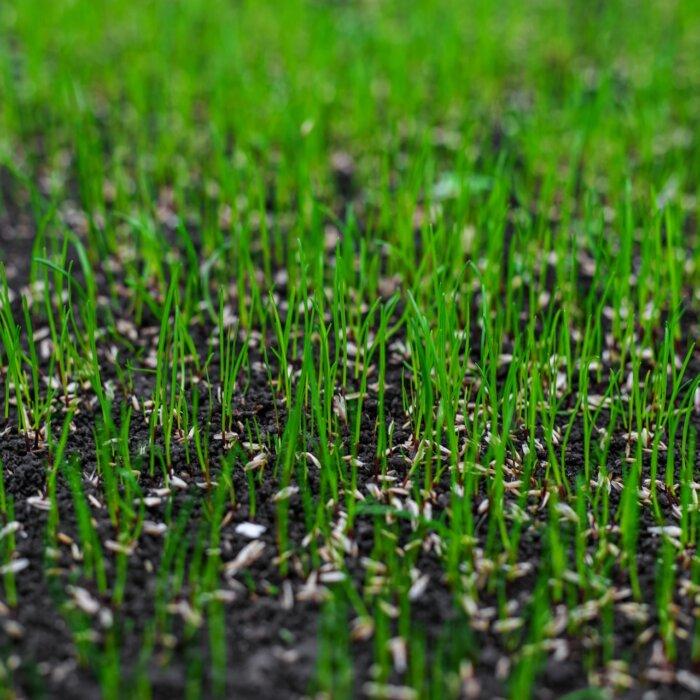
Regenerative fields supported more non-crop plants, more insects on the soil and in the foliage, more soil-dwelling species, and more birds. This was not one isolated measurement moving in the desired direction. Life appeared to return together.
The regenerative farms did produce lower average yields than the conventional farms, although their yields remained comparable to national averages. More importantly, their net profits were equivalent. The conventional farms moved more commodity through the combine, but they did not necessarily leave the farmer with more money.
That finding should cause us to reconsider what we mean when we call a farm productive. If one field produces more bushels but requires more fertilizer, more pesticides, and more purchased inputs, while another produces sufficient food, supports more life, holds more water, stores more carbon, and leaves the farmer with the same profit, which farm is truly more productive?
The researchers framed much of their work around greenhouse-gas mitigation. They calculated that if the difference they observed could be replicated across all American field-crop acreage, the additional carbon held in the soil would equal approximately 1.49 years of total U.S. greenhouse-gas emissions.
That is an extraordinary calculation, but it must be understood correctly. The researchers measured a difference in existing soil-carbon stocks. They did not demonstrate that American farmland could absorb that quantity every year forever. Nor did this observational study establish precisely how many years it took the farms to accumulate the difference.
I am also not particularly interested in turning every acre of farmland into another entry in the world’s carbon ledger. Carbon is one measuring stick. It helps us determine whether biological processes are functioning, but it is not the purpose of the farm. Farmers are not carbon-capture contractors for corporations, and healthy soil should not be reduced to an offset that allows someone elsewhere to continue polluting.
Carbon in the soil is fertility. It is organic matter, plant roots, microbial life, and improved soil structure. It helps the ground receive rain rather than shed it. It participates in the exchange between plants, fungi, animals, and the atmosphere. Long before governments invented carbon credits, God designed carbon to move through the living world.
The real victory documented in this study is not one carbon number. It is that farms managed with greater respect for natural processes contained more life while remaining economically viable. The carbon, fungi, plants, insects, and birds were not separate victories. They were different expressions of a system returning to function.
The study also examined what motivated the farmers themselves. Regenerative farmers were more likely to identify soil health and their family’s physical and mental well-being as reasons for their decisions. Conventional farmers were more likely to prioritize finances, yield, and expanding the size of their operations.
This does not make one group good and the other bad. Farmers generally make decisions inside the economic system handed to them. For decades, that system has rewarded volume, uniformity, and specialization. It taught farmers to measure success in bushels while ignoring the biological capital disappearing from beneath those bushels.
Regeneration begins with a different understanding of the farmer’s role. Modern industrial agriculture often treats the farmer as an operator whose job is to apply purchased products and force a predictable output. Some modern environmentalism goes in the opposite direction and treats human beings as an intrusion from which nature must be protected.
Regenerative agriculture offers another possibility: The farmer is a keystone species. Human beings can certainly degrade land, but that is not the only effect we can have. A thoughtful farmer can use animals, plants, disturbance, and recovery to increase biological abundance. We can move cattle before they overgraze. We can give plants time to recover. We can protect the soil from the sun, return manure to the land, increase plant diversity, and make room for the organisms that perform work no machine can reproduce.
This is not humanity withdrawing from nature. It is humanity participating in nature with humility and responsibility. Genesis does not describe man being placed outside the garden and instructed never to touch it. Man was placed inside the garden “to dress it and to keep it.” Our purpose was never passive observation. It was stewardship.
Even this valuable and exciting study is presented through the familiar modern framework of climate mitigation and repairing planetary damage. I understand why the researchers use that language, and their carbon findings deserve attention. But perhaps we do not need to begin only with what humanity has broken or with the fear that technology must save us from ourselves.
Perhaps we begin by remembering that soil was designed to be alive, animals were designed to move across landscapes, plants were designed to feed microbes, and human beings were given the capacity to observe these relationships and care for them.
The most advanced agricultural technology may not be a machine, chemical, or computer model. It may be God’s design functioning as intended—and the farmer finally stepping back into the role of steward.
Views expressed in this article are opinions of the author and do not necessarily reflect the views of The Epoch Times.