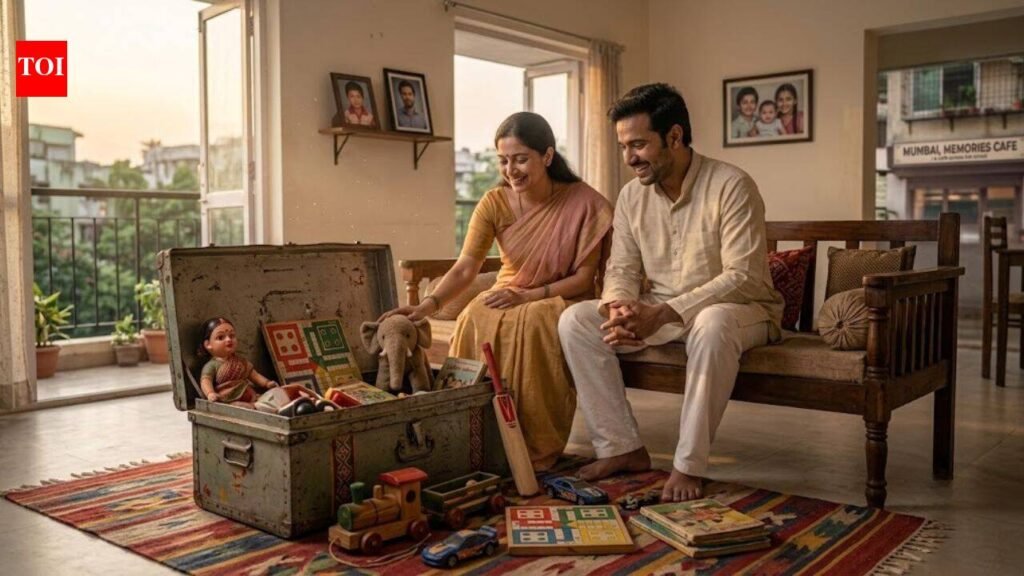
For some parents, an old toy can be much harder to throw away than an unused household item. A faded teddy bear, a broken toy car, a worn-out doll or an old board game may have little practical use, especially after a child has grown up. Yet parents may keep these objects carefully packed away for years. At first glance, it may seem like simple nostalgia. But psychology suggests there can be more behind this habit. Research on possessions, memory and identity shows that objects can become closely connected to important experiences and relationships. An old toy may therefore carry emotional meaning far beyond its material value.
When an old toy becomes a piece of family history
10 Sept 2026 | 12:19
What’s one thing you swore you’l never do as a parent now you find yourself doing?
One reason parents hold on to childhood toys is that objects can act as reminders of personal experiences. Researchers have found that possessions can help people preserve and retrieve autobiographical memories, which are memories connected to their own lives. This means a toy can become a kind of physical memory cue. A teddy bear may remind a parent of bedtime routines, while an old board game may bring back memories of family weekends. A toy car may take them back to the period when their child was learning to walk and play. The object itself may not be particularly valuable. What matters is the story attached to it.Research reviewed by Elise van den Hoven and colleagues has explored how personal possessions can help people preserve and retrieve autobiographical memories. Their work suggests that meaningful objects can play an important role in maintaining connections with the past. This may explain why parents sometimes find it surprisingly difficult to part with toys that their children have not touched for many years. Throwing away the object can feel like throwing away a small piece of an important period in family life.
The toy can represent a parent’s identity too
Psychologist and consumer researcher Russell Belk’s Extended Self Theory offers another way of understanding this behaviour. Belk proposed that possessions can become extensions of how people see themselves. Objects can represent important relationships, experiences, places and stages of life. For parents, children’s belongings can become connected to the experience of raising a family. A toy from early childhood may remind them of a time when their child depended on them for almost everything. As children grow older and become independent, everyday parenting changes. Parents may no longer prepare every meal, organise every activity or spend hours playing with their children. Keeping a few childhood possessions can provide a physical connection to that earlier role.Nostalgia can make this connection even stronger. Psychologists Constantine Sedikides and Tim Wildschut have studied nostalgia as an emotion that can strengthen feelings of social connection and continuity between a person’s past and present. This helps explain why an old toy can suddenly feel powerful when a parent finds it years later. Looking at it may bring back not only memories of the child but also memories of who the parent was at that time. The toy can therefore represent an entire chapter of family life.
Why throwing the toy away can feel like a loss
There is also a psychological reason why getting rid of an old possession can feel uncomfortable. The endowment effect describes the tendency for people to place greater value on things simply because they own them. Emotional attachment can make this effect even stronger. A parent may know logically that an old toy is no longer useful, but its emotional value can outweigh its practical value. That is why decluttering children’s belongings can become an unexpectedly emotional experience. The decision may not feel like, “Should I throw away this old plastic toy?” Instead, it may feel more like, “Am I ready to let go of this memory?”However, keeping old toys does not automatically mean a parent is unable to move on or has an unhealthy attachment. Many people preserve photographs, clothes, toys and other objects because they enjoy having reminders of important moments. The important difference is how the possessions affect everyday life. Keeping a small box of favourite toys as family keepsakes is very different from being unable to discard almost anything, even when possessions create serious problems in the home. Ultimately, an old toy may be worth very little in financial terms but priceless in emotional terms. For a parent, it can hold memories of a child’s early years, family routines and a version of life that cannot be recreated. So the next time you find an old toy hidden in a cupboard and wonder why your parents never threw it away, the answer may be simple: they were never really keeping the toy. They were keeping the memory attached to it.