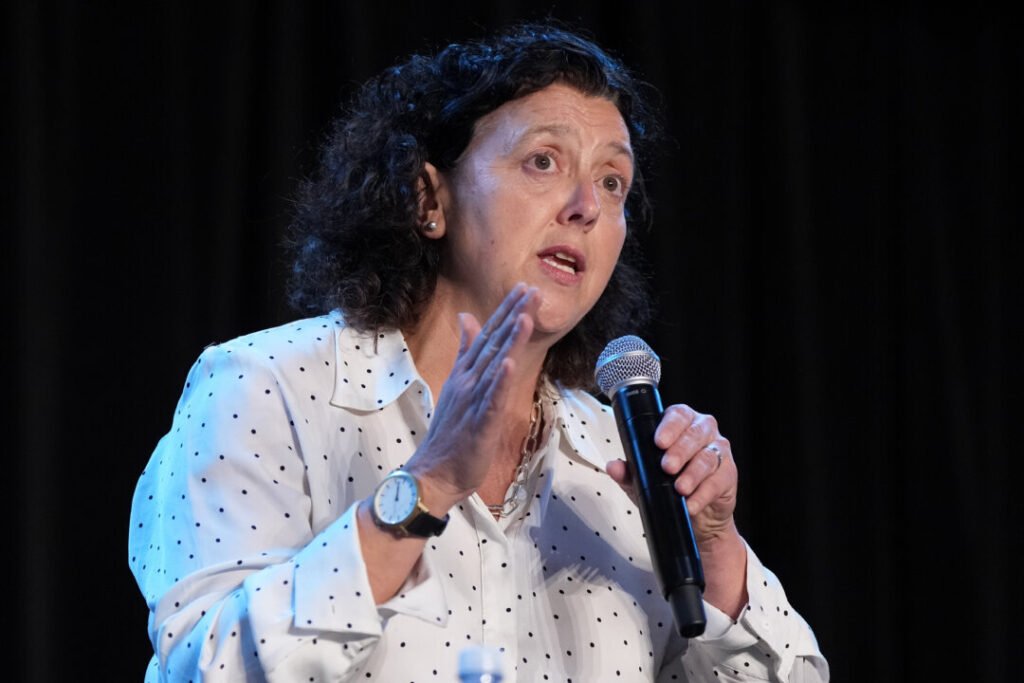

Monique Ryan the Teals MP for the seat of Kooyong speaks during a community candidates’ forum in Melbourne, Australia on April 24, 2025. Asanka Ratnayake/Getty Images
Federal teal MP Monique Ryan says she will move an amendment this week to shield pensioners from a budget measure that strips age-based private health insurance (PHI) rebates from over-65s.
Ryan referenced a Parliamentary Budget Office (PBO) analysis she commissioned that found pensioners could bear the cost of roughly half the government’s expected savings.
“After paying taxes throughout their working lives and maintaining private health insurance to meet their health needs as they age, age pension recipients will bear the brunt of the government’s changes.”
The base rebate rate, currently 28.139 percent for those aged 65 to 69 and 32.158 percent for those 70 and over, would be cut to the standard 24.118 percent for both groups.
Related Stories
Of the total savings, $1.564 million would come from Age Pension recipients and $1.58 million from non-pensioners aged 65 and over, with PHI holders under 65 producing a net cost to government of $148.8 million over the period.
The PBO put the affected population at 131,000 pensioners and 816,000 non-pensioners aged 65 to 69, and 1.36 million pensioners and 1.28 million non-pensioners aged 70 and over.
If extended to 2036/37, cumulative savings are projected at $10.974 million.
“This is a cash grab aimed at older Australians on low and fixed incomes during a cost-of-living crisis,” Ryan said.
“Stripping rebate support from elderly Australians is an insult to people who have made valuable contributions during their working lives … This policy treats age pensioners unfairly. It shifts responsibility for the cost of their care from the federal government onto the states and could well end up costing more than it saves.”
Coalition shadow minister for health, Anne Ruston, a co-signatory of Ryan’s statement, has attacked the measure repeatedly.