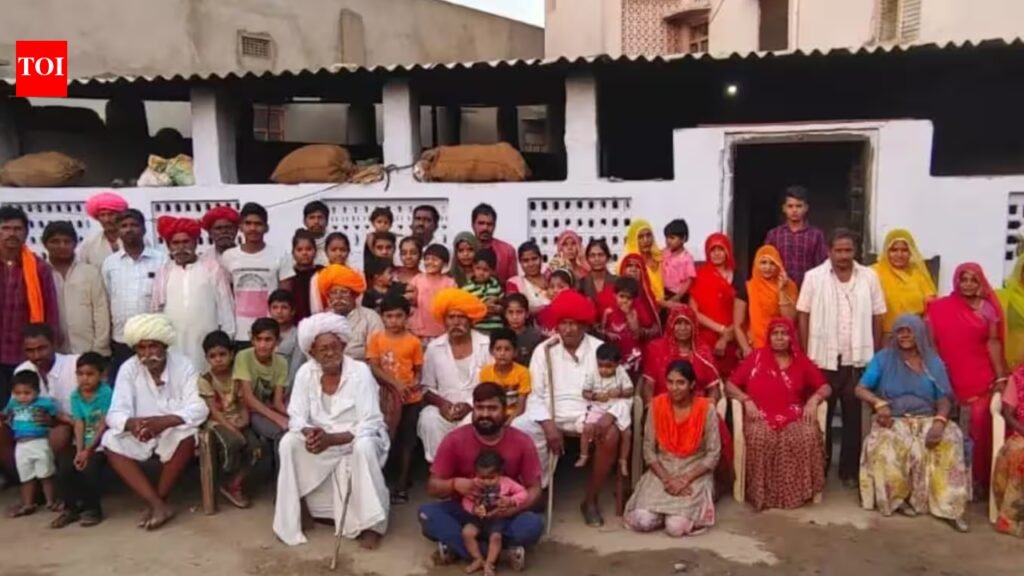
For most families, getting three generations under one roof can be an exercise in negotiation. In a village near Ajmer, however, six generations continue to share a home, a kitchen and much of their daily life- making the Bagdi Mali family a striking example of just how large a joint family can become.In Ramsar village near Nasirabad, around 36 km from Ajmer, the Bagdi Mali family has 185 members living together. The household includes 65 men, 60 women and 60 children.But the number is only the beginning of the story. The more unusual part is how everyday life is organised when nearly 200 people have to be fed, accommodated and brought together for family occasions.
A kitchen that works almost like a small community kitchen
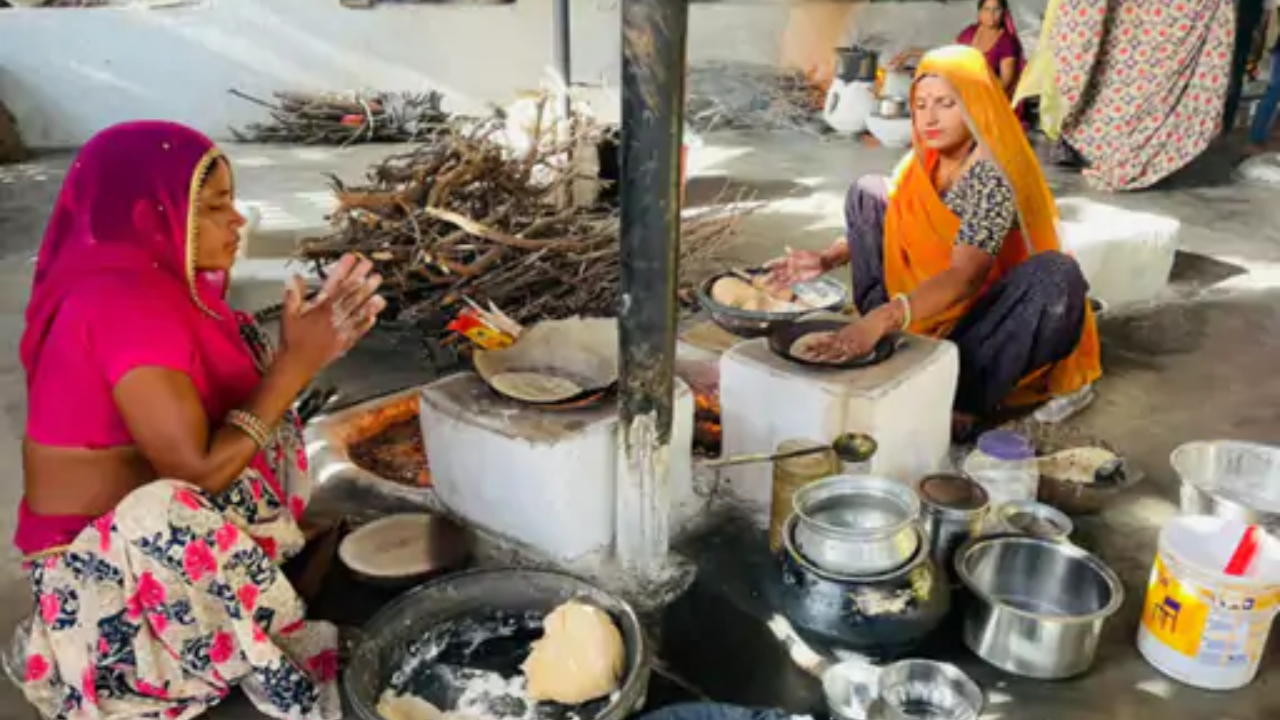
With 185 members, the Bagdi Mali family cooks nearly 50kg of flour and 15kg of vegetables every day.
With so many mouths to feed, cooking for the family is a daily operation in itself. FM Sikar reported that the household uses around 50 kg or more of flour a day for rotis and about 15 kg of vegetables. The family’s monthly expenditure on ration is around Rs 12 lakh as per the report.The household has 13 stoves running during the morning and evening cooking hours. And meals remain one of the occasions that bring the family together. Children, adults and elderly members eat together, while family members stand by one another during celebrations as well as difficult times.
Six generations under one roof
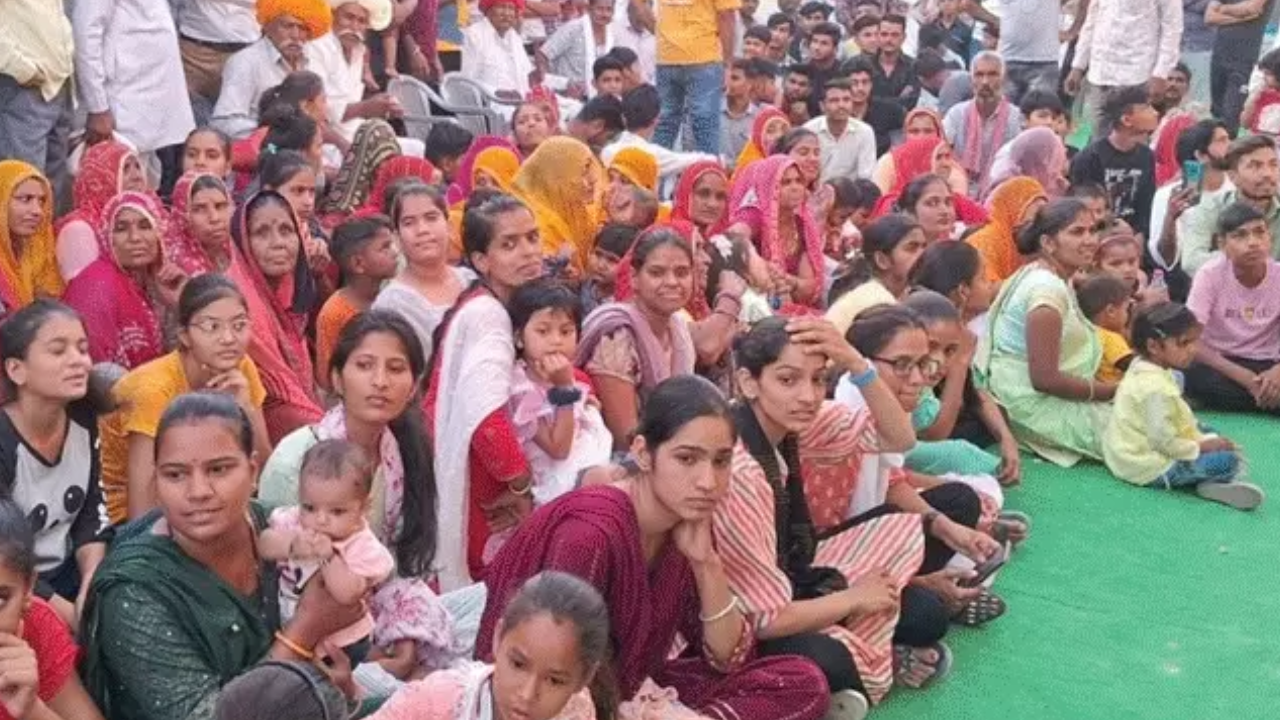
Six generations of the Bagdi Mali family continue to share a home and daily life in Ramsar village.
The family traces its lineage to Sultan Mali, who had six sons- Mohanlal, Bhanwarlal, Ramchandra, Chhaganlal, Chhotulal and Birdichand. Sultan Mali and two of his sons, Bhanwarlal and Ramchandra, have since died, but their descendants continue to form the large joint household.For Birdichand, the explanation for why the family has remained together is not simply its size or shared property. It is the principle passed down by his father.His message, as reported by FM Sikar and other outlets, was to remain united. When disagreements arise, the elders sit together and work through them rather than allowing a dispute to split the family.“If there is any dispute, all the elders sit together and resolve it. Our father always taught us to stay together and value one another. There is love and affection among everyone in the family, and we understand the importance of our relationships,” Birdichand said.
Not everyone earns the same way
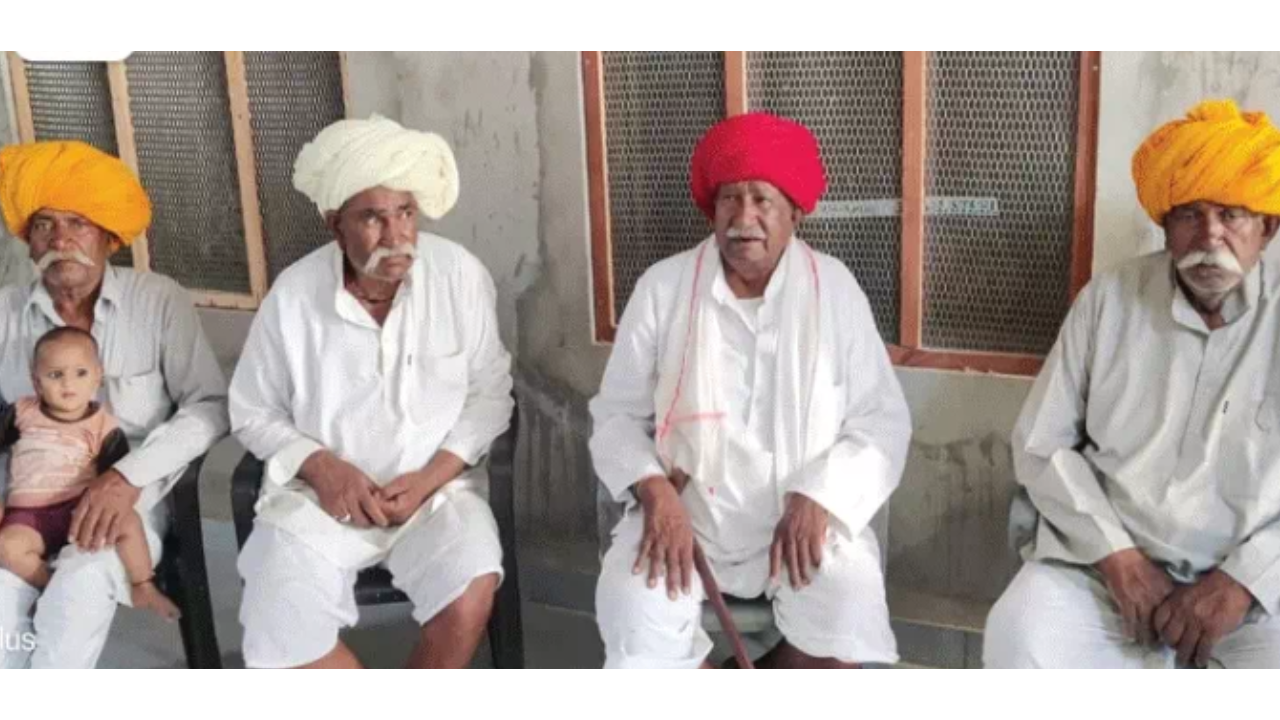
The family’s livelihood includes farming, animal husbandry, private and government jobs and other businesses.
The family’s livelihood is spread across several occupations. Some members work in government and private jobs, while others are involved in farming, animal husbandry, a building-material business and driving tractors.A social-media post that helped bring attention to the family also claimed that the household has around 700 bighas of agricultural land, 12 cars, 80 two-wheelers and 11 tractors. Agriculture, employment, business, animal husbandry and other work contribute to a household whose expenses are correspondingly large.
From village household to viral family
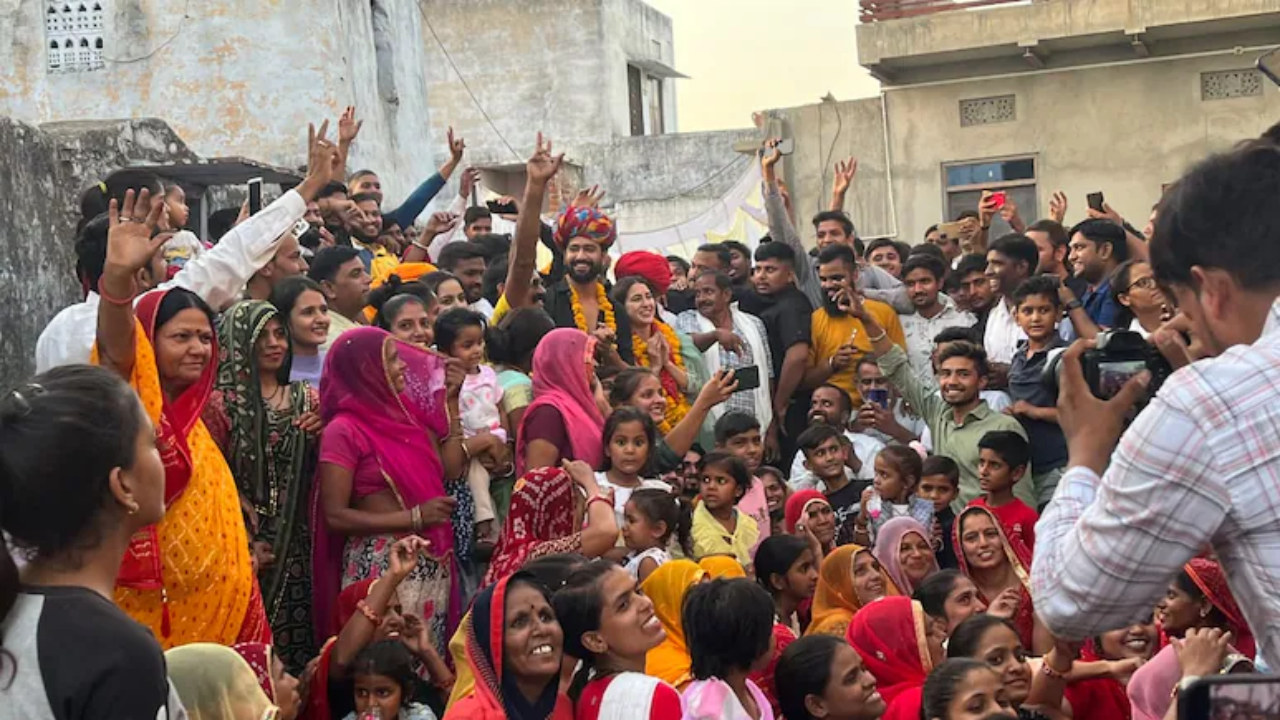
The Bagdi Mali family came into the spotlight after videos showing its 185 members went viral on social media.
The Bagdi Mali family came into wider public attention in 2024 after a video showing the huge joint family began circulating on social media. The family had also attracted attention after actors Vicky Kaushal and Sara Ali Khan visited their home while they were in Ajmer for a film shoot. Sara later shared a video featuring the family on social media.Their visit turned a relatively local story into a viral one, but the family’s unusual structure existed long before the cameras arrived.There is also a political and community dimension to the family’s history. One of the daughters-in-law became the village sarpanch in 2016 and was reported to have worked on issues including roads, drains and electricity supply.
What keeps a 185-member family together?
The answer, at least according to the family members quoted in reports, is less about the size of the house and more about the way relationships are managed.There are different occupations, different age groups and six generations under the same family umbrella. Yet the family’s elders continue to play a role in settling disagreements, while work and household responsibilities are distributed across members.That makes the Bagdi Mali family interesting not merely because 185 people live together, but because the arrangement requires an unusual degree of coordination. The daily quantity of flour and vegetables, the multiple stoves, the different sources of income and the sheer number of relationships all point to a household that functions through collective routines.At a time when families are increasingly organised around smaller household units, the Bagdi Mali family offers a glimpse of another mode- one where grandparents, parents, children and extended branches of the same family continue to share a home and a common everyday life.Its story is ultimately less about counting heads and more about what happens when six generations choose to remain part of the same household and make the logistics of living together part of the family tradition.