
In the past few years, something has increasingly troubled me regarding my fellow females. Many of them have never looked better—at least in the polish and perfection of today’s picture-perfect Instagram world. Indeed, female podcasters, politicians, and other public figures all race to capture the hair blowouts, lip fillers, and contoured faces that society tells us are the measure of a beautiful woman.
But even while these women exhibit unblemished external beauty, their nature exhibits something completely different. A brash boldness seems to consume many of them, exhibited not only by coarse language and sexual innuendo, but also by a detestation of men and young children, babies in particular.
What’s missing that makes today’s women so different from those of yore? The answer is kind, gentle femininity, the characteristic that makes a woman beautiful both internally and externally. Those willing to look beyond social media will find that there still are a few places we can go to help us cultivate gentleness in our own lives and in the lives of our daughters.
Look to the Books
The first is literature.
“Human literature teaches us what it is to be a man,” Russell Kirk wrote in “Enemies of the Permanent Things.” Common sense tells us that the reverse is also true: Literature can teach us what it means to be a woman, not only by examples of gentle womanhood, but also by showing us the contrast between the sexes and how these differences are good and balance one another out.
Related Stories
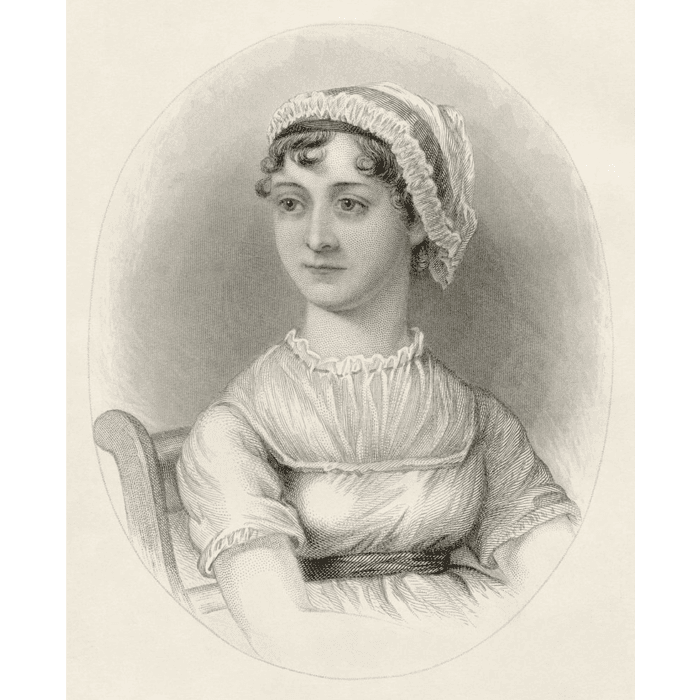
Not sure where to start? For advanced readers, I recommend classics such as “Jane Eyre” and Jane Austen’s “Persuasion” and “Mansfield Park.” For younger readers, picture books illustrated by Tasha Tudor are infused with a gentle demeanor, while students in between these categories may enjoy “Little Women” or some of the old novels by early 20th-century author Amy Le Feuvre.
Dress for Success
In this age of liberation, women are told that anything goes, especially when it comes to our clothing. Thus it is that women are told to “power dress” and wear pantsuits to establish their authority in the corporate world, or to dress scantily to establish their sexiness.
But if clothes can make us feel powerful or sexy, can’t they do the opposite and cultivate qualities such as gentleness in us as well?
Consider, for example, what the late great author and illustrator Tudor said of feminine dress: “Why do women want to dress like men when they’re fortunate enough to be women? Why lose our femininity, which is one of our greatest charms? We get much more accomplished by being charming than we would by flaunting around in pants and smoking. I’m very fond of men. I think they’re wonderful creatures. I love them dearly. But I don’t want to look like one.”
“Dress for the job you want,” the old saying goes. In the same way, it seems that if we want to cultivate a gentle demeanor in our lives, reaching for the clothes that make us feel feminine—the floral patterns, the flowing dresses, and the soft fabrics—will likely foster that attitude.
Standing Strong Through Suffering

“Violets, Sweet Violets,” 1906, by John William Godward. Public domain
A third way to cultivate the character of gentleness comes through embracing the difficulties, trials, and sufferings of life, a fact Abigail Adams recognized.
“It is not in the still calm of life, or the repose of a pacific station, that great characters are formed,” she wrote in a 1780 letter to her son. “The Habits of a vigorous mind are formed in contending with difficulties. … Great necessities call out great virtues.”
Many of us would naturally think that hard circumstances would cultivate the opposite of gentleness. But that all depends on whether we resist those difficulties, allowing ourselves to become bitter in the process, or whether we accept them as ways to build great character in our lives. As Adams implied, those who struggle through hardships will gain the valuable reward of a virtuous character—a component of which is gentleness.
Looking to a Higher Power
Despite religion being something we’re not supposed to talk about in polite company, I would be remiss if I failed to mention the role faith plays in cultivating gentleness. We see an example of this in the 9th-century B.C. poetry of the ancient Israelite King David.
In Psalm 18, David attests to the power of gentleness in his own life, telling God, “Thy gentleness hath made me great.” Essentially, David is saying that his success in life stems not from his own power, but from God’s own personality—a personality characterized by gentleness. And simple logic suggests that the more time mere mortals spend with a gentle God, the more like him they will become—male and female alike.
We live in a world today where arguments abound, loudness lingers, and crudity crushes civility. Meanwhile, glamour grows, almost as if it’s an attempt to cover the cracks of national character with a few slaps of paint.
Let’s quit the contouring and cue the character. The brash and bold may have their moment, but in the end, it is those who cultivate a gentle demeanor who have the true strength of character and power to influence the world.