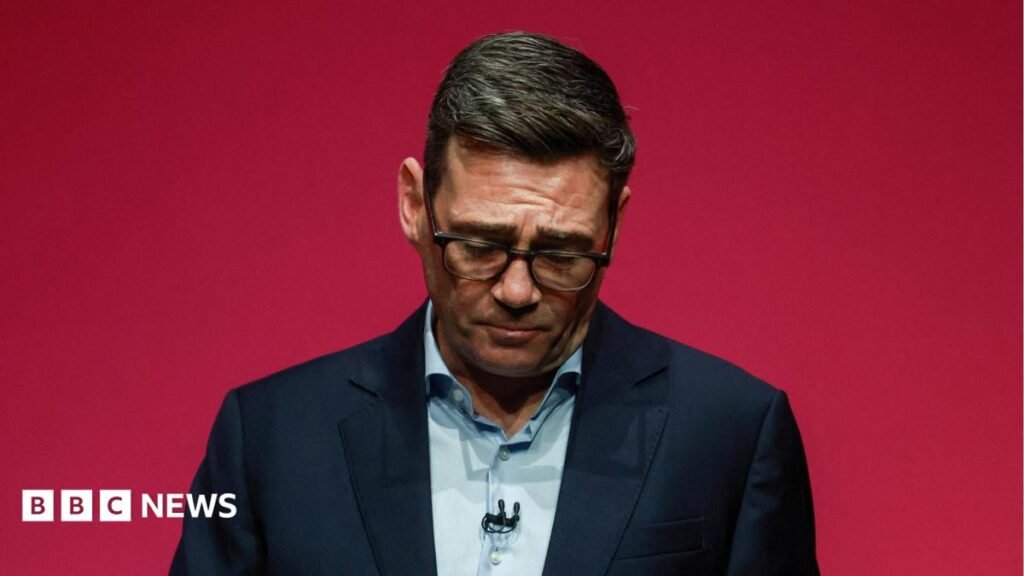
What stood out in this speech was its breadth. His pitch could, very broadly, be divided into the short term – what he hopes to achieve before a general election; and the long term – the prospectus he is beginning to assemble to put to the country when polling day comes around inside the next three years.
The biggest ideas have the longest timeframe and, perhaps, the greatest need for a lengthy debate in their gestation.
Take the headline grabber: revamping social care in England. Previous attempts to do so, by both Labour and the Conservatives, haven’t survived the intensity of a general election campaign, having been announced close to an election.
The aim of Burnham’s plan is to seed a conversation now about what a new system might look like – the idea being that the argument is won in advance.
Let’s see. The debate is only just beginning.
The plan to fund this by making increases in the state pension from 2030 less generous than they are now was more detailed than some expected at this stage.
The triple lock means the state pension currently increases annually in line with inflation, average wage growth or 2.5%, whichever is highest.
But from April 2030, if Labour win the next election, the annual earnings link will be dropped. It would, Labour figures say, be increased further if needed, to ensure that it stays above 30% of the full time average wage.
Knowing they would face blunt criticism about binning the existing triple lock – note the reaction of the Unite union and Labour’s political rivals – it would appear the prime minister was keen to offer as much of what he hopes will be reassuring detail to many.
Also going into the next Labour manifesto, he said, a change in the Westminster voting system and – after a review to come – the idea of a closer relationship with the European Union.
How much closer, with what trade offs and prompting what reaction, we don’t yet know.
And from the longer term stuff to the here and now – including housing reform in England, more public control of the water industry and the electricity grid.
There was an energy and sense of urgency to Burnham’s pitch and without question he has created a battalion of dividing lines with Labour’s political opponents which are likely to dominate the debate ahead.
His cabinet and many in his party are relishing the battle of ideas the prime minister has set up and is enthusiastically leaning into.
It was noteworthy that beyond a broad reference to Labour’s opponents on the Right, the party’s rivals didn’t get a mention in a speech lasting more than an hour.
The question is: does he and his government have the capacity to deliver?
And do they have the capacity to convince you, the voter, they have a vision you regard as coherent, appealing and affordable?
You hardly need reminding of the backdrop that contributed to thwarting many of his recent, many predecessors: a persistently sclerotic economy and a persistently turbulent international picture, for starters.
Neither will make turning all of this into a reality straightforward.