A Chinese netizen has drawn attention with a wordless video that appears to mock a political environment in which people are expected to applaud while remaining silent.
The video, posted on a Chinese social media platform on Sept. 5, shows the user sitting inside a car and facing the camera. The video was reposted by X account @whyyoutouzhele. The person first holds up two strips of tape, then crosses them over their mouth to seal it shut. Unable to speak, the person begins clapping.
The roughly 10-second video contains no dialogue. The caption suggests that the video was reposted after earlier content disappeared or became inaccessible.
The performance does not explicitly mention the Chinese Communist Party (CCP) or any state agency. However, to many Chinese viewers, the combination of a sealed mouth and applause was an unmistakable reference to a society in which dissent is discouraged while expressions of political support are expected.
Several China-based individuals spoke to The Epoch Times on condition of anonymity out of fear of reprisal.
“The most direct meaning of this video is that after sealing your mouth, you still have to applaud,” said a Guangdong-based netizen.
Related Stories

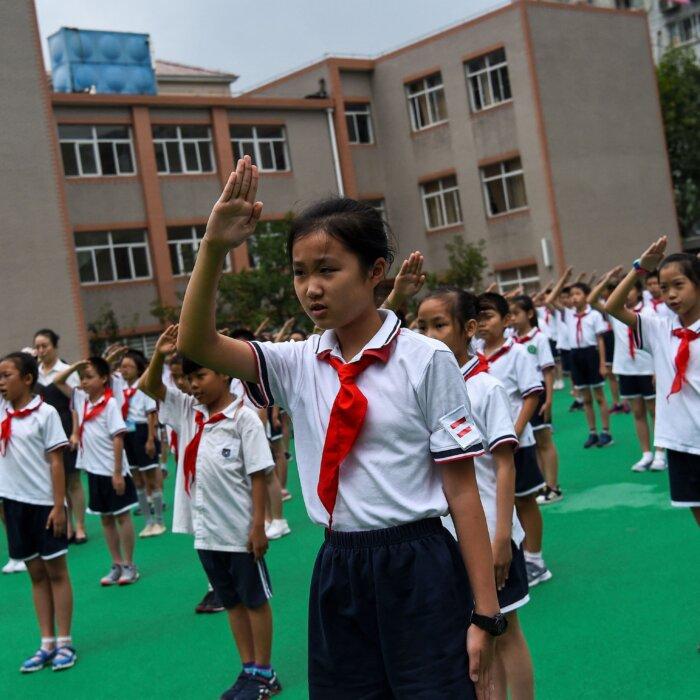
He told the publication that the attention the video received reflected a broader perception that the regime expects more than silence from the public.
“It shows that the CCP not only does not allow people to criticize [it], but also wants people to applaud and support it,” the netizen said. “Every time there is a major [Party] meeting, the deputies sitting below applaud. These people are puppets.”
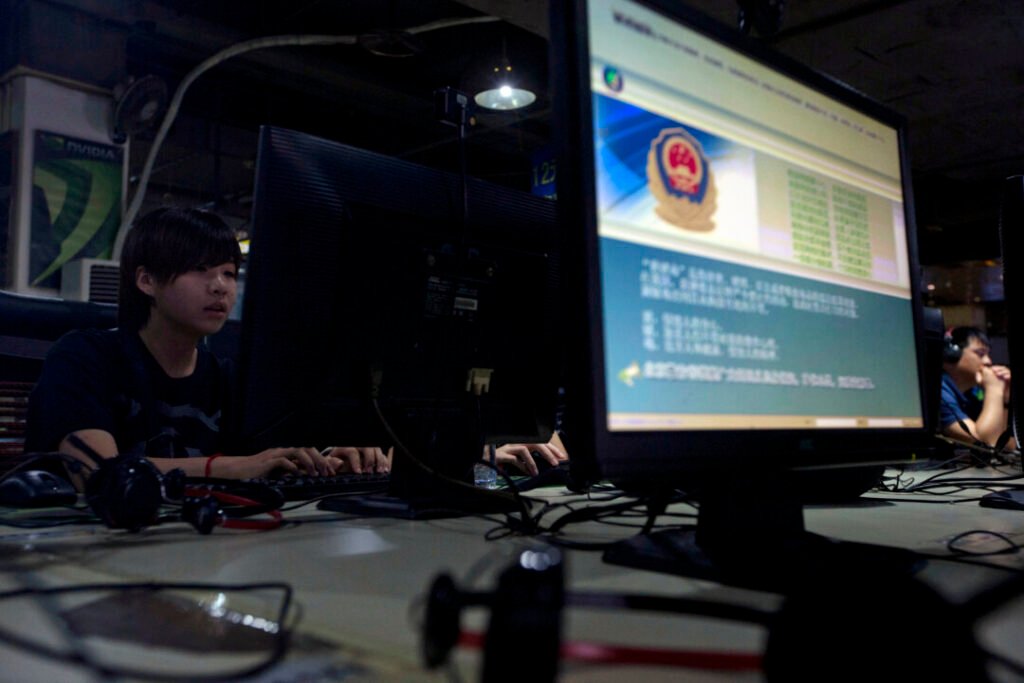
The video illustrates a broader phenomenon on China’s heavily censored internet. As direct political criticism becomes increasingly difficult, users have turned to images, gestures, wordplay, sarcasm, and other forms of coded expression to convey messages that may otherwise be removed.
Hidden Political Messages
The comments beneath the tape video provided another example of how seemingly innocuous language can take on political meaning.
One commenter asked why the tape was not red, a remark many would interpret as a reference to the color associated with communism. Another mentioned “white paper,” an apparent reference to the nationwide protests in late 2022, when demonstrators held up blank sheets of paper to express opposition to China’s COVID-19 lockdowns and restrictions on speech.
A Chinese online commentator in the northern city of Taiyuan told The Epoch Times that such references are part of an increasingly developed system of political code words used by Chinese internet users.
“White paper does not have a single word, and tape cannot speak either, but everyone knows what they mean,” the commentator said.
“As the CCP’s censorship becomes increasingly strict, under this kind of environment, netizens use images, movements, homophones and irony to express views different from those of the authorities,” he said. “This is a product of an environment that distorts human nature.”
Indirect language can allow users to communicate with one another without relying on political terms that content-moderation programs more readily identify.
A Chinese current-affairs commentator, surnamed He, told The Epoch Times that coded expression also creates a dilemma for China’s social media platforms.
Such posts avoid obvious political terminology while still allowing viewers to understand the intended message.
“This kind of expression reduces political words that can be directly identified by the platforms, and it also creates a problem for the censors—deleting the video means admitting that the video has touched on reality,” He said. “[But] if the platform does not delete it, the video will continue to spread.”
That dynamic can turn censorship itself into a source of information. When a post disappears, users may infer that the subject matter or wording has crossed an unofficial boundary.
Chinese social media platforms have tightened controls on discussions involving politics, the economy, social issues, and public policy in recent years. Content creators have increasingly relied on indirect references and satire to discuss subjects that could attract censorship.
Xiao Bin contributed to this report.