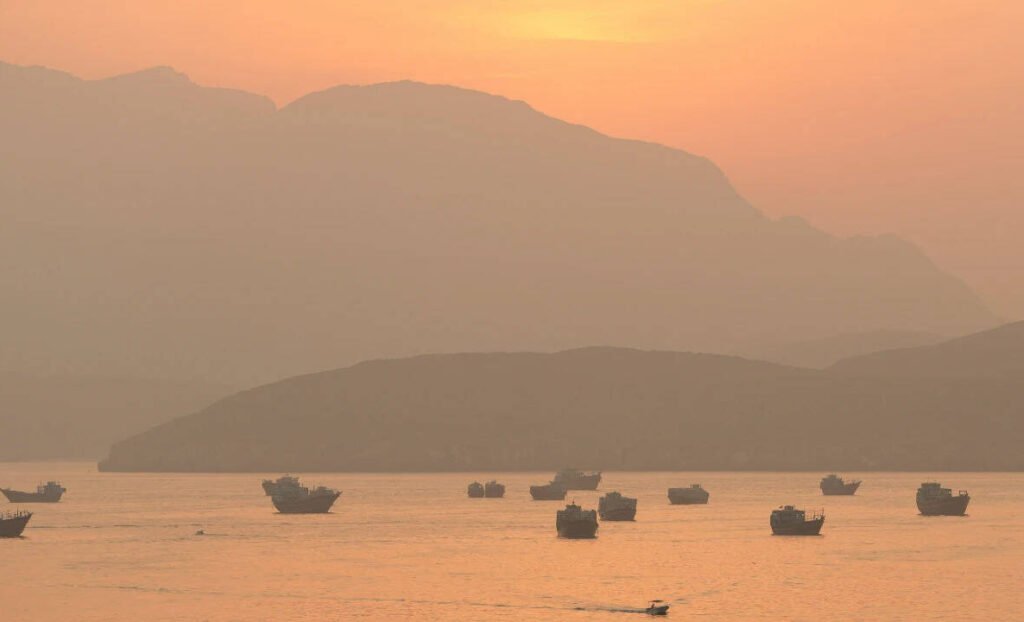
The Gulf region is accelerating efforts to diversify its energy export routes as geopolitical tensions expose the risks of relying on the Strait of Hormuz. New pipelines, ports and trade corridors could reshape global energy security over the next five years.
The Strait of Hormuz has long been one of the most important gateways for global energy supplies. Connecting the Persian Gulf with the Gulf of Oman and the Arabian Sea, this narrow waterway plays a critical role in transporting crude oil, petroleum products and liquefied natural gas (LNG) to international markets.
However, rising geopolitical tensions and disruptions to regional shipping have intensified concerns about the Gulf’s dependence on this strategic passage. Governments, energy companies and investors are increasingly exploring alternative routes that could keep exports moving during future crises.
The challenge is no longer simply how to reopen or protect the Strait of Hormuz. It is how to build a more resilient energy transportation network that does not depend on a single maritime chokepoint.
Why the Strait of Hormuz Matters to the Global Economy
The Strait of Hormuz is a critical artery for international energy trade. Before the latest disruptions, approximately 20 million barrels of oil and petroleum liquids passed through the waterway each day, representing roughly one-fifth of global petroleum liquids consumption.
Major energy producers, including Saudi Arabia, the United Arab Emirates, Kuwait, Iraq and Qatar, depend heavily on the surrounding maritime network to reach international customers.
Asian economies are particularly exposed to disruptions because a substantial share of the oil transported through Hormuz is destined for Asian markets. China, India, Japan and South Korea are among the important destinations for energy shipments from the Persian Gulf.
Any prolonged disruption can affect oil prices, shipping costs, insurance premiums and the availability of energy supplies. These effects can spread well beyond the Middle East, influencing fuel prices, industrial production and inflation across the global economy.
For Gulf exporters, diversifying transportation routes has therefore become an important part of long-term economic and national security planning.
Saudi Arabia’s East-West Pipeline Offers an Alternative
Saudi Arabia has one of the region’s most significant alternatives to the Strait of Hormuz: the East-West Pipeline, which connects oil-processing facilities in the eastern part of the country with Yanbu on the Red Sea coast.
The pipeline has a reported capacity of up to 7 million barrels per day, although actual export volumes depend on operating conditions, domestic requirements and the availability of downstream infrastructure.
By transporting crude oil across the Arabian Peninsula, Saudi Arabia can reduce its dependence on shipping through Hormuz.
Nevertheless, the alternative is not without risks. Oil exported through Yanbu must still travel through the Red Sea to reach many international markets. Security concerns around the Bab el-Mandeb Strait and other regional shipping routes can create additional vulnerabilities.
Expanding pipeline capacity, storage facilities and export terminals could improve Saudi Arabia’s flexibility, but a reliable alternative requires secure maritime access as well as sufficient land-based infrastructure.
UAE Expands Its Options Through Fujairah
The United Arab Emirates has also developed infrastructure designed to bypass the Strait of Hormuz.
The Habshan-Fujairah pipeline transports crude oil from inland production facilities to Fujairah, a port located on the Gulf of Oman. Because Fujairah lies outside the Strait of Hormuz, it provides an alternative gateway for some Emirati oil exports.
The route offers a strategic advantage by allowing oil tankers to load cargo without first passing through the narrow waterway.
However, pipeline capacity alone cannot guarantee uninterrupted exports. Storage limitations, terminal operations, shipping availability and security risks can all influence how much oil can reach international markets during a crisis.
For the UAE, continued investment in ports, logistics facilities and alternative transport connections could strengthen the country’s position as a regional energy and trade hub.
Oman Could Become an Important Gateway for Gulf Trade
Oman is attracting attention because its coastline provides direct access to the Arabian Sea and the Gulf of Oman.
Ports such as Duqm and Salalah offer opportunities to develop additional shipping and logistics connections that avoid the Strait of Hormuz. These facilities could support future energy transportation, container shipping and wider regional trade networks.
Proposals involving new pipelines from Gulf production centres towards Omani ports could provide additional options for countries seeking to diversify their export routes.
However, many of these concepts require substantial investment, international agreements, land access and years of construction. They should not be confused with fully operational alternatives capable of immediately replacing existing shipping capacity.
Oman’s potential advantage lies in its geography. With the right infrastructure and regional cooperation, the country could become an increasingly important link between Gulf producers and markets across Asia, Africa and Europe.
Can New Pipelines Replace the Strait of Hormuz?
Although alternative pipelines can reduce dependence on Hormuz, replacing the waterway completely would be extremely difficult.
The main challenge is scale. Existing bypass infrastructure can transport a meaningful volume of crude oil, but the Strait of Hormuz has historically handled much larger flows of petroleum and natural gas.
There are also important differences between energy products. Crude oil can be redirected through suitable pipelines, while liquefied natural gas requires specialised liquefaction facilities, storage systems, terminals and LNG carriers.
Qatar, one of the world’s major LNG exporters, faces a particular challenge because its LNG shipments depend heavily on maritime access through Hormuz. Building an alternative export system would require far more than simply constructing an oil pipeline.
A realistic long-term strategy would therefore combine additional pipelines, expanded ports, strategic storage, diversified shipping routes and stronger regional transport connections.
Rather than eliminating the Strait of Hormuz’s importance, these investments could reduce the economic impact of a future disruption.
Global Energy Markets Face New Risks and Opportunities
The search for alternative routes could have significant implications for global energy markets.
First, greater transportation flexibility could help reduce the risk of sudden supply shortages during regional crises. If one route becomes unavailable, exporters with access to other pipelines and ports may be better positioned to maintain deliveries.
Second, infrastructure investment could create opportunities for construction companies, engineering firms, shipping operators, port authorities and logistics providers.
Third, the development of new trade corridors could change the strategic importance of countries located along alternative routes. Saudi Arabia, the UAE and Oman may benefit from expanded connectivity, while neighbouring countries could gain from cross-border infrastructure projects.
However, new infrastructure will not automatically lower energy prices. Construction costs, financing requirements, political risks, transport distances and insurance premiums will influence whether alternative routes are commercially competitive.
The long-term benefits will depend on whether governments can turn ambitious proposals into reliable, affordable and secure transportation networks.
What the Shift Means for India and Other Asian Economies
India has a strong interest in the security of Gulf energy exports because it imports substantial quantities of crude oil and maintains extensive economic and commercial relationships with the region.
Disruptions around Hormuz can affect India’s energy import costs, shipping arrangements and broader economic outlook. Higher oil prices can also put pressure on transportation expenses, manufacturing costs and inflation.
Alternative pipelines and ports could improve the resilience of regional energy supplies, particularly if they provide dependable access to international shipping routes.
Nevertheless, India would not be insulated from every disruption. Global oil prices are influenced by worldwide supply and demand, and a major geopolitical crisis can affect prices even when some alternative routes remain operational.
For India and other Asian importers, the most effective response involves diversified energy suppliers, adequate strategic reserves, reliable shipping arrangements and continued investment in renewable energy and domestic energy security.
Could Hormuz Become Less Important Within Five Years?
The possibility of reducing dependence on the Strait of Hormuz has gained momentum as governments reassess the risks associated with concentrated energy transportation networks.
HSBC Group Chief Executive Georges Elhedery has highlighted the potential for significant investment in alternative energy logistics over the coming five years. The broader investment opportunity includes pipelines, ports and transport corridors designed to improve the resilience of regional trade.
However, a prediction that Hormuz could become less strategically decisive should not be interpreted as evidence that it will become completely redundant.
Existing infrastructure cannot be expanded overnight, and major projects face financial, engineering, environmental and political challenges. Some proposals may take years to become operational, while others may never progress beyond the planning stage.
The most likely outcome is a gradual shift towards a more diversified network of energy transportation routes. Such a system could give Gulf countries greater flexibility without eliminating their dependence on the Strait of Hormuz entirely.
Conclusion: Diversification Is the Gulf’s Long-Term Strategy
The growing search for alternatives to the Strait of Hormuz reflects a fundamental change in how Gulf nations approach energy security.
Saudi Arabia’s East-West Pipeline and the UAE’s Habshan-Fujairah pipeline already demonstrate that some oil exports can bypass the strategic waterway. Additional investment in Omani ports, regional transport corridors and new infrastructure could provide further options in the years ahead.
Yet geography, capacity constraints and security risks mean that no single alternative can easily replace Hormuz.
The long-term objective is to create a connected and flexible transportation system capable of keeping energy and trade moving during periods of uncertainty. For Gulf exporters, global energy markets and major importing countries such as India, this diversification could become an increasingly important part of economic resilience.
The Strait of Hormuz is likely to remain strategically significant. What may change is the extent to which the global economy depends on it as the only practical route for a large share of Gulf energy exports.
Frequently Asked Questions (FAQs)
1. Why is the Strait of Hormuz important?
The Strait of Hormuz connects the Persian Gulf with the Gulf of Oman and the Arabian Sea. It is a major international route for crude oil, petroleum products and liquefied natural gas.
2. Which countries have alternative oil export routes?
Saudi Arabia operates the East-West Pipeline to the Red Sea, while the UAE uses the Habshan-Fujairah pipeline to transport oil to a port outside the Strait of Hormuz.
3. Can Oman help Gulf countries bypass Hormuz?
Oman has ports on the Arabian Sea and Gulf of Oman that could support alternative shipping and logistics routes. New pipelines and other major connections, however, would require investment and development.
4. Will alternative routes reduce global oil prices?
Not necessarily. Alternative routes could reduce the risk of supply disruptions, but oil prices also depend on global demand, production, geopolitical conditions, transportation costs and market expectations.
5. Why does the Strait of Hormuz matter to India?
India imports substantial quantities of crude oil and has important energy trade relationships with Gulf producers. Disruptions can influence oil prices, freight costs and the country’s energy security.
6. Will the Strait of Hormuz become obsolete?
Complete replacement is unlikely in the near term. Alternative routes can reduce dependence on the strait, but current infrastructure cannot easily match its historical transportation capacity.