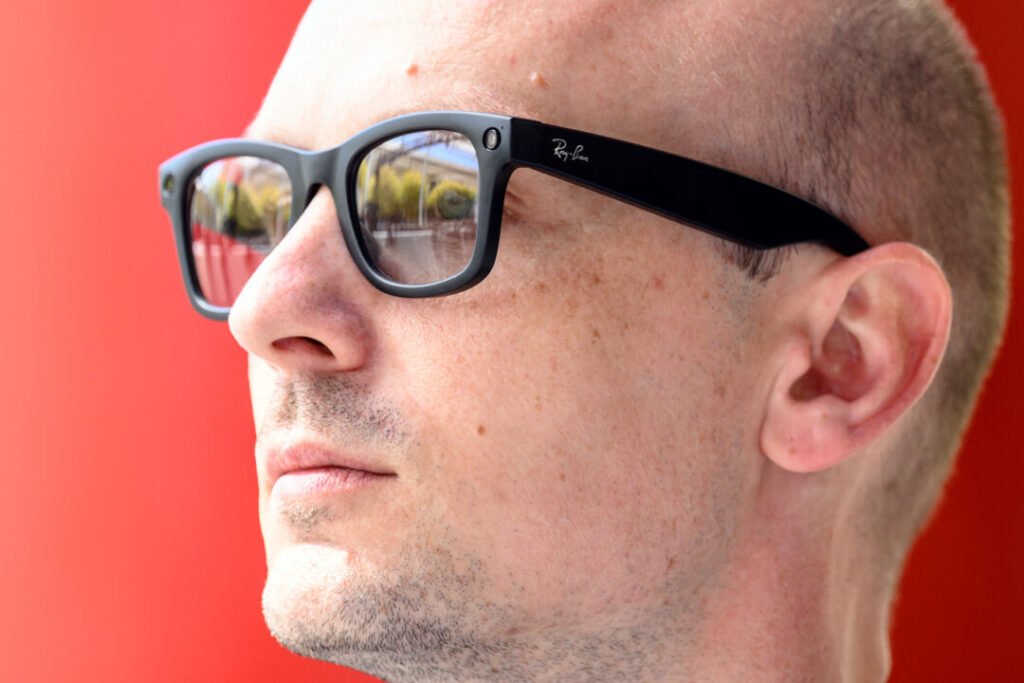

An audience member watches the Meta Connect Developer Conference keynote while wearing Ray-Ban Meta 2nd generation smart glasses at Meta’s headquarters in Menlo Park, California, on Sept. 27, 2023. Josh Edelson/AFP via Getty Images
The rise of affordable, camera-equipped smart glasses risks handing violent extremists a powerful new tool for surveillance, propaganda and attack planning, according to a Lowy Institute researcher.
James Paterson, a research associate with the institute’s Transnational Challenges Program, argued that smart glasses are following the same trajectory as drones and 3D printing: technologies that began as expensive novelties restricted to government use before becoming cheaper, more capable and easier to use—and ultimately accessible to extremists.
Basic camera-equipped versions are already sold cheaply at Kmart and Amazon, putting the technology within reach of almost anyone.
Related Stories
However, Paterson said the implications of accessible smart glasses extend beyond privacy, with the real danger lying not in any wholly new capability they provide, but in how much easier they make existing extremist activity.
“Emerging technologies have long acted as force multipliers for terrorist actors, making it easier to plan attacks, increase their lethality, communicate and produce or distribute propaganda,” he said.
“Smart glasses potentially follow the same logic, even if their implications are less dramatic. Their significance is not that they give extremists entirely new capabilities, but that they make existing ones easier to use.
“Someone planning an attack can already photograph a target, record video or communicate through a smartphone. Smart glasses make those activities hands-free, less conspicuous and increasingly integrated with artificial intelligence.”
Examples of Extremist Use of Smart Glasses
The glasses “were not essential to the attack,” Paterson said, “but their use provides an early indication of the emerging consumer technology being incorporated into attack planning.”
The propaganda value of the devices is a further concern. He argues that first-person footage captured through smart glasses could feed the same appetite that has kept video of the 2019 Christchurch mosque shootings circulating online more than seven years on.
AI integration could potentially allow such footage to be processed and disseminated in real time.
Paterson drew a parallel between smart glasses and commercial drones, which took years to migrate from military use to hobbyist shelves—and years more before security agencies caught up with their exploitation by extremist groups for surveillance and attacks.
He warned that governments routinely identify threats only after a technology is widely adopted, and said international bodies, including the United Nations General Assembly, had already raised concerns about terrorists exploiting emerging technologies.
The researcher is calling on policymakers to get ahead of the curve this time by assessing new consumer technologies for their extremist potential based on their price, availability, and ease of use—before, rather than after, they end up on the shelves of discount retailers.