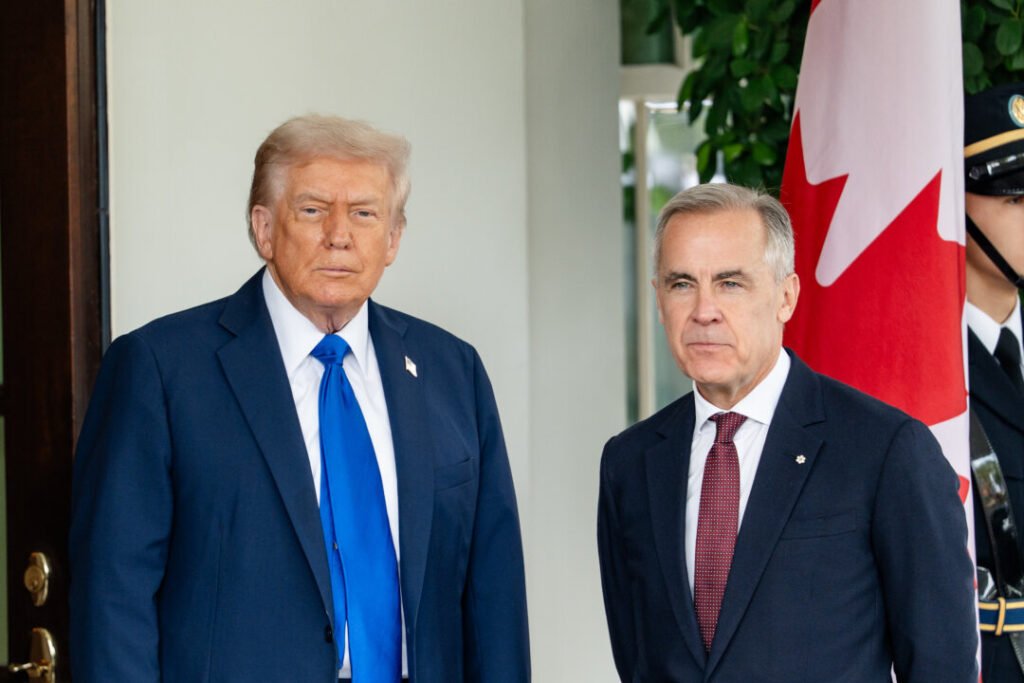

U.S. President Donald Trump greets Canadian Prime Minister Mark Carney at the White House on Oct. 7, 2025. Madalina Kilroy/The Epoch Times
Prime Minister Mark Carney responded to U.S. President Donald Trump’s signing of an executive order renaming Lake Ontario as Lake America, saying the body of water will always keep its original name.
“We know that America is changing. Their trading relationships, their foreign policies, their national monuments, their hydronyms,” Carney said. “Canadians also know that naming reality means calling it Lake Ontario – then, now and always.”
The U.S. president said that Canada has been “ripping us off for a long time on trade,” and that the United States has defended Canada militarily “for nothing.”
“They don’t pay for anything, and they want to be treated like a state, but they’re not a state,” Trump said. “We love the people of Canada. I don’t think their representatives do an appropriate job. Maybe they’ll change. I really don’t know, it doesn’t make much difference. But we can’t let the whole Canadian thing that’s been going on for decades, and it has to come to a stop.”
Related Stories
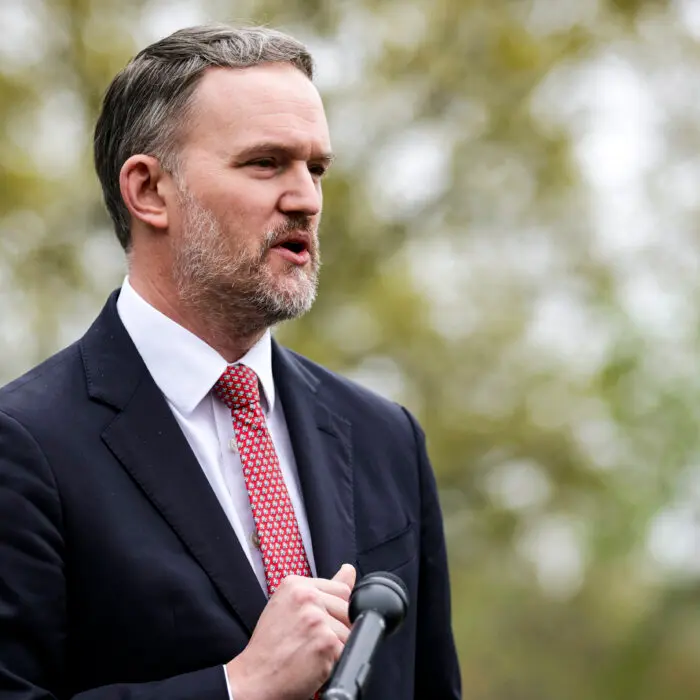
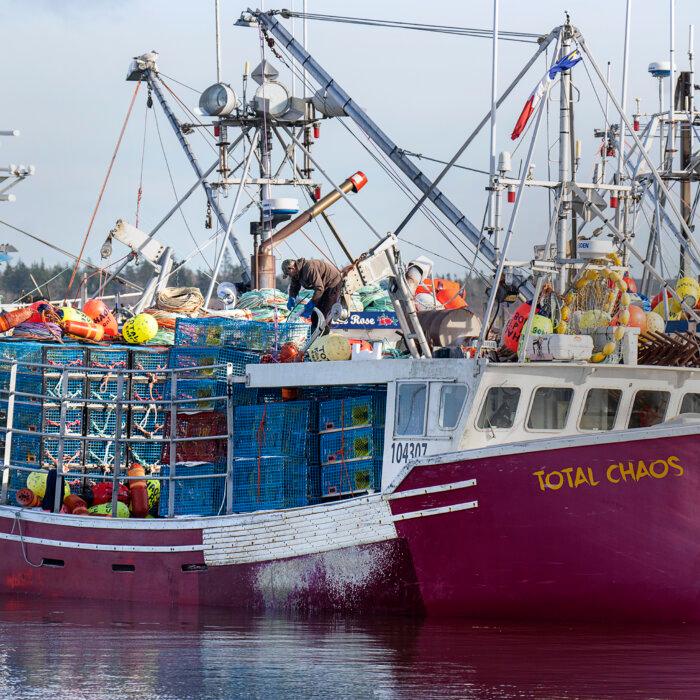
Trump first proposed renaming Lake Ontario to Lake America on Aug. 25 after Ontario Premier Doug Ford criticized him with insults and profane language over new U.S. tariffs on Canada on Aug. 24. Trump issued statements of his own taking aim at Ford with insults, and said he was considering changing the lake’s name because he didn’t foresee conducting “much business with Ontario any longer.”
After taking office in January 2025, Trump also issued an executive order for all U.S. agencies to change the name of the Gulf of Mexico to the Gulf of America. Amid the conflict between the United States and Iran, Trump has proposed that Washington could eventually manage and levy tolls on the Strait of Hormuz waterway, which Iran has sought to entirely block and prevent oil tankers from passing through, with Trump proposing to call it the “Strait of Trump.”
“Our two countries have real trade issues that impact our people. Instead of responding to stunts and distractions, Canadians must stay focused on what we can control: making our economy strong and affordable at home and using our leverage to fight tariffs abroad,” Poilievre said.
Washington’s new 50 percent tariffs on US$20 billion worth of Canadian products came into force on Aug. 22 after trade talks between the two nations collapsed on Aug. 21.
Canada has since announced counter-tariffs on roughly the same volume of U.S. products, which will come into force on Sept. 8.
In response, Trump has said he’ll impose new 50 percent tariffs on Canadian autos and auto parts in 2027.