Verbal communication can be one of the most difficult and, subsequently, comical things we do every day. The difficulty lies in the disconnect between what we want to say and what we end up saying.
In his short story “My Financial Career,” Stephen Leacock tells a wonderful story that illustrates this human struggle to communicate. Leacock presents a man who wishes to convey something, but fails because his inner trepidation changes his words.
To the Bank
After receiving a raise at work, a man goes to the bank to open an account and deposit $56. Unfortunately, banks make him nervous: “The clerks rattle [him]; the wickets rattle [him]; the sight of the money rattles [him]; everything rattles [him].” With such a nervous disposition, he enters the bank at a great disadvantage.
He walks in and already feels the panic and stress fill his body. He scans the many clerks, then approaches a sign that reads “Accountant.” The nerves surge in his body. He asks the accountant if he can see the manager, then solemnly adds “alone.” He’s not sure why he said “alone,” but he cannot take it back now.
The manager arrives looking authoritative and serious, which throws the poor man into another wave of nerves. He panics and asks, “Are you the manager?” The manager answers in the affirmative, and the man asks, “Can I see you … alone?” Again, he reluctantly, but nervously, adds “alone.”

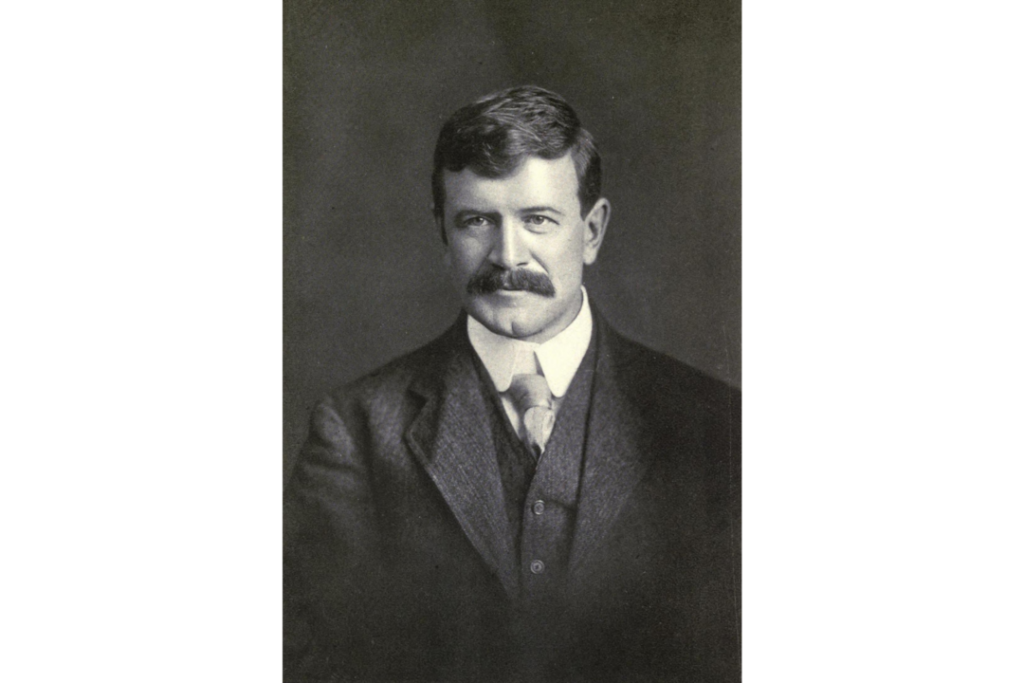
Stephen Leacock used sharp wit to show how inner panic can transform simple everyday conversations into hilarious misunderstandings. Public Domain
The Source of Misunderstanding
At the word “alone,” the manager looks alarmed and shows the uneasy man into a private room. They both sit, but the man finds his nerves so overcharged that he cannot speak. The manager initiates the conversation: “You are one of Pinkerton’s men, I presume.” The man suddenly realizes that the manager thinks that he is a detective.
Wishing to correct this idea, the man says he’s not a detective, but he wishes to open a bank account. The manager is relieved, but remains serious regarding this transaction, still assuming he’s someone important.
Related Stories


The manager asks how much money the man wishes to deposit, and when the man says $56, the manager stands, opens the door, and says loudly, “Mr. Montgomery … this gentleman is opening an account, he will deposit fifty-six dollars.”
The manager dismisses the embarrassed man, but the man is so distracted that he walks into the safe. After being scolded out of the safe, the man walks to the accountant’s desk. He shoves his crumpled-up cash towards the accountant, saying, “Here … deposit it.”
But now that he has deposited the money into his new account, he realizes that he wishes to withdraw some of it. However, the amount that he asks to withdraw is not the amount that he actually wants.
Through this story, Leacock shows how frustrating communication can be. When internal feelings confuse the mind, the words that exit the mouth can be the opposite of what we want to say, or in the tone we wish to say them.
Antoine de Saint-Exupéry puts it perfectly in “The Little Prince” when he says, “Words are the source of misunderstandings.” Yet, in these misunderstandings, Leacock shows the comedy, for things said accidentally often prove hilarious.
Leacock shows that communication is important, but it doesn’t always have to be taken so seriously. It is only words. So, while we attempt to figure it out, we should be willing to laugh and take our misunderstandings lightly.