Introduction: Is Refinancing Your Student Loan the Right Move?
The weight of student loan debt in the USA is a burden shared by millions. As of 2026, with interest rates fluctuating and the cost of living rising, the question on everyone’s mind is: “How can I lower my monthly payments and save money?” The answer for many lies in a powerful financial tool: the student loan refinance calculator.
This is not just a number-crunching exercise; it’s the first step toward financial freedom. Whether you are a recent graduate starting your career, a professional with a stable income, or someone looking to consolidate multiple loans, using a calculator is essential to see if refinancing is the right path for you.
In this comprehensive guide, we will explore everything you need to know about the student loan refinance calculator. We’ll dissect how it works, the critical data you need to input, the trade-offs between different loan terms, and provide actionable strategies to maximize your savings. By the end of this article, you’ll be equipped to make an informed decision that could save you thousands of dollars over the life of your loan .
Understanding the Student Loan Refinance Calculator
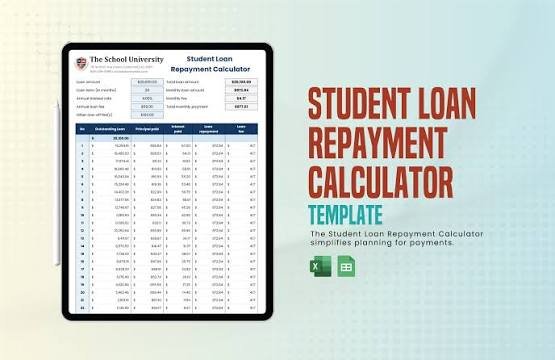
A student loan refinance calculator is a free online tool designed to estimate your potential savings and new monthly payment if you refinance your existing student loans . It compares your current loan situation—like balance, interest rate, and remaining term—with a new refinanced loan that offers a different interest rate and/or repayment term.
By entering a few key numbers, the calculator provides a clear picture of:
-
Your new estimated monthly payment.
-
Your total monthly savings.
-
The total interest you will pay over the life of the new loan.
-
The total amount you could save (or lose) in interest over time .
This clarity is invaluable. It removes the guesswork from a major financial decision, allowing you to see immediately how a lower rate or a different repayment timeline affects your budget and long-term financial goals. Using a student loan refinance calculator is the most direct way to determine if a lender’s offer will actually benefit you .
How to Use a Student Loan Refinance Calculator
Using the calculator is simple, but having the correct information is crucial for accurate results. Here’s a step-by-step guide on how to navigate a student loan refinance calculator effectively .
Step 1: Gather Your Current Loan Information
To get started, you need precise details about your current student loans. You can find this information on your latest loan statement, on your lender’s website, or on the Federal Student Aid website (StudentAid.gov) for federal loans.
You will need:
-
Current Monthly Payment: The exact amount you are paying each month. If you have multiple loans, add all your payments together.
-
Remaining Loan Balance: The total amount you currently owe. This is the principal amount left, not the original amount you borrowed.
-
Current Interest Rate: The interest rate you are currently being charged. If you have multiple loans with different rates, calculate the weighted average. For example, if you have a $10,000 loan at 5% and a $20,000 loan at 6%, the weighted average is roughly 5.67%.
-
Remaining Loan Term: How many months (or years) you have left until your loan is paid off in full .
Step 2: Determine Your Refinance Goals
Before you start plugging in numbers for the new loan, ask yourself: What is my primary goal for refinancing? This will dictate which interest rates and loan terms you should explore .
Common goals include:
-
Lowering Your Monthly Payment: You might be looking for immediate budget relief. This usually involves extending your loan term.
-
Saving on Total Interest: You want to pay the least amount of interest over time. This usually involves securing a lower rate and a shorter term.
-
Paying Off Debt Faster: You are aiming to be debt-free as quickly as possible. This involves a shorter loan term .
-
Consolidating Multiple Loans: You want to simplify your life by combining multiple loans into one single, manageable payment .
Step 3: Input the Refinance Loan Information
Now, you can explore different refinance scenarios. Based on pre-qualification offers you have received from lenders or the advertised rate ranges on their websites, you will input :
-
New Interest Rate: The annual percentage rate (APR) you expect to get on your new refinanced loan. Remember, the lowest advertised rates are typically reserved for the most creditworthy borrowers .
-
New Loan Term: The number of years you want to repay the new loan. Common terms are 5, 7, 10, 15, and 20 years .
Step 4: Analyze the Results
Once you hit “calculate,” the tool will display your results. Pay close attention to the following metrics :
-
New Monthly Payment: Can you comfortably afford this within your budget?
-
Monthly Savings: Is the amount significant enough to justify the refinance?
-
Total Interest Paid: Compare this to the total interest you would pay on your current loan.
-
Total Savings: This is the most critical number. It shows the net financial benefit of refinancing.
The Great Trade-Off: Monthly Payment vs. Total Interest
One of the most important lessons a student loan refinance calculator teaches is the fundamental trade-off between a lower monthly payment and paying less interest over time .
Scenario A: Extending Your Loan Term for Lower Monthly Payments
If your goal is to reduce your monthly financial burden, you might choose a longer loan term, such as 15 or 20 years. A longer term spreads the repayment of your principal over more months, which significantly lowers your monthly payment. This can free up cash flow for other financial priorities like saving for a home, investing, or building an emergency fund.
However, the calculator will show you the downside: you will likely pay more in total interest over the life of the loan because you are paying interest for a much longer period .
Scenario B: Shortening Your Loan Term to Save on Interest
If your goal is to minimize the total cost of your debt, you might choose a shorter loan term, such as 5 or 7 years. The calculator will show you that your monthly payment will be higher, which requires a larger portion of your monthly budget.
The significant benefit is: you will pay substantially less in total interest and be debt-free much sooner. By locking in a lower rate and paying off the loan faster, you can save thousands of dollars .
Visualizing the Trade-Off with a Refinance Calculator
| Scenario | Current Loan (Example) | Refinance Option A (Longer Term) | Refinance Option B (Shorter Term) |
|---|---|---|---|
| Balance | $50,000 | $50,000 | $50,000 |
| Interest Rate | 7.5% | 5.5% | 4.5% |
| Loan Term | 10 years | 15 years | 5 years |
| Monthly Payment | ~$594 | ~$409 | ~$933 |
| Total Interest Paid | ~$21,300 | ~$23,600 | ~$5,900 |
| Analysis | Baseline. | Lower payment, but more interest paid overall. | Higher payment, but massive savings on interest. |
Using a student loan refinance calculator allows you to experiment with these scenarios side-by-side, helping you decide which trade-off is best for your unique financial situation and goals .
The Crucial Warning: Federal Student Loans and Refinancing
This is the most critical caution to consider before you use your student loan refinance calculator and decide to refinance. Refinancing federal student loans with a private lender is a permanent decision. You will lose access to all federal benefits and protections .
What You Will Lose If You Refinance Federal Loans
Once you refinance a federal loan with a private lender, it is converted into a private loan. You will forfeit:
-
Public Service Loan Forgiveness (PSLF): If you work for a government or non-profit organization and are pursuing PSLF, do not refinance. You will lose all progress toward forgiveness .
-
Income-Driven Repayment (IDR) Plans: These plans cap your monthly payments at a percentage of your discretionary income. Private lenders do not offer these protections .
-
Federal Forbearance and Deferment: The ability to temporarily pause or reduce payments during periods of financial hardship, like unemployment or medical emergencies, is a key federal benefit .
-
Generous Hardship and Death/Disability Discharges: Federal loans offer specific discharge options that are generally not available with private lenders.
The Golden Rule
If your goal is to benefit from IDR plans or PSLF, a student loan refinance calculator should be used as a tool to inform you of the opportunity cost, not as a green light to proceed. Many financial experts advise that refinancing federal loans is only advisable if you have a high and stable income, a strong credit profile, and are absolutely certain you will not need federal protections . Always visit StudentAid.gov to understand all your options before making a decision .
Who is an Ideal Candidate for Student Loan Refinancing?
The student loan refinance calculator will show the greatest benefits for borrowers who fit a specific profile. If you are considering refinancing, use the calculator to see if this strategy aligns with your situation .
Key Indicators
-
Strong Credit Score: A high credit score (typically 720 or higher) is the most critical factor for securing the lowest, most advantageous interest rates .
-
High and Stable Income: Lenders want to see that you have a consistent income, which ensures you can manage the new loan payments .
-
Low Debt-to-Income Ratio (DTI): A DTI below 40% is generally preferred by lenders. It signals that you are not over-leveraged with other debt .
-
Current Rate is High: If the average interest rate on your current loans is 6% or higher, refinancing is likely a smart move .
-
No Need for Federal Protections: You have a stable job and a healthy emergency fund, so you are confident you won’t need IDR or deferment options.
Fixed Rate vs. Variable Rate: Which is Right for You?
When you use a student loan refinance calculator to compare offers, you’ll be asked to consider both fixed and variable interest rates. Understanding the difference is key to making the right choice .
Fixed Interest Rate
A fixed rate is locked in for the entire life of the loan. Your interest rate and monthly payment will never change, regardless of what happens in the broader market.
-
Advantages: Predictability and stability. You can budget with absolute certainty.
-
Disadvantages: The starting rate is typically higher than a variable rate.
-
Best for: Borrowers who prefer certainty and plan to take a long time to repay their loan .
Variable Interest Rate
A variable interest rate fluctuates over the life of the loan based on a benchmark index, such as the Secured Overnight Financing Rate (SOFR) . Your interest rate can go up or down, which means your monthly payment can change over time.
-
Advantages: The starting rate is usually lower than the fixed-rate option, which could lead to initial savings.
-
Disadvantages: Uncertainty. Your monthly payment could increase significantly if interest rates rise, putting a strain on your budget. Many variable-rate loans have a cap to limit how high the rate can go .
-
Best for: Borrowers who are comfortable with some risk, can handle a potential increase in their payment, and plan to pay off the loan in a short period (before rates can rise significantly) .
Tip: As of mid-2026, with some fixed rates for top-tier borrowers starting around 4% – 5%, many financial experts recommend locking in a fixed rate . Use the calculator to compare both scenarios.
Top Lenders and Their Current Rates (2026)
While your specific rate will depend on your credit profile and financial history, it’s helpful to know the range of rates offered by top lenders. According to data from July 2026, here is a snapshot of the market .
| Lender | Approximate Fixed Rates (APR) | Approximate Variable Rates (APR) | Notes |
|---|---|---|---|
| ELFI | 4.29% – 8.44% | 4.74% – 8.24% | Known for excellent customer service. |
| KeyBank | 4.74% – 8.75% | 4.14% – 9.19% | 0.25% autopay discount available. |
| LendKey | 4.39% – 9.24% | 4.19% – 9.24% | A marketplace connecting borrowers with community banks and credit unions. |
| SoFi | 3.99% – 8.74% | 3.99% – 9.99% | Rates include 0.25% autopay discount. |
| Splash | 4.20% – 10.24% | — | A loan marketplace. |
Disclaimer: Rates are current as of July 2026 and include an autopay discount. Your actual rate will depend on your creditworthiness . Always check with the lender for the most current rates.
Step-by-Step Guide to the Refinancing Process
After using the student loan refinance calculator and confirming that refinancing is a good idea, follow these steps to successfully refinance your loans .
1. Compare and Prequalify with Multiple Lenders
Prequalification allows you to check your potential rates with a soft credit pull, which does not affect your credit score . Compare offers from at least 3-4 lenders, including banks, credit unions, and online lenders.
2. Input Offers into the Calculator
Take the personalized quotes you receive and plug them into the student loan refinance calculator. This will show you exactly how much you would save with each lender, helping you pick the best one .
3. Choose a Lender and Apply
Once you’ve selected the best offer, formally apply. This will trigger a hard credit inquiry, which can temporarily lower your credit score by a few points .
4. Choose Your Loan Term and Rate
Select the term and fixed/variable rate that best aligns with your goals based on your calculator analysis.
5. Submit Your Application and Complete the Process
You will need to provide supporting documents, such as proof of income, a copy of your diploma, and your current loan statements. Once approved, your new lender will pay off your old loans .
Advanced Strategies to Maximize Your Savings
Beyond just using the calculator, you can adopt strategies to maximize your savings .
1. Leverage the Autopay Discount
Most lenders offer a 0.25% interest rate reduction when you sign up for automatic payments. While a quarter of a percent doesn’t sound like much, on a $50,000 loan it can save you hundreds of dollars in interest over 10 years. Your student loan refinance calculator can factor this in .
2. Optimize the “Goal-Oriented” Approach
As highlighted by some lenders, start with your primary goal . If your priority is a lower monthly payment, the calculator should evaluate long-term options. If your priority is to pay less interest, it should evaluate short-term options. This “goal-first” method ensures you’re not just seeing random numbers but a solution tailored to your needs.
3. “Accelerate” Your Payments
Even if you choose a longer term with a lower required payment, you can still pay more each month. This is a “best of both worlds” strategy: you have the flexibility of a lower required payment during tight months, but you can still pay down your principal faster and save on interest when you have extra cash.
4. Consider Adding a Cosigner
If your credit is not strong enough to qualify for the best rates, applying with a creditworthy cosigner can help you secure a lower rate. Run your student loan refinance calculator with and without a cosigner to see the potential difference .
Frequently Asked Questions
1. What is a good refinance rate?
As of 2026, a “good” refinance rate is any rate that is at least 1.5% lower than your current average rate . The current range is between 4% and 14% APR, with the best rates going to the most creditworthy borrowers .
2. Can I refinance federal loans?
Yes, you can, but you will lose federal benefits like PSLF, IDR plans, and generous forbearance options. It is generally not recommended for borrowers who work in public service or have unstable income .
3. Does checking my refinance rate affect my credit score?
Most lenders check your rate with a “soft” credit inquiry, which does not affect your credit score. A “hard” inquiry is only done when you complete the full application .
4. What do I do with multiple loans?
You can combine them all into one loan! Add up all your balances and monthly payments. For the interest rate, use the weighted average .
5. Is there a fee for refinancing?
Many top lenders like SoFi and KeyBank charge no origination fees, application fees, or prepayment penalties . However, always double-check your specific lender’s policy.
Conclusion: Take Control of Your Financial Future
A student loan refinance calculator is your most powerful ally in the journey toward financial freedom. It transforms a complex financial decision into a clear, understandable comparison of data. By inputting accurate information and understanding the trade-offs between monthly payments and total interest, you can confidently navigate the refinancing landscape.
Whether you are looking to lower your monthly bills, save thousands on interest, or consolidate your debts into one manageable payment, the calculator provides the roadmap. Remember the crucial warnings—especially regarding federal loans—and always align your decision with your long-term financial goals.
Don’t let student loan debt control your life. Use a student loan refinance calculator today and take the first step toward a more secure and prosperous future.
Take Action Today: Find a student loan refinance calculator, gather your loan documents, and see exactly how much you could save.
Learn More:
-
Understand current student loan interest rates .
-
Explore refinancing options for medical and high-earning professionals .
-
Check if you qualify to refinance your student loans .