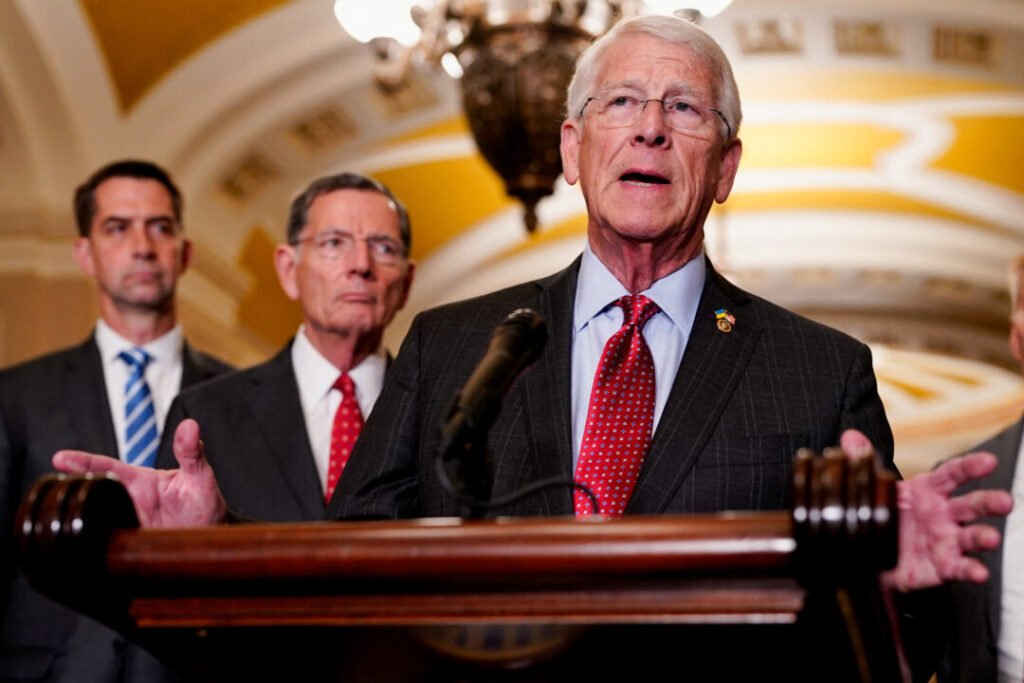
Senate Armed Services Committee Chairman Sen. Roger Wicker (R-Miss.) called for the United States to carry out its security commitments to Taiwan as a roughly $14 billion arms package for the island remains pending.
Wicker made the comments after meeting Sept. 29 with Yui Tah-ray, Taiwan’s representative to the United States.
“In 1979, Congress passed the Taiwan Relations Act, which remains the law of the land,” Wicker said in a statement.
“As members of Congress, we have a duty to make sure this law is adhered to and that decisions about the defense needs of Taiwan are based on our joint assessment of military necessity.”
The Taiwan Relations Act provides the framework for unofficial U.S. relations with Taiwan and calls for the United States to make available defense articles and services needed for Taiwan to maintain a sufficient self-defense capability.
Wicker said Congress in recent years had authorized and appropriated increased resources for Taiwan, including military training, security assistance, and arms sales.
Related Stories
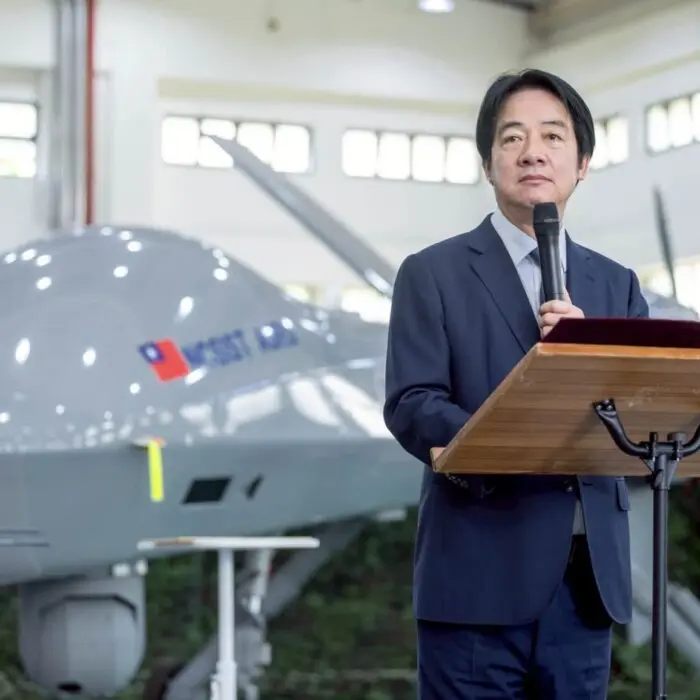

“These authorities must be used for the purposes that Congress intended,” he said.
The package remained pending after Trump met with Xi at the White House on Sept. 24.
A senior administration official told The Epoch Times on Sept. 30 that Trump would make a determination on a new Taiwan arms package “in a fairly short time.” The official also pointed to the administration’s approval of $11.1 billion in arms sales to Taiwan in December 2025, describing it as the largest-ever arms package for Taiwan.
The official said Trump approved more arms sales to Taiwan during his first term than any previous president and approved more during the first year of his second term than during all four years of the Biden administration.
Reagan-Era Assurances
Wicker also cited the Six Assurances given to Taiwan during the Reagan administration, saying Washington should not allow Beijing a role in decisions over U.S. arms sales to the island.
“President Reagan made clear that we would not consult with the Chinese Communist Party on arms sales to Taiwan,” Wicker said.
“The 40th president was right when he made that promise then, and we would be wise to uphold that precedent now.”
The Six Assurances, issued in 1982, include a commitment that the United States had not agreed to prior consultation with Beijing over arms sales to Taiwan.
The State Department declassified two cables detailing the assurances in 2020.
Wicker also pointed to China’s military buildup and what he described as growing coercion against Japan, the Philippines, and Taiwan.
“The Taiwanese people have chosen democracy as their form of government and have built a dynamic and advanced economy as a result,” he said.
“It is in America’s best interest that Taiwan remain a free, independent, and sovereign nation, which requires our continued support.”
Taiwan’s government has separately said U.S. arms sales have not stopped. Deputy Foreign Minister François Wu said in comments released by Taiwan’s foreign ministry on Sept. 30 that the United States had not halted arms sales to Taiwan and that Taipei and Washington remained in close contact based on shared interests.
Wu said Taiwan continued to enjoy bipartisan support in Congress and that helping Taiwan strengthen its self-defense under current international conditions was in the United States’ own interest.
Taiwan Defense Minister Wellington Koo said Sept. 29 that Washington had told Taipei after the Trump–Xi meeting that U.S. policy toward Taiwan had not changed.
Koo said arms-sale cooperation with the United States was continuing and that Taiwan had received no notification of changes to any individual programs.