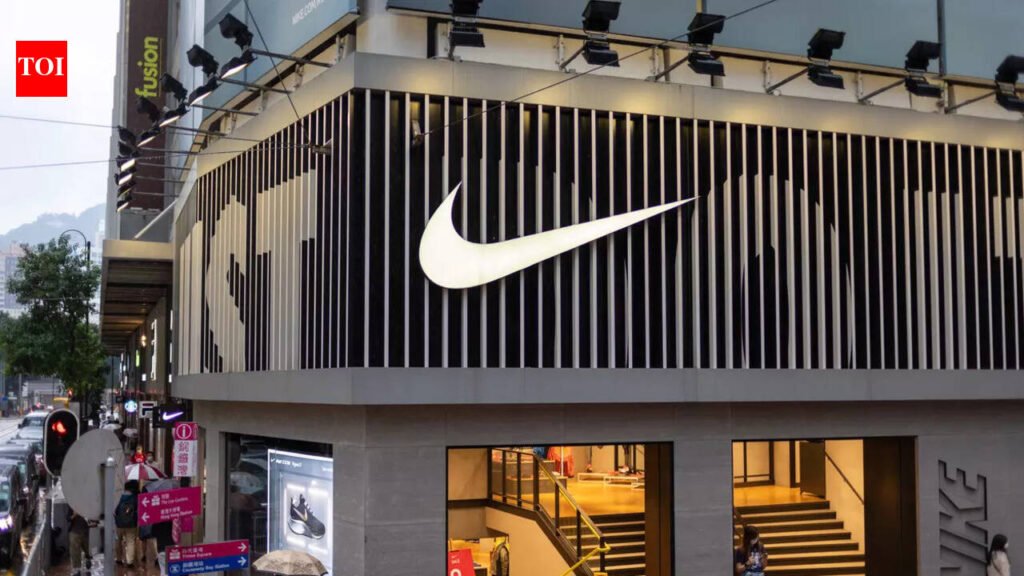
Nike’s stock is having a very different moment from the one the sportswear giant enjoyed a few years ago.Shares closed at $38.40 on September 4, 2026, according to historical market data, putting the stock roughly 50% below its 52-week high of $76.97 and about 78% below its 2021 record high.For Indian readers, $38.40 is approximately ₹3,627, using an exchange rate of about ₹94.45 to the dollar. Nike trades on the New York Stock Exchange, so this is a currency conversion rather than an Indian market price.The bigger story, however, isn’t the share price.Nike is still one of the world’s biggest sportswear companies and remains profitable. But revenue growth has stalled, footwear is under pressure, its direct-to-consumer business has weakened and Greater China has become a major drag. Meanwhile, brands such as On, Hoka and New Balance have become increasingly important in performance footwear and lifestyle.For a company that helped define modern sneaker culture, that is a fashion problem as much as a financial one.
Nike has lost momentum?
Nike’s fiscal year ended May 31, 2026.According to Nike’s FY2026 results, the company generated $46.4 billion in revenue, essentially flat compared with the previous year. On a currency-neutral basis, revenue declined 2%.Net income fell to $3.1 billion, from $3.2 billion in fiscal 2025, according to Nike’s annual filing with the US Securities and Exchange Commission.Footwear remains the biggest concern.Nike Brand footwear revenue was approximately $29.5 billion in fiscal 2026. While reported revenue was broadly flat, it declined 2% on a currency-neutral basis, while footwear unit sales fell 1%.Apparel performed better, with Nike Brand apparel revenue rising 4% to approximately $13.4 billion.The numbers don’t suggest that consumers have stopped buying Nike. They show a company struggling to generate the growth and product momentum investors had come to expect.
The direct-to-consumer strategy has taken a hit
Nike spent years building its direct-to-consumer business through its own stores, website and apps.That strategy was designed to give Nike greater control over pricing, product presentation and the customer relationship.But the latest results show a clear change.Nike reported that Nike Direct revenue fell 6% to $17.7 billion in fiscal 2026. Nike Brand digital revenue declined 12%.Wholesale went the other way. Nike Brand wholesale revenue increased 6% to $27.5 billion.That explains why Nike is putting greater emphasis on retail partners again.For fashion, wholesale still matters. A Nike sneaker sitting alongside products from Adidas, New Balance or On has to win the consumer’s attention directly.But wider distribution can’t solve a product problem.If consumers don’t want the shoe, putting it in more stores won’t make it desirable.
The sneaker market has changed
Nike helped turn sneakers into fashion.Air Jordan became bigger than basketball. The Air Force 1 became a streetwear staple. The Dunk moved from basketball into fashion and music. Air Max became a lifestyle product as much as a performance shoe.But Nike’s dominance also created an opportunity for competitors.On and Hoka have made technical running shoes part of everyday fashion. New Balance has successfully turned heritage running models into lifestyle products, while Adidas remains a major competitor across sport and fashion.Reuters, citing Euromonitor International data, reported that Nike’s share of the global sports-footwear market fell from 25.9% in 2022 to 22.9% in 2025.That doesn’t mean Nike has suddenly become irrelevant.
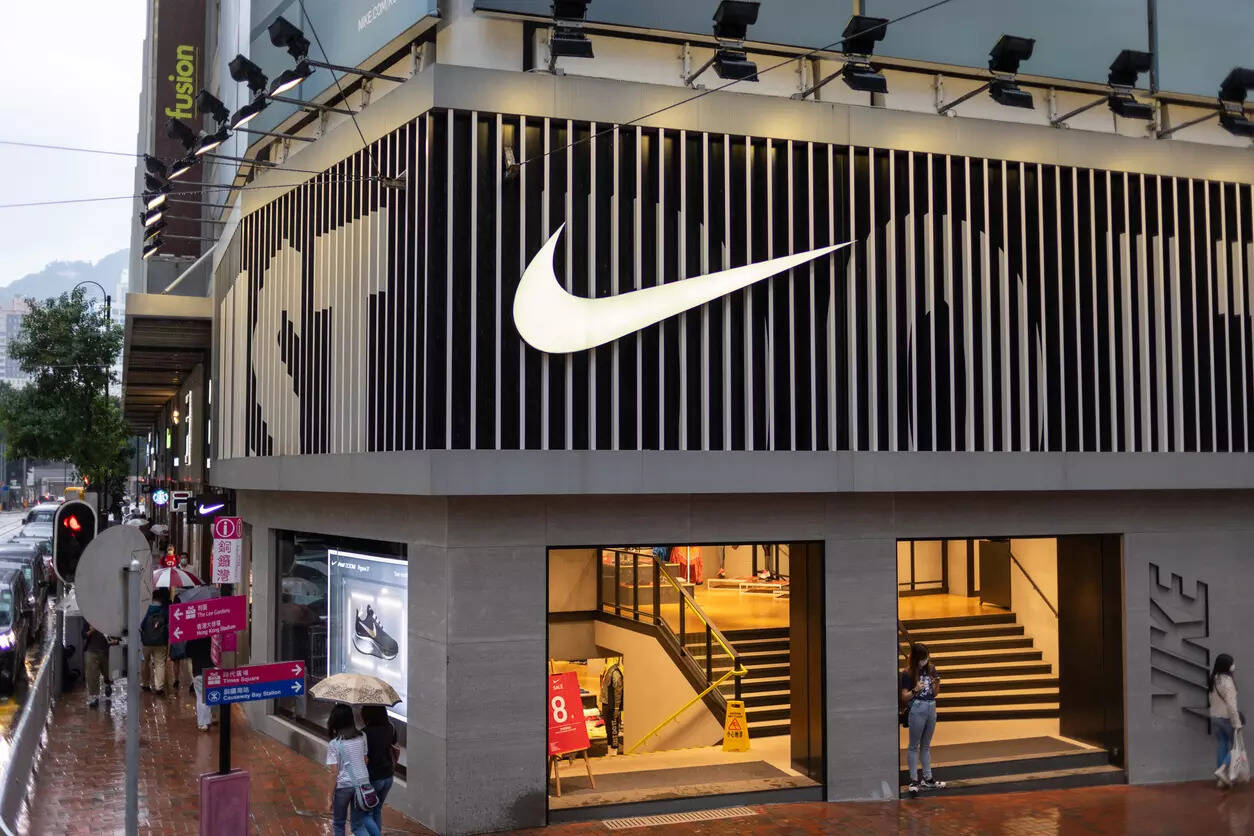
It means consumers now have more credible alternatives.And that makes Nike’s next product cycle particularly important.
Nike’s biggest fashion question: What’s next?
Nike has one of the strongest product archives in fashion.Air Force 1. Dunk. Air Max. Jordan.These names already have enormous recognition. But there is a limit to how much a brand can rely on its archive.Retro products can sell. They can create nostalgia. But they don’t necessarily create the next generation of cultural relevance.The question for Nike is simple: What comes next?CEO Elliott Hill, who returned to Nike in October 2024 after more than three decades at the company, has been pushing the business back toward sport, product innovation and stronger retail relationships.Nike describes the strategy as “Sport Offense.”That direction is significant because Nike’s greatest successes often came when performance products crossed over into culture.The company needs to make that happen again.
Running is a key battleground
Running is one of Nike’s clearest opportunities.The company has enormous technical credibility and long-standing relationships with elite athletes.But On and Hoka have changed the category.Their shoes aren’t only being bought for running. They have become part of everyday wardrobes.That combination of performance and fashion is exactly where Nike has historically been strongest.Nike doesn’t need to copy On or Hoka. It needs to create products that feel distinctly Nike while giving consumers a genuine reason to switch.Reuters has reported on the pressure Nike faces from newer running competitors and the need for the company to restore its reputation for innovation.The problem isn’t whether Nike can make a technically good shoe.It can.The challenge is making one people actually want.
China remains the biggest problem
Greater China is currently one of Nike’s weakest markets.According to Nike’s FY2026 annual filing, Greater China revenue fell from $6.59 billion to $5.85 billion, an 11% decline on a reported basis and 13% on a currency-neutral basis.Footwear revenue declined 15%, while Nike Direct revenue fell 12%. Digital sales dropped 29%.Competition has also changed significantly.Chinese brands including Anta and Li-Ning have become stronger, giving consumers credible domestic alternatives.Nike has acknowledged the need to improve the relevance of its China business. Reuters has also reported on the company’s efforts to adjust its strategy in the market.For Nike, China isn’t simply a revenue problem.It’s a cultural one.China is one of the world’s largest consumer and fashion markets, so maintaining relevance there matters for the brand as well as the balance sheet.
India tells a different story
India offers Nike a more positive long-term opportunity.According to The Financial Express, Nike India’s sales rose 14% to around ₹1,380 crore in the financial year ended March 2025.The publication also reported that Nike’s Indian store network had fallen to roughly 100 stores, compared with more than 200 a decade earlier.That makes Nike’s digital strategy increasingly important.Nike’s own India website says Nykaa began handling Nike.com operations in India from February 2026.The partnership gives Nike a locally operated digital route into India’s growing fashion and e-commerce market.Nykaa subsequently said its Nike partnership had crossed 1.5 million app installs within six months.That figure should not be interpreted as Nike sales. It is a digital engagement metric reported by Nykaa.Still, it suggests that the partnership has attracted substantial consumer attention.
India has another challenge: Price
Nike has strong brand recognition in India, particularly among younger urban consumers.But premium pricing limits its reach.Many Nike sneakers sell for several thousand rupees, while premium Jordan and performance models can cost well above ₹10,000.That creates a difficult balance.Nike needs to remain aspirational without becoming inaccessible.Too much discounting could weaken its premium positioning. But prices that remain too high can restrict the brand to a relatively narrow consumer base.This is particularly relevant as Adidas, Puma, Asics, Skechers, New Balance and other brands compete for India’s expanding sportswear market.
Inventory and discounting matter
Nike ended fiscal 2026 with approximately $7.5 billion in inventory, according to its annual filing.Gross margin was 42.9%, up from 42.7% a year earlier.Nike had previously acknowledged that discounting and changes in channel mix had put pressure on margins.For a fashion company, this is more than an accounting issue.Heavy discounting can clear unwanted stock, but it can also train consumers to wait for sales.Nike needs new products that can command full price.That is one reason the company’s product pipeline matters so much.
What Nike needs to do
Nike doesn’t need to abandon its heritage. It needs to stop depending on heritage as the main source of excitement.Product innovation has to come first. The company needs new franchises and silhouettes that create demand rather than simply extending existing icons.Running needs to remain a priority. Nike has the technology and credibility to compete with On and Hoka. The challenge is turning those advantages into products that also have cultural appeal.Wholesale should remain part of the strategy. The 6% increase in Nike Brand wholesale revenue shows that retail partners still matter.Nike Direct needs to become more compelling. The decline in digital sales suggests that simply owning an app or website isn’t enough. Consumers need a reason to shop there.And localisation matters. India, China, North America and Europe have different consumers and different fashion cultures. One global brand does not require one identical strategy.
What the decline means for fashion
Nike’s falling stock price doesn’t mean the brand is no longer fashionable.That would be too simplistic.The bigger issue is that Nike’s scale and heritage no longer guarantee growth.The company still has athletes, technology, global distribution, intellectual property and one of the most recognisable logos in the world.What has become harder is creating the next product that captures attention.That is particularly important in fashion, where consumers can move quickly from one brand to another.Nike’s archive will continue to be valuable. Air Force 1, Jordan, Dunk and Air Max aren’t going away.But the company needs something new alongside them.India could become part of that next chapter. The country’s growing sneaker and sportswear market gives Nike room to expand, while the Nykaa partnership gives it a more locally adapted digital model.China is the harder test, given the scale of the decline and the strength of local competition.And globally, Nike needs to prove that it can once again turn performance innovation into fashion relevance.The stock price is the most visible sign of Nike’s current problems.But the real turnaround won’t happen on Wall Street.It will happen when consumers see a new Nike shoe and want it badly enough to pay full price.For Nike, the next big move isn’t going to come from its archive. It has to come from the next shoe.