
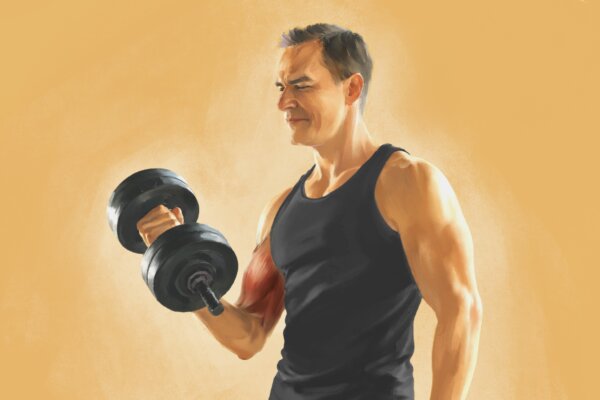
However, strength training can dramatically slow this decline and improve body composition.
Strength training, also known as resistance training, is a form of exercise that builds muscle strength and lean mass by working against resistance from dumbbells, bands, or your own body weight.
It doesn’t just tire your muscles out but sets off a chain reaction across your nervous, muscular, energy, and hormonal systems, Margarita Severnaia, a San Diego fitness coach specialized in strength training, told The Epoch Times. Understanding that chain reaction explains why strength gains happen quickly at first, and why muscle growth takes longer.
It all starts with the nervous system.
When you decide to lift something, your brain sends signals to your muscles while your nervous system simultaneously receives information about the movement from your muscles, joints, and tendons. The more force you need to produce, the more motor units—each made up of a nerve cell and the muscle fibers it controls—your nervous system can call into action.
These neural adaptations help explain why you can become noticeably stronger in the first few weeks of strength training.
Upon receiving a nerve signal, muscle fibers contract and use adenosine triphosphate (ATP) for energy. Short, intense sets rely more heavily on anaerobic pathways, but aerobic metabolism never fully shuts off—all systems stay active at once, just in different proportions.
Muscle cells sense the tension and translate it into biochemical signals that trigger protein synthesis.
At the same time, your sympathetic nervous system activates: heart rate and breathing quicken, blood is redirected toward working muscles, and stored energy in the form of glycogen (extra glucose) and fat is mobilized. A cascade of hormones, including adrenaline, norepinephrine, cortisol, insulin, testosterone, and growth hormone, becomes involved.
The real growth happens after you leave the gym.
While exercise stimulates muscle protein synthesis, the recovery period is when the body restores energy balance and repairs and remodels muscle tissue. “Microdamage” can happen after an unfamiliar or unusually hard session, but more damage doesn’t mean more gains. Severe damage just extends recovery time without improving results. When adequate protein, energy intake, sleep, and recovery are available, your muscle size and strength increase over weeks and months.
Compared with strength training, cardiovascular training develops your heart and lungs’ ability to supply oxygen during sustained effort. Bodybuilding uses strength training as its primary tool, paired with a structured nutrition plan built around distinct phases: gaining muscle, maintaining physique, and cutting fat.
Strength training’s various benefits include:
1. Stronger Muscles
Strength training doesn’t just make you stronger. It builds muscle strength, endurance, and tone, making it easier to perform everyday activities and reduce fatigue.
2. Longer Life
As people age, strength training also helps preserve the muscle mass, flexibility, and balance needed to stay independent and mobile.
3. Healthier Body Composition and Metabolism
Strength training improves your muscle-to-fat ratio by building or preserving lean mass. Because muscle tissue burns energy just to maintain itself, more muscle means a higher resting metabolic rate.
4. Stronger Bones
Every time your muscles pull against your bones during resistance training, that mechanical stress stimulates bone-forming processes and promotes adaptations that can help maintain or increase bone mineral density and bone strength, helping counter age-related bone loss. Combined with other weight-bearing activities such as walking and running, strength training may help prevent bone loss, osteoporosis, and fractures.
5. Chronic Disease Risk Reduction
Regular strength training may help prevent and manage several major chronic conditions, including:
-
Type 2 Diabetes: Strength training may reduce visceral fat, lower HbA1c (long-term blood sugar levels), increase glucose transporter availability, and improve insulin sensitivity.
-
Cardiovascular Disease: Strength training may support cardiovascular health by lowering resting blood pressure, reducing low-density lipoprotein (LDL or “bad”) cholesterol and triglyceride levels, and increasing high-density lipoprotein (HDL or “good”) cholesterol levels.
-
Obesity: A 2022 meta-analysis of 65 studies involving more than 2,500 overweight or obese adults found that resistance-based exercise helped them lose an average of 3.5 pounds of fat mass and gain approximately 1.8 pounds of lean mass.
-
Chronic Lower Back Pain: A March meta-analysis of 10 studies involving more than 400 participants with chronic lower back pain found that resistance training significantly improved pain intensity and disability among participants.
-
Arthritis: Strength training may also help reduce the risk of injury by strengthening muscles, tendons, and other structures that support and stabilize the joints. As a result, it may improve joint stability, reduce pain, and improve function in people with osteoarthritis.
6. Better Mental Health and Sleep
The mind-body connection here runs deeper than “exercise improves mood.”
Resistance training may influence brain function directly, including neurochemical signaling and levels of brain-derived neurotrophic factor, a protein that supports the growth and health of neural connections. It may improve mood by supporting brain plasticity and healthy neural function.
A well-rounded strength program is built around a handful of fundamental movement patterns, not an endless list of exercises.
If you are new to training, a qualified fitness professional can help. If you have a chronic medical condition or concerns about exercising safely, consult your doctor.
Begin each workout with a five- to 10-minute dynamic warm-up or light aerobic activity, such as brisk walking, before every session.
You can start with bodyweight exercises to develop proper technique before progressing to free weights, resistance bands, or weight machines. As a general rule, choose a weight or resistance level that allows you to perform eight to 12 repetitions with good form, while making the final few repetitions challenging.
The basic exercises (many of them will be explored in the upcoming series, “The Science of Classic Exercise”) include:
-
Squat Movements: Squats and lunges strengthen the legs and hips while improving lower-body stability.
-
Hinge Movements: Deadlifts and hip thrusts target the glutes, hamstrings, and lower back by emphasizing hip extension.
-
Push Exercises: Bench press, overhead press, and push-ups develop the muscles of the chest, shoulders, and triceps.
-
Pull Movements: Rows and pull-ups strengthen the back, shoulders, and biceps while promoting good posture.
-
Carry Exercises: Farmer’s carries improve grip strength, core stability, and overall functional strength.
-
Core and Bracing Exercises: Planks and loaded carries strengthen the abdominal and trunk muscles, help stabilize the spine, and improve balance during both exercise and everyday activities.
Training Tips
Keep these tips in mind to train safely and get the most from your workouts:
-
Prioritize technique over weight. Breathe steadily and never hold your breath during a lift.
-
Increase weight, repetitions, or sets gradually as exercises get easier. This is called progressive overload, the principle of gradually increasing your training to continue producing results.
-
Finish each session with a cool-down that includes light activity and gentle static stretching.
-
Give a muscle group at least one full rest day before training it again.
-
Stop if you feel sharp pain, which is different from normal muscle fatigue.
Strength training is generally low-impact, but risk varies depending on the exercise and training methods used.
In addition to muscle strains and tears, joint pain or irritation, and overuse injuries—which can occur with almost any form of exercise—particular attention should be paid to the following risks, Dr. Mariam Zakhary, clinical advisor at Ikon Recovery Center, told The Epoch Times.
-
Delayed-Onset Muscle Soreness: Can cause diffuse muscle soreness or tenderness in the muscles that were exercised. It usually develops within several hours after training, peaks approximately one to three days later, and gradually resolves as the body adapts to increased activity or a new training stimulus. This is a common and usually self-limited response to unfamiliar or unusually strenuous exercise, but soreness is not required for muscle growth or an effective workout.
-
Pain From Injury: Can be sharp, localized, or progressively worsening and may be accompanied by swelling or inflammation, reduced strength, joint instability, changes in movement patterns, or recovery that takes longer than expected. These signs indicate that it is time to stop and reassess, rather than push through the pain.
-
Tendinopathy: Can cause load-related tendon pain and dysfunction, often with localized tenderness or stiffness. Discomfort may be noticeable during the first few repetitions and temporarily ease as the tendon warms up, only to return during or after subsequent sets. A decline in tolerance to loads that were previously well tolerated can also be a warning sign. Zakhary noted that when these symptoms occur, training volume or intensity should be adjusted rather than simply pushing through the pain, “as tendons develop at a slower rate than your enthusiasm.”
Some people use certain equipment or clothing to support their performance and safety during strength training. “Lifting straps, belts, sleeves and wrist wraps can assist with certain situations; however, they cannot take the place of poor technique or excessive loading,” Zakhary said. “In most cases, a comfortable garment, supportive footwear, properly adjusted equipment and access to safety bars or a qualified spotter are the essential elements.”
Nutrition plays a vital role in maximizing the benefits of strength training by providing the energy needed for exercise and the nutrients required for muscle repair and growth.
“First and foremost, your diet should align with your goals and the intensity of your physical activity,” Severnaia said.
Protein provides the building blocks needed to repair and maintain muscle and other tissues. It is best eaten regularly throughout the day, Severnaia added.
Fats support hormone production and help the body absorb fat-soluble vitamins.
Severnaia also emphasized the importance of adequate fluid intake. “Water itself doesn’t burn fat, but a lack of it can impair exercise tolerance, concentration, and recovery.”
Strength training is more than a way to build muscle—it’s an investment in strength, resilience, and long-term health. You don’t need to train perfectly; consistent, combined with good nutrition and recovery, is what drives lasting results.