New airspace restrictions for Cork City are coming into effect this week which are set to have major impacts on drone operators.
The Irish Aviation Authority (IAA) have introduced new temporary measures that will significantly limit drone pilots and enthusiasts from flying over large parts of the city without providing two days’ notice.
But why are these measures coming into place, and what does it mean for the recreational, commercial and emergency use of drones over Cork City’s airspace?
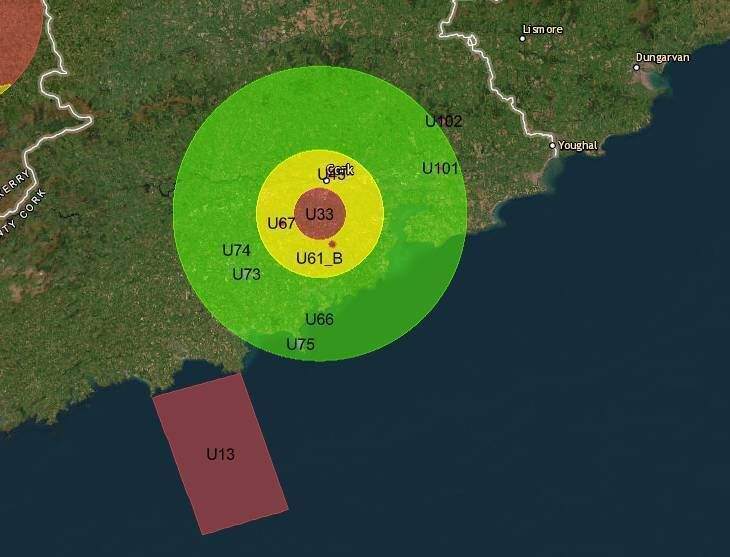
For now, the current geographical zones for flying drones in Cork looks like this.
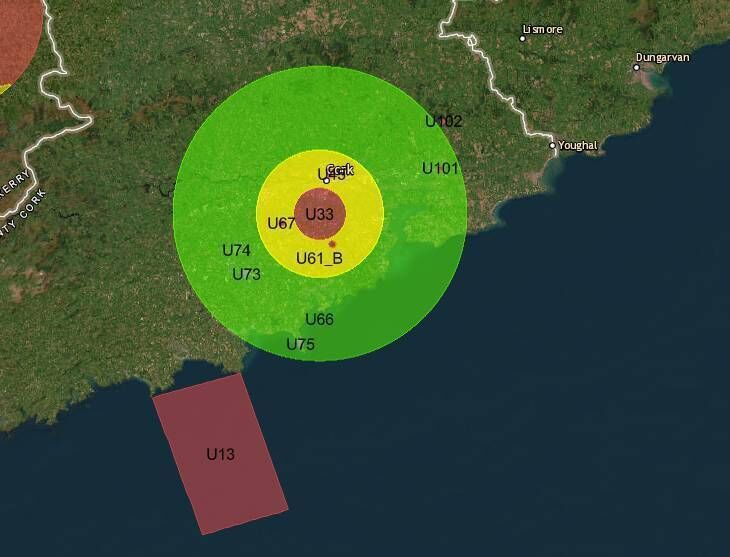
No flying is allowed in the red zone. In the yellow zone, drones can fly up to 30m or below. In the green zone, drones can fly up to 90m or below and everywhere else, drones can fly up to 120m or below.
Sometimes, the IAA will implement temporary red zones over stadiums or public spaces if a concert or sports event is taking place to avoid a drone being flown over an assembly of people.
Currently, there are just two permanent red zones prohibiting drone flights in Cork: around Cork Airport and Cork Prison, but that is set to change.
From February 14, the IAA will temporarily expand these red zones to cover Douglas, Cork city centre, the Docklands, Mayfield, and Ballyvolane, between 8am and 10pm.
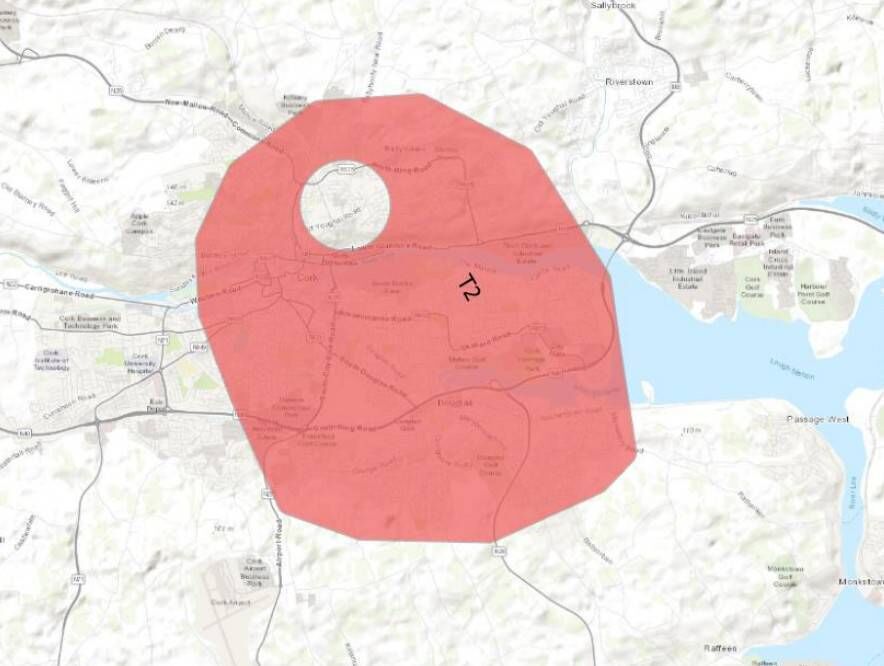
The circle located inside the red zone represents Cork Prison, where a no-fly zone already exists independently of the new restrictions.
The new measures mean that drone operators will need to request permission from Cork air traffic control at least two days in advance of flying.
To understand the new changes coming in, it is important to note the difference between Visual Line of Sight (VLOS) drone operations and Beyond Visual Line of Sight (BVLOS) drone operations.
VLOS is when one pilot flies one drone, keeping it in direct sight at all times. This represents the vast majority of drone users.
BVLOS is when one pilot flies multiple drones at one time, operating them simultaneously without maintaining direct visual contact with them. These licenses are very rare in Ireland, with only a handful of companies holding one.
The restrictions coming into place specifically target VLOS operations, which is why the majority of drone users are set to be impacted.
The IAA said that while it currently allows VLOS operations over Cork City, a new temporary geographical zone will be established to specifically enable BVLOS operations, giving them exclusive use of the airspace without providing two days’ notice.
The IAA said the temporary VLOS restrictions aim to ensure the safe conduct of BVLOS flights over the city.
Given the nature of their operations, BVLOS flying is inherently riskier than VLOS flying.
Currently, Cork has no BVLOS operators, but the IAA expects this to change with the new measures.
One licensed BVLOS operator is drone delivery company Manna, which has expressed interest in expanding operations to Cork.
Last month, Manna’s chief technology officer, Alan Hicks, said the company hopes to operate nationwide by the end of 2026.
Another such operator is Wing, owned by Google’s parent company Alphabet. In 2021, the drone operator ran trials to create a rapid medical delivery network in South Dublin.
While it remains unconfirmed which BVLOS operator will start flying in Cork once these measures are enacted, it is understood that the restrictions on the majority of drone users coming into play are to facilitate their operations.
Beginning on Saturday, VLOS drone operators will have to apply to Cork air traffic control two days before they intend to fly a drone over Cork City.
Speaking to the Irish Examiner, Bob Foley, director and accountable manager at Cork-based company, Engineers With Drones, said that anyone flying a drone in Cork City without ATC permission next week — including photographers, young children, or recreational users — will be breaking the law.
Mr Foley has criticised the new measures, arguing that the changes benefit only a small number of companies while restricting essential services and recreational users.
Concerns have also been raised that emergency services relying on drones may be unable to use them when needed.
Speaking to the Irish Examiner, Christy O’Donovan of Cork City Missing Persons Search and Recovery said: “We rely very heavily on drones for our operations.”
“We use drones now in every single search mission that we conduct. They have been a game-changer for us. What used to take us an hour-and-a-half searching on the ground can now be cleared in just over two minutes using a drone.”
Mr O’Donovan said the drones were critical when searching large green area, as well as rivers, especially at night.
“From a health and safety perspective, drones do wonders. Instead of sending our volunteers out in risky conditions, the drones can do it instead.
“This all comes down to timing. When we get a call, we act immediately. We cannot wait around. The sooner you’re on the ground, the more likely you are to have a positive outcome.”
Currently, the IAA’s measures are temporary. They will come into effect on February 14 and remain in place until May. However, the IAA said it proposes to make these restrictions permanent from May onwards.
The IAA is conducting a targeted consultation of airspace users on its proposal to make the measures permanent in Cork city. Submissions are due by 5 pm on March 14, 2026.
The punishments for flying drones can often times be uncertain and are largely determined on a case-by-case basis.
If a drone is caught flying in a no-fly zone, Gardaí can detain it. In addition, a licensed aerodrome operator may use a counter drone system to disrupt, disable or seize control of the drone if it is considered to be a risk.
In one case from last December, a drone operator was prosecuted for illegally flying a drone over 120m within a prohibited area without authorisation. The area in question was at a Snow Patrol concert at Thomond Park in Limerick. The defendant was ordered to pay a fine of €4,000, and a contribution towards costs of €1,000.
Speaking on the case, Inspector Padraigh Sutton, An Garda Síochána Limerick Divisional Roads Policing Unit said the Gardaí, in cooperation with the IAA, would investigate all reports of illegal drone use, and offenders will be prosecuted.
However, in another case from last November, engineering company Wills Bros Ltd was found to have operated drone flights in the Dublin Airport red zone without authorisation.
Despite the company’s non-compliance, the three pilots involved were not prosecuted, and instead were commended by the IAA for “responding proactively, taking full reponsibility and working closely with the IAA to bring their operations to full-compliance.”
The IAA said this approach was part of its “Just Culture” ethos, which ensures that organisations and individuals can engage proactively with theauthority to address safety issues, while maintaining trust and collaboration across the aviation community.
Another issue regarding drones is the number of operators in Ireland that do not have the necessary license. There are an estimated 50,000-60,000 drones currently in Ireland.
Meanwhile, the IAA has only has roughly 13,000 Ireland-based licensed pilots in their system.
“That is a lot of unlicensed pilots flying around with no knowledge of these new geozones or what they mean,” Mr Foley notes. “There needs to be more done to communicate these measures with these people.”