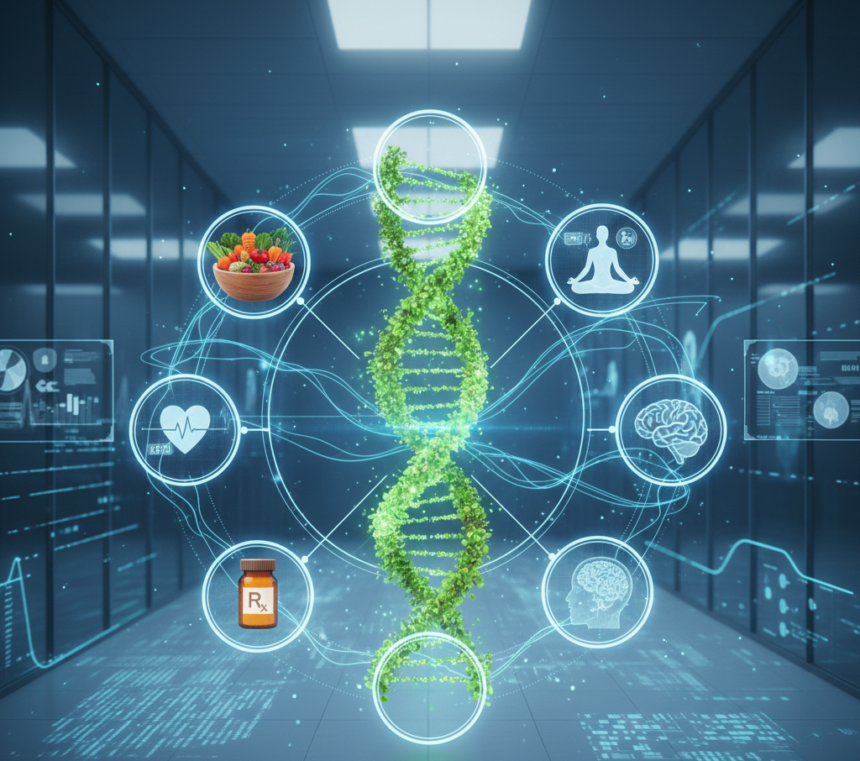
WellHealthOrganic AI in Healthcare : The convergence of artificial intelligence and healthcare is no longer a distant future; it is the present reality reshaping how we understand, diagnose, and treat the human body. In an era where information is abundant but clarity is scarce, a new paradigm is emerging—one that doesn’t just treat illness but cultivates wellness. This is the vision behind WellHealthOrganic AI in healthcare: a revolutionary approach that harmonizes the raw computational power of artificial intelligence with the timeless wisdom of organic, holistic living.
For decades, healthcare has largely been reactive—a system designed to intervene once disease has taken hold. We wait for symptoms to appear before seeking answers. But what if we could predict, prevent, and personalize health with unprecedented precision, all while staying rooted in natural principles? This is the promise we are here to explore. By weaving together the analytical might of AI with the foundational elements of organic nutrition, lifestyle balance, and preventative care, WellHealthOrganic is charting a new course. This isn’t just about fixing what’s broken; it’s about building an intelligent, intuitive system for lifelong vitality.
This comprehensive guide delves deep into the multifaceted role of AI in modern medicine, viewed through the lens of integrative and organic health. We will explore how AI is revolutionizing diagnostics, personalizing treatment plans in oncology and cardiology, streamlining healthcare operations, and even shaping the future of organic wellness. We’ll navigate the challenges of data privacy and algorithmic bias, and look ahead to a future where your health is monitored, supported, and optimized by a seamless partnership between human wisdom and artificial intelligence.
The Great Synthesis: When Organic Wisdom Meets Artificial Intelligence
The term “wellhealthorganic” evokes images of clean eating, natural remedies, and a life in sync with nature. At first glance, it may seem at odds with the high-tech world of algorithms and machine learning. However, the true power of the WellHealthOrganic philosophy lies in its ability to synthesize these two worlds. It recognizes that technology is not the enemy of nature, but a tool that can help us understand and interact with our biology on a deeper, more profound level.
Think of your body as the most complex ecosystem on the planet. For centuries, we have only been able to observe its surface. AI acts as a powerful new lens, allowing us to see the intricate interactions between our genes, our gut microbiome, the food we eat, and the environment we live in. It doesn’t replace the need for organic, whole foods; it enhances our ability to understand why they are so beneficial for our unique body.
For example, a standard dietary recommendation might be to “eat more leafy greens.” A WellHealthOrganic AI-powered system could go further. By analyzing your blood work, genetic markers, and gut bacteria composition, it could identify that your body has a specific variation in the MTHFR gene, which affects how you process folate. It would then not only recommend spinach but also suggest specific, organic, folate-rich foods and preparation methods that maximize absorption for your unique genetic makeup. This is the essence of the synthesis: using high-tech tools to deliver hyper-personalized, nature-based solutions.
Revolutionizing the First Look: AI in Medical Diagnosis
The journey to wellness begins with understanding. Historically, diagnosis has been an art as much as a science, reliant on a physician’s experience and pattern recognition. AI is elevating this to an exacting science, offering a second pair of incredibly intelligent eyes that never tire.
AI in Radiology: Seeing the Unseen
In radiology, the impact is transformative. Convolutional neural networks (CNNs), a type of deep learning algorithm, can now analyze X-rays, CT scans, and MRIs with a level of precision that often surpasses the human eye. For a platform like WellHealthOrganic, this is invaluable. Early detection is the cornerstone of preventative health. AI algorithms can flag the faintest shadow on a lung scan that might indicate stage 1 cancer, or pinpoint the earliest signs of bone density loss, allowing for immediate intervention with diet, exercise, and natural supplements long before a fracture occurs. This moves us from treating advanced disease to managing early risk factors.
AI in Dermatology and Ophthalmology: Protecting Your Senses
Our skin and eyes are windows to our overall health, and AI is becoming a master key. In dermatology, AI models trained on millions of images of skin lesions can now differentiate between a benign mole and a malignant melanoma with accuracy comparable to top dermatologists. For the health-conscious individual, this means a smartphone app powered by WellHealthOrganic AI could provide a preliminary risk assessment for a suspicious spot, prompting a timely visit to a specialist and peace of mind.
Similarly, in ophthalmology, AI is a guardian of sight. By analyzing retinal scans, algorithms can detect the early onset of diabetic retinopathy, glaucoma, and macular degeneration—often years before a patient notices symptoms. Since many of these conditions are linked to metabolic health and inflammation, an early AI-driven alert can be the catalyst for a profound lifestyle shift towards an anti-inflammatory, organic diet, potentially saving one’s eyesight.
Beyond Single Images: The Power of Multimodal Diagnosis
The true genius of AI in a holistic health context lies in its ability to perform multimodal diagnosis. It doesn’t just look at your X-ray in a vacuum. A WellHealthOrganic AI system could integrate that radiology report with your genomic data, your latest blood work (vitamin D levels, inflammatory markers), your gut microbiome profile from a stool test, and even data from your wearable watch (heart rate variability, sleep quality). It then synthesizes all this information to build a complete picture of your health.
For example, instead of just diagnosing you with high cholesterol, the AI might reveal a correlation between your poor sleep, specific gut bacteria that are out of balance, and a genetic predisposition to lipid metabolism issues. The resulting recommendation wouldn’t just be a statin drug; it would be a holistic protocol: targeted organic probiotics, specific sleep hygiene practices, and a personalized nutrition plan emphasizing particular organic fibers and healthy fats. This is diagnosis not as a single label, but as a dynamic, interconnected map of your health landscape.
AI for Personalized Treatment and Integrative Care
Moving from diagnosis to treatment is where the WellHealthOrganic philosophy truly shines. AI’s ability to tailor therapies to the individual—known as precision medicine—is a perfect match for the principle that no two bodies are the same, and therefore no single diet or treatment plan works for everyone.
AI in Oncology: A Partner in the Fight
In oncology, this is life-changing. AI systems like IBM Watson for Oncology can digest millions of pages of medical literature, clinical trial data, and genomic sequencing information in seconds. For a patient, this means their specific tumor’s genetic signature can be analyzed, and AI can help identify targeted immunotherapies or clinical trials that are most likely to be effective for their unique cancer.
From an organic perspective, AI can also help manage the side effects of conventional treatment. It can analyze a patient’s data to predict when they are at high risk of severe nausea or fatigue from chemotherapy and proactively suggest precise, organic nutritional interventions—specific ginger teas, easily digestible bone broths, or high-antioxidant berry smoothies—to bolster the body’s resilience during treatment. It’s about using all tools available, both conventional and natural, in a coordinated, intelligent way.
AI in Endocrinology and Diabetes: Real-Time Organic Management
For the millions managing diabetes or pre-diabetes, AI is a game-changer. Continuous Glucose Monitors (CGMs) paired with AI algorithms can track blood sugar in real-time and predict future spikes or crashes based on what you eat and how you move. A WellHealthOrganic AI assistant could learn that for you, a specific organic apple variety causes a much gentler glucose response than a banana. It could then send a notification before your blood sugar drops too low during a workout, suggesting a quick, organic snack. This creates a feedback loop that empowers individuals to become experts in their own metabolic health, using real-time data to make informed organic food choices that keep them stable and energized.
Streamlining Healthcare Operations for a Human-Centric Experience
One of the biggest frustrations in modern healthcare is the administrative burden—long waits, mountains of paperwork, and doctors spending more time typing on a computer than looking at their patients. AI is a powerful tool for streamlining these operations, freeing up human caregivers to do what they do best: provide compassionate care.
The AI-Powered Virtual Assistant
Imagine a 24/7 WellHealthOrganic virtual health assistant. You could ask it questions about an organic meal plan, get a reminder to take your herbal supplements, or describe a symptom you’re experiencing. The AI, using natural language processing, could triage your concern, pulling relevant data from your health profile. It might advise you on a simple home remedy (e.g., a salt water gargle for a sore throat) or, if the symptoms are concerning, schedule an appointment with your preferred doctor, pre-populating the appointment note with your symptoms and history. This reduces wait times and ensures your face-to-face time with a doctor is spent on healing, not data entry.
Optimizing the Healing Environment
On a larger scale, hospitals and clinics are using AI to predict patient admission rates, optimize staff schedules, and manage inventory. For a wellness center embracing the WellHealthOrganic model, this could mean ensuring that organic, healing meals are always available in the cafeteria, or that rooms are scheduled to allow for adequate natural light and quiet time between patients. By using AI to handle the logistics, the physical environment can be optimized for true healing.
As we’ve seen, the integration of AI into healthcare, especially through a lens as thoughtful as wellhealthorganic, holds immense promise. But this powerful tool is not without its challenges. In the next section, we will critically examine the ethical landscape, confronting the hurdles of data privacy, algorithmic bias, and the vital need to ensure this technology enhances rather than replaces the human connection at the heart of medicine.
[End of Part 1]
This section establishes the core concept, covers the diagnostic and treatment applications from your source article, and integrates the “wellhealthorganic” brand philosophy. To continue building this to an 8800-word article, the subsequent parts would delve into:
-
Part 2: Ethical Challenges (Data Privacy, Bias, Transparency, and the “Black Box” problem).
-
Part 3: The Future Landscape (AI in robotic nursing, mental health, federated learning, and predictive wellness).
-
Part 4: The WellHealthOrganic Roadmap (A practical guide on how individuals can engage with AI tools today for organic wellness).
-
Part 5: Conclusion (Synthesizing the vision of a balanced, tech-enhanced, organic future).