



Scroll through any fitness feed and the 30-30-30 rule shows up almost instantly. It sounds simple. Eat 30 grams of protein within 30 minutes of waking up. Then do 30 minutes of low-intensity cardio. The promise is tempting: better metabolism, steady energy, and steady fat loss. But does this structure truly support sustainable weight loss, or is it just another trend packaged neatly for social media?Here’s all we need to know about what the science says, what it does not say, and where this rule fits into real-life health.
What exactly is the 30-30-30 rule?
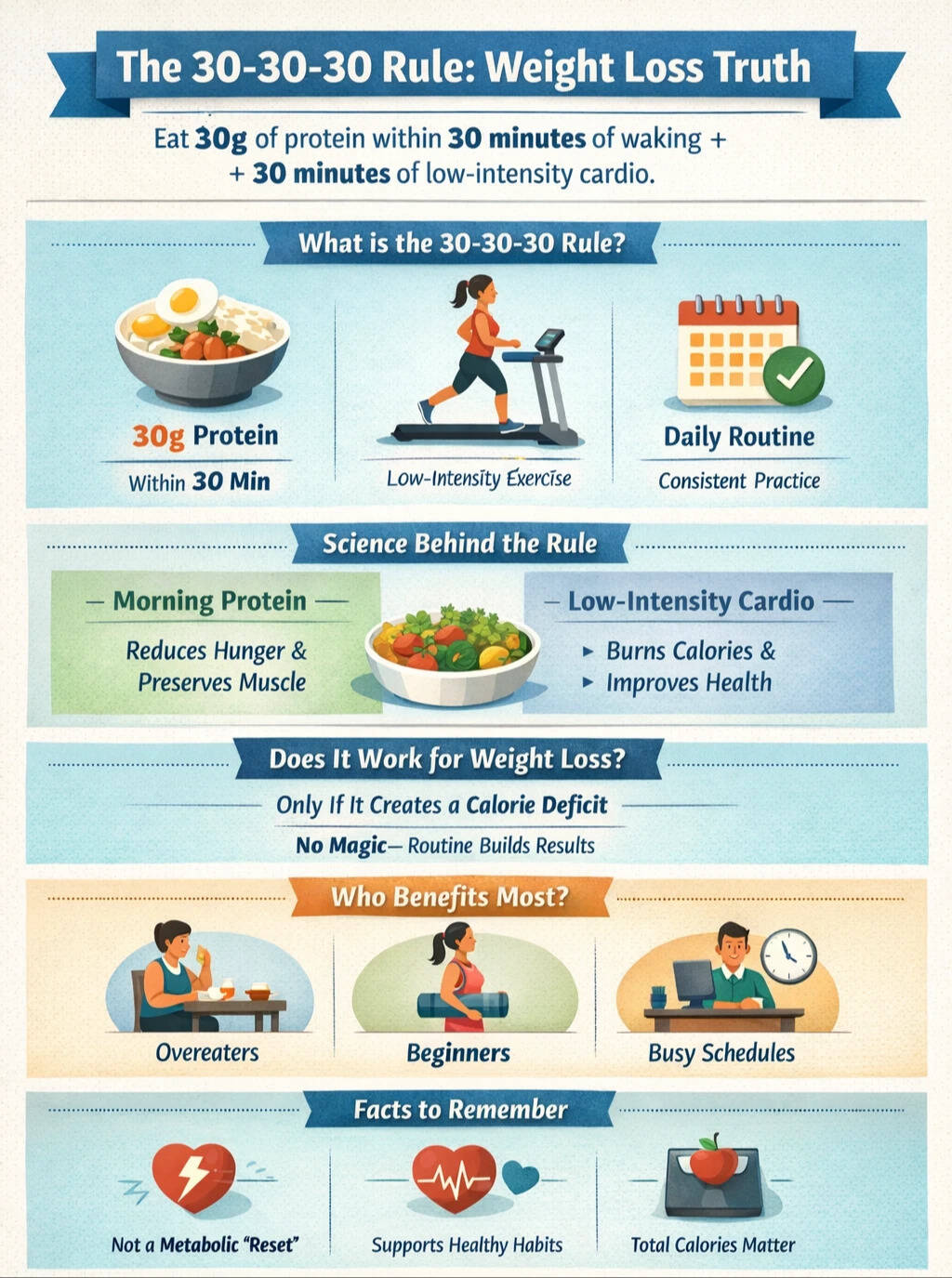
The rule has three parts:
- 30 grams of protein within 30 minutes of waking
- 30 minutes of low-intensity steady-state cardio
- Consistency, ideally daily
Low-intensity cardio usually means brisk walking, cycling at a comfortable pace, or light jogging. The heart rate stays moderate. You can still hold a conversation.The idea is simple. Protein supports muscle. Cardio burns fat. Morning timing “activates” metabolism.Simple plans feel doable. That is one reason this rule became viral.

Why morning protein matters more than people realise
Protein in the morning does more than fill the stomach. It influences hunger hormones like ghrelin and peptide YY. A higher-protein breakfast can reduce cravings later in the day.Research from the National Institutes of Health explains that higher protein intake can improve satiety and help preserve lean muscle during weight loss. Preserving muscle matters because muscle tissue supports resting metabolic rate.A study published in Nutrition Reviews discusses how protein intake increases fullness and may support body fat reduction when combined with calorie control.Thirty grams is not random. For many adults, that amount is enough to stimulate muscle protein synthesis in the morning. Eggs with curd, paneer with vegetables, or a lentil-based breakfast can easily reach that mark.This part of the rule stands on solid ground.
The role of 30 minutes of low-intensity cardio
Low-intensity cardio is sustainable. It is not extreme. It does not spike stress hormones excessively.According to the Centers for Disease Control and Prevention, adults need at least 150 minutes of moderate-intensity activity per week for health benefits.Thirty minutes a day fits neatly into that recommendation.Low-intensity exercise primarily uses fat as a fuel source during the activity. That does not mean it “melts” fat instantly. Weight loss depends on overall calorie balance. But daily movement improves insulin sensitivity and supports cardiovascular health.In 2020, the World Health Organization released global physical activity guidelines showing that consistent moderate activity lowers the risk of heart disease, type 2 diabetes, and some cancers.So the cardio component supports long-term health, even beyond weight loss.
Sustainable weight loss rarely comes from dramatic hacks. It grows from daily habits repeated quietly.
Does it actually cause weight loss?
Here is the honest answer. The 30-30-30 rule works only if it helps create a sustainable calorie deficit.Protein can reduce overeating later. Morning cardio adds calorie expenditure. But if total daily intake remains high, fat loss will not occur.Data from the NIH explains that weight loss requires consuming fewer calories than the body uses over time.There is no metabolic magic window that guarantees fat loss just because protein was eaten at 8 am.However, the structure can build routine. Routine reduces decision fatigue. And routine often determines long-term success.
Metabolism: Activated or just supported?
The internet claims that the 30-30-30 rule “resets” metabolism. That wording is misleading. Metabolism is the total of chemical processes that keep the body alive. It does not switch on at sunrise.Morning protein slightly increases thermogenesis, which is the energy required to digest food. Exercise temporarily raises calorie burn. But the long-term metabolic rate depends largely on body composition, age, sex, and total activity level.So the rule does not hack metabolism. It supports healthy metabolic function when practiced consistently.
Who might benefit most?
This rule may help:
- People who skip breakfast and overeat at night
- Individuals who struggle with daily structure
- Beginners who need a clear starting point
It may not suit:
- People with early work shifts
- Those with digestive discomfort in the morning
- Individuals who prefer evening workouts
Sustainable weight loss depends on adherence. A plan that fits real life always beats a plan that looks perfect on paper.
Weight loss and health
Weight loss should never focus only on appearance. Excess body fat increases the risk of heart disease, high blood pressure, type 2 diabetes, and certain cancers.A study published in the Translational Behavorial Medicine explains that even a 5-10 percent reduction in body weight can improve blood pressure, cholesterol, and blood sugar levels.That is powerful.The 30-30-30 rule can support these changes if it encourages daily movement and adequate protein intake. But it is not a standalone solution. Sleep quality, stress levels, strength training, and overall diet pattern matter equally.
Trend or tool?
The 30-30-30 rule is not a miracle. But it is not meaningless either.Its strength lies in structure. Protein supports satiety and muscle. Cardio builds consistency. Together, they may create a gentle calorie deficit without extreme restriction.The real question is not whether the rule works in theory. The real question is whether it fits into daily life without feeling like punishment. When a plan feels realistic, the body responds over time.