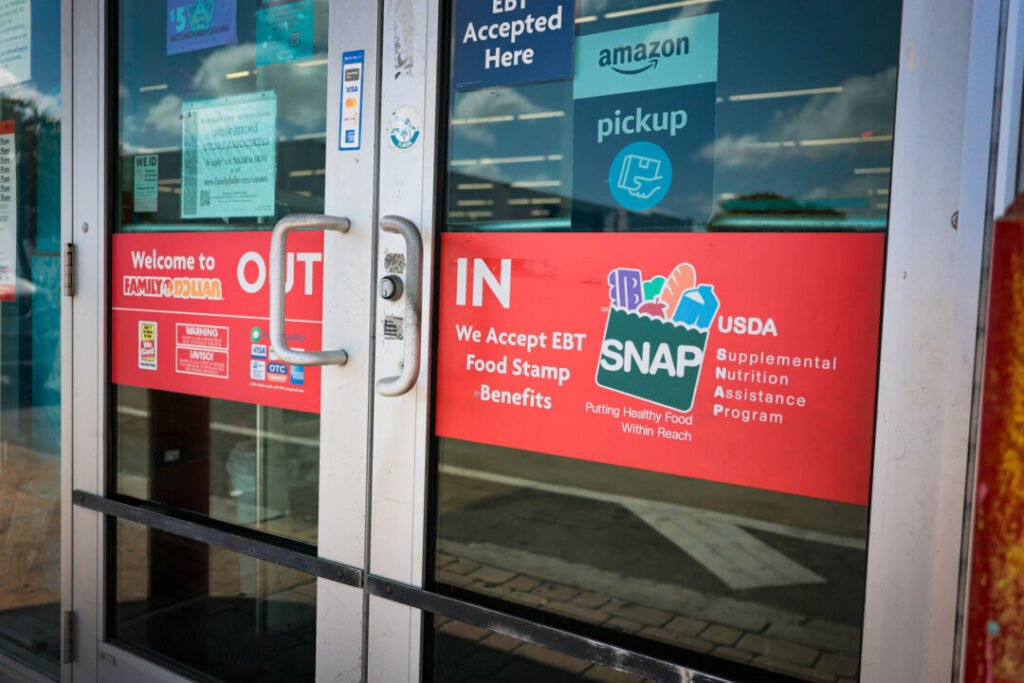

A sign indicates that a store accepts SNAP benefits in Miami, Fla., on April 21, 2026. Joe Raedle/Getty Images
Agriculture Secretary Brooke Rollins announced nearly $6 billion in total savings tied to efforts to eliminate fraud in the government’s Supplemental Nutrition Assistance Program (SNAP).
Rollins outlined the wins in a Sept. 15 post to X, saying that $5.8 billion in taxpayer losses have been prevented by the anti-fraud initiatives implemented during President Donald Trump’s second term.
This was done through the shutdown of nearly 1,840 illegal SNAP devices that processed Electronic Benefit Transfer (EBT) cards and the disqualification of 5,335 fraudulent retailers.
“Those who defraud SNAP are stealing from taxpayers and taking resources away from Americans who genuinely need assistance,” Rollins said. “We have zero tolerance for this abuse, and we will continue pursuing bad actors and protecting the integrity of the program.”
There are several ways an ineligible person can be counted in SNAP, including illegal immigrants being certified in error or by fraud, and deceased household members continuing to receive benefits.
Related Stories

Trump issued an executive order in March 2025 directing federal agencies to obtain lawful and “unfettered access” to data from federally-funded programs such as SNAP to facilitate an audit of government spending.
The SNAP integrity team was created in May 2025 to review state SNAP data against federal databases to identify potential fraud.
The maximum monthly food assistance offered through SNAP is set for its annual increase in line with the cost-of-living adjustment in October.
The benefit ceiling for a family of four will reach $1,023 for most of the nation, which is an increase from the current maximum of $994. Total benefits vary based on family size and income. In May 2026, the average monthly benefit received by U.S. households was $344.51.
The overall cost of the monthly SNAP benefits have fallen in recent years, from $13.4 billion in October 2022 to $6.8 billion in May 2026, largely because pandemic emergency allotments largely ended in 2023 and fewer people on the program.
Separate state cost-sharing penalties for high payment-error rates, enacted by the Republican-led Congress in the 2025 One Big Beautiful Bill Act, are scheduled to begin in October 2027. More than 40 states and territories recorded SNAP payment-error rates above 6 percent in fiscal year 2025, the level that triggers the penalty.
Tom Gantert contributed to this report.