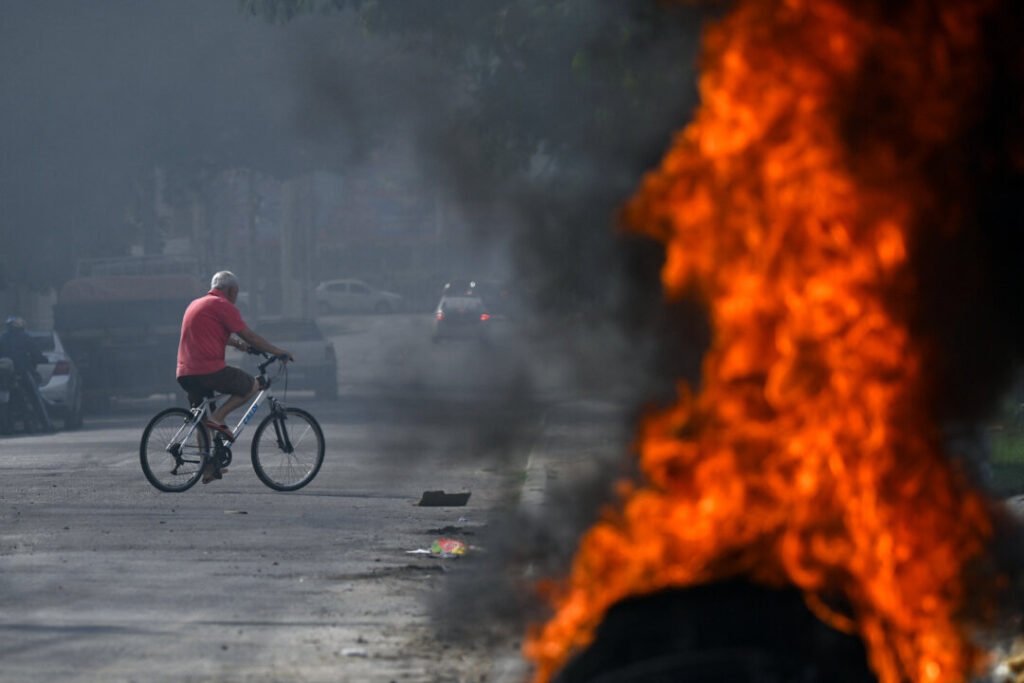

A man rides a bicycle past burning tires during an operation targeting drug trafficking at Cidade Alta favela, part of the Israel Complex, in Rio de Janeiro, Brazil, on June 10, 2025. Mauro Pimentel/AFP via Getty Images
A renewed U.S. travel advisory for Brazil highlights ongoing crime risks and recommends that visitors avoid favelas and border regions.
While there were no changes to the overall advisory level, the department provided a more detailed overview for travelers. Violent crimes, such as murder, carjacking, and armed robbery, occur in urban regions of Brazil, the U.S. Department of State said in Monday’s advisory.
It urged visitors to take extra care at night and during dating-app encounters, and to be cautious when withdrawing cash from ATMs or leaving banks.
“Assaults are common, including with sedatives or drugs placed in drinks, especially in Rio de Janeiro,” the department said.
Gang activity and organized crime are widespread in the country, according to the department. Brazil is designated a “Level 2-Exercise increased caution” classification, while some areas of the country are designated as “Level 4-Do not travel,” the most severe of the four advisory levels.
Other countries, including popular destinations in Europe such as the UK, Denmark, and France, also have a “Level 2-Exercise increased caution” designation, mainly due to terrorism, with the risk of civil unrest also cited for France.
Related Stories


The State Department said that U.S. government employees working in Brazil must obtain special authorization to travel within 100 miles of Brazil’s land borders with Bolivia, Colombia, Guyana, French Guiana, Paraguay, Peru, Suriname, and Venezuela.
The advisory warned that if travelers enter informal housing developments, such as favelas and vilas, tour companies or police cannot guarantee their safety.
“Gangs strictly control access to these neighbourhoods,” the department said. “Tourists have been killed after accidentally entering on foot or when following GPS directions while driving.”
In December 2024, an Argentine tourist was shot in the head and chest in Rio de Janeiro when he strayed into a gang-controlled hillside favela on his way to the Christ the Redeemer statue. He died the following month.

Military policemen are transported on a backhoe during an operation to dismantle barricades set up by criminals at the Cidade de Deus favela in Rio de Janeiro, Brazil, on Nov. 24, 2025. Pablo Porciuncula/AFP via Getty Images
In another incident, in April this year, nearly 200 tourists became trapped atop a Rio de Janeiro hill after police launched an operation against a local gang. No visitors were reported to have been injured.
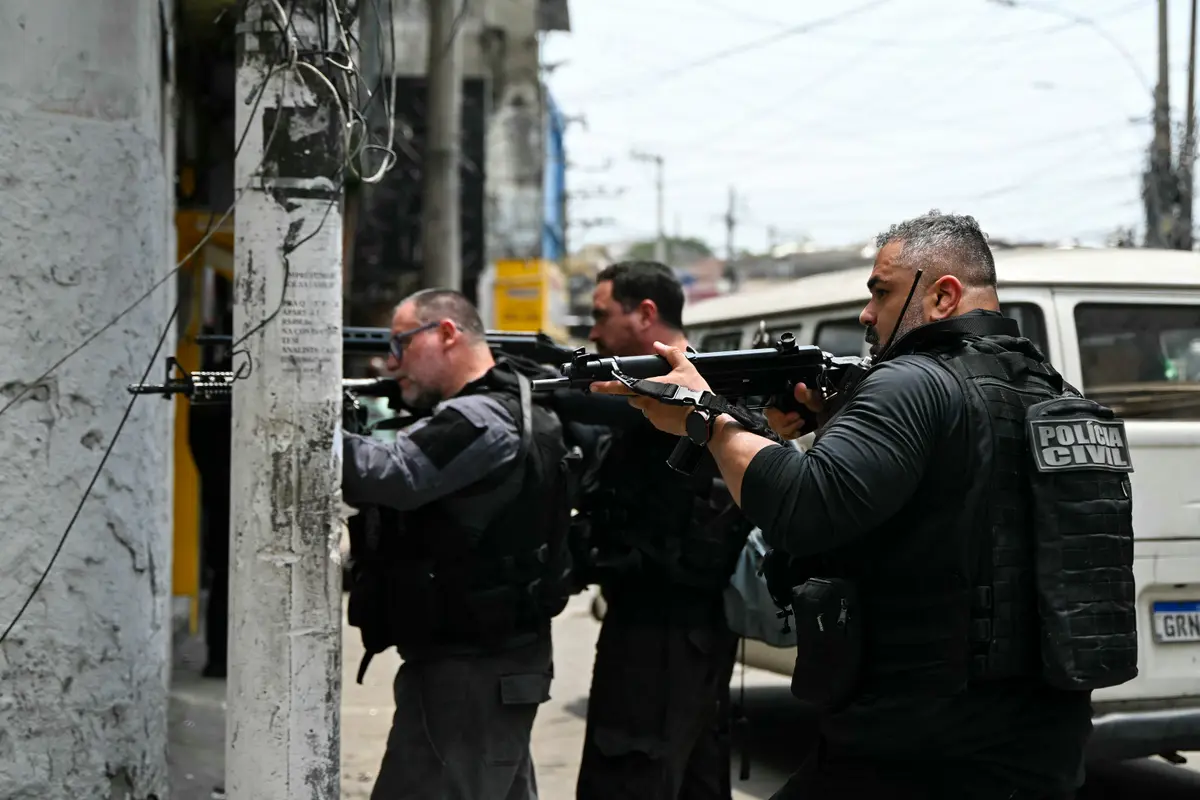
Police officers take cover during the Operacao Contencao (Operation Containment) at the Vila Cruzeiro favela, in the Penha complex, in Rio de Janeiro, Brazil, on Oct. 28, 2025. Mauro Pimentel/AFP via Getty Images
Express kidnapping, in which criminals take people hostage at gunpoint to withdraw cash from several ATMs or transfer funds through banking apps, is an ongoing threat, according to the State Department.
“Kidnapping for ransom involving U.S. citizens is rare but occasionally occurs,” the department said. “U.S. businesses frequently arrange enhanced security for senior executives in Sao Paulo and other major cities.”
Last year, 759,637 tourists from the United States visited Brazil, according to a Jan. 9 post by the Alliance of Mediterranean News Agencies.
The Associated Press and Reuters contributed to this report.