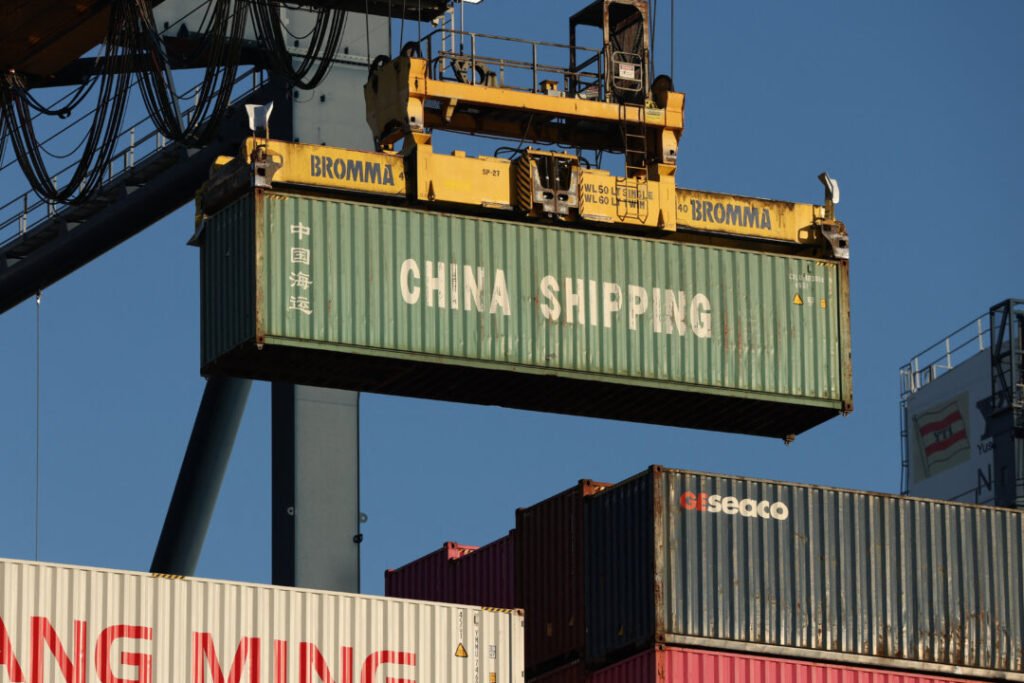

A China Shipping cargo container is unloaded by crane from a container ship at the Port of Los Angeles along the Pacific Ocean in Los Angeles on Aug. 19, 2026. Patrick T. Fallon / AFP via Getty Images
The United States and China on Sept. 27 released lists of products covered by a $30 billion reciprocal tariff reduction deal reached following Chinese leader Xi Jinping’s three-day state visit to Washington last week.
The White House released a list covering 77 types of U.S. imports from China that will be subject to tariff cuts, including fireworks, tableware, artificial flowers, blankets, bed linens, highchairs, child safety seats, toys, fish hooks, and holiday decorations.
It issued another list of U.S. exports to China covering 1,619 types of items, which includes agricultural commodities, personal care products, timber, and medical equipment.
China is set to cut tariffs on some U.S. agricultural goods, including corn, wheat, meat, and dairy products, according to a list jointly issued by the Chinese Commerce Ministry and the White House. The list, however, doesn’t include soybeans, for which China is the largest buyer.
U.S. Trade Representative Jamieson Greer said the two nations have identified $30 billion of trade in non-sensitive goods from each side that could benefit from “more favorable tariff treatment in the future.”
“From agricultural products to medical devices, President Trump is unlocking improved market access for about 30 percent of U.S. exports to China, while benefiting consumers with imports from China of household goods, toys, and other products that the United States generally does not import from other countries,” Greer said in a statement.
Related Stories


The Chinese Commerce Ministry said in a separate statement that the tariff reductions will take effect after both sides complete the required procedures under their respective domestic laws, with further details on the tariff cuts to be released later.
The ministry said the agreement would help to stabilize bilateral economic and trade relations between the two nations, while also creating “favorable conditions for China’s exports” to the United States.
The White House first announced the deal in a Sept. 25 fact sheet, saying both sides agreed to establish a Board of Trade to recommend more favorable tariffs on $30 billion worth of non-sensitive goods from each side. The board also launched a working group to address market access barriers in the agricultural sector.
The two leaders “discussed fostering peace and prosperity to enhance confidence for businesses and consumers around the world,” the White House said, adding that the United States and China would pursue “a constructive relationship of strategic stability.”
Tom Ozimek, The Associated Press, and Reuters contributed to this report.