
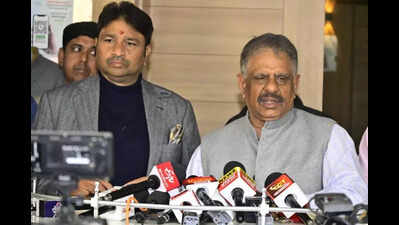
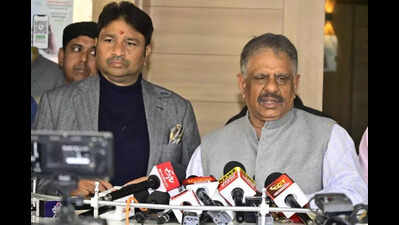
Jaipur: A fierce debate erupted in the Rajasthan Assembly Thursday during the Question Hour as state health minister Gajendra Singh Khimsar faced criticism regarding the delay in framing rules under the Right to Health Act.The Act, notified on April 12, 2023, is yet to see its essential rules implemented, prompting Congress MLA Harimohan Sharma to question the state govt’s commitment to the health of its citizens.
Khimsar’s response ignited further controversy when he attributed the legislation to a political manoeuvrer by the previous Congress govt, asserting that it was rushed through without proper stakeholder consultation as an election tactic. He claimed that the current BJP govt’s MAA Scheme, which offers extensive healthcare services, renders the Right to Health Act redundant, further questioning the Congress’s failure to frame rules during its governance. The tension escalated as Leader of Opposition Tikaram Jully sought clarification on the govt’s intentions, accusing the ruling party of jeopardising public health. His remarks incited a reaction from Congress members, who stormed the well of the House in protest, leading Speaker Vasudev Devnani to call for order and warn of adjournment. Following a brief period of disorder, Congress MLAs returned to their seats but later staged a walkout in protest against Khimsar’s comments. Former Chief Minister Ashok Gehlot, the architect of the Right to Health Act, also criticised Khimsar’s assertions, saying, “These people could not understand the Chiranjeevi Scheme, nor could they grasp the concept of free medicines.” Gehlot said the previous Congress govt’s free and cashless treatment measures, including free medicines, diagnostics, treatment and surgeries, along with health insurance coverage up to Rs 25 lakh, were unmatched and had influenced other states to adopt similar models. He alleged the current BJP govt was yielding to the “medical lobby” and portraying the legislation as unnecessary. Gehlot said the health minister’s comment in the assembly that there was no need for the Right to Health Act was like rubbing salt into the wounds of poor and middle-class families burdened by rising medical expenses.