
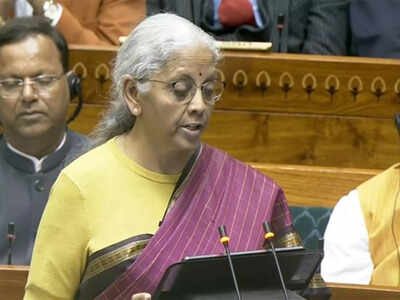
The Union Budget 2026 has been presented, with Finance Minister Nirmala Sitharaman outlining the government’s roadmap for economic growth. For India’s tourism and hospitality industry, the budget was closely watched by industry people on how the budget announcements will set an agenda for the industry’s next phase of development. From connectivity and infrastructure to targeted tourism initiatives, the announcements offer insight into what lies ahead for hotels, travel companies, investors, and allied sectors.The sector had been seeking stronger budgetary support to boost new air routes, expand infrastructure, and stimulate both domestic and international travel.

Tourism related stocks also were looking positive after the Finance Minister put focus on building indigenous tourism. Shares of travel and tourism companies rose as much as 10 percent after the announcement, as investors bet on the industry growing in coming years.In her speech, the FM proposed developing 15 archaeological sites to promote heritage tourism in the country. Places like Sarnath and Hastinapur will be developed. She also proposed a plan for scaling 10k guides in well known tourist hubs. Comprehensive documentation of this work will be done and extended to a range of spiritual historic sites in the country, so as to better implement preservation efforts while promoting tourism driven economic development.The Budget also outlined plans to introduce mountain train services in states such as Himachal Pradesh, Uttarakhand, and Jammu & Kashmir. These services are intended to improve connectivity in hilly regions while promoting tourism in areas that are often difficult to access.
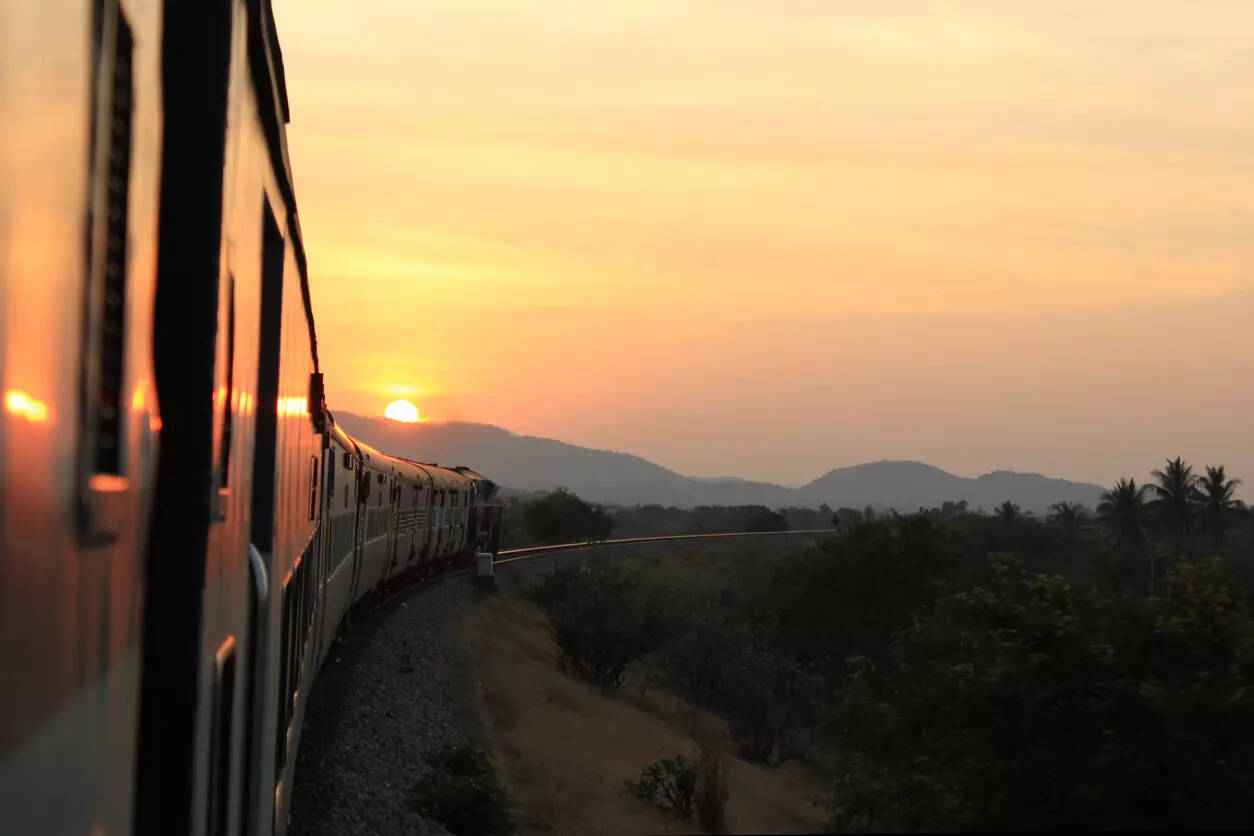
In a big infrastructure push, Sitharaman also proposed starting work on seven high-speed rail corridors to connect Indian cities and improve long-distance travel. Announcing the Union Budget 2026, she said these corridors would connect important economic, industrial and cultural nodes of the country to reduce travel time, increase logistics efficiency and growth in a balanced manner.The high-speed rail corridors to be covered by the bill are:Mumbai–Pune,Pune–Hyderabad,Hyderabad–Bengaluru,Hyderabad–Chennai,Chennai–Bengaluru,Bengaluru–Varanasi, andVaranasi–Siliguri.These corridors are intended for enhancing connectivity in western, southern and eastern part of India as well as connecting economic centres to technology hubs.Here’s how the industry leaders reacted:“What stood out for me in this Budget is that it doesn’t treat travel as a one-sided story. Outbound travel needed a course correction, and cutting TCS on foreign tour packages to 2% does exactly that, it takes away a friction that travellers were feeling every time they planned a trip. On the inbound side, the intent is clearly longer-term. What stands out is the emphasis on cultural and experiential travel, whether through developing archaeological sites, strengthening Buddhist circuits, or building skilled local guide networks, tells us the focus is finally shifting to how India is experienced, not just how many people arrive. If this is executed well, it could move Indian tourism from being crowded and transactional to curated and experience-led.”— Karan Agarwal, Director, Cox & Kings“It is encouraging to see the Union Budget recognise tourism as a strategic economic catalyst driving employment, strengthening local enterprise, and contributing to foreign exchange while placing India’s cultural and natural heritage at its core. As one of the country’s most employment-intensive and revenue-generating sectors, tourism has the capacity to play a far more expansive role in India’s growth story, and the Budget’s focus signals a clear intent to unlock that potential responsibly.For Uttarakhand, the emphasis on sustainable and responsible tourism is particularly significant, as the state’s long-term appeal is intrinsically linked to the protection of its forests, rivers, and biodiversity. The proposal to upgrade the National Council for Hotel Management & Catering Technology into a National Institute of Hospitality, alongside structured upskilling of 10,000 guides, will meaningfully enhance service quality and destination interpretation. Initiatives such as the National Destination Digital Knowledge Grid and curated experiences like bird-watching trails further reinforce a model of tourism rooted in knowledge, conservation, and community engagement an approach that aligns strongly with the ethos of Jim Corbett National Park. Overall, the measures outlined lay the foundation for a more resilient and enduring tourism economy, built on skill development, environmental stewardship, and shared community benefit.”– Ayu Tripathi, Director, Aahana Resort“I commend Finance Minister Nirmala Sitharaman on the Union Budget 2026–27 for recognising the strategic importance of medical tourism in India’s healthcare growth story. The announcement of five regional medical tourism hubs is a strong and timely step that will enhance India’s position as a global medical value travel destination. By integrating modern healthcare with AYUSH systems, diagnostics and rehabilitation, the budget lays the foundation for a more coordinated and patient-centric ecosystem. The emphasis on private sector participation and strengthening healthcare capacity will improve service delivery and scalability. While further policy support over time can accelerate global patient inflows, the budget clearly demonstrates a forward-looking approach to building a competitive and resilient medical tourism ecosystem that contributes to economic growth.”– Shaaz Mehmood, Founder, Medijourn Solutions Private Limited“The move to include temple towns in the City Economic Regions is very bold and appropriate. The allocation of ₹5,000 crore per CER over a period of five years will help modernise infrastructure, fuel local trade and tourism and translate rising visitor numbers into higher transaction value revenues. This, in fact, will turn temple towns into self-sustaining engines of economic growth while maintaining the sanctity and culture of these sacred spaces.The budget allocation is a critical enabler for the CHESS- G doctrine, a six-pronged strategic framework introduced by Temple Connect. It determines how effectively the model translates from intent to execution across its core pillars. Targeted investment will ensure better convenience infrastructure, hygiene standards, experience design, safety protocols, sustainability integration, and growth activation. We are speaking of economic growth that is centred on inclusion, enabling livelihoods for local communities like artisans, local vendors, e-auto drivers, MSMEs, temple custodians, as well as amplifying local hospitality and temple tourism. This holistic temple-city development is a foundational pillar of a truly Viksit Bharat. Until now, we were operating like the most organised-unorganised sector. However, the temple ecosystem has a higher scope and needs more financial boost from the various state governments and a higher participation from the Culture and Tourism outfits supporting the cause of Empowered Temple Economy & it’s Ecosystem to become much more organised with targeted allocation, cross-ministerial co-ordinations and structured policy support.”– Shri Giresh Vasudev Kulkarni, Founder of Temple Connect and ITCX International Temples Convention and EXPO