

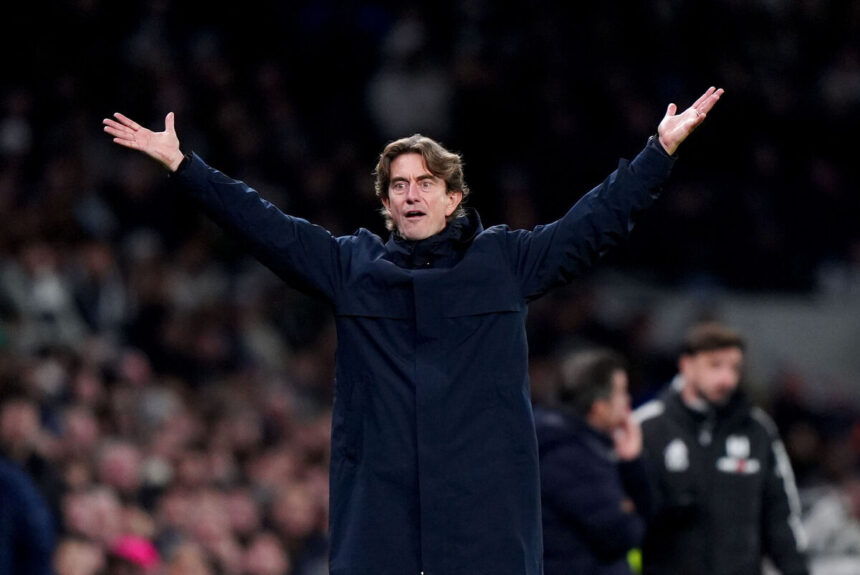
Don’t talk about Spurs. Don’t talk about Spurs. Don’t keep returning to Spurs, bloodshot and shivering. Don’t end up twitching on a Manhattan street corner, nodding at Jean-Michel Basquiat as he drifts past, waiting for your Spurs man to appear out of a fire escape, uncork his Spurs pouch, and say what do you need, while you chatter about just wanting to return to the club DNA, whatever that is, nobody knows, but it’s Spurs, and Spurs is your wife and it’s your life and, you know, sources close to sources say a swoop for German wunder-coach Helmut von Wangerburg may actually be at an advanced … So, Spurs then. It’s true that the media are addicted to this club. But it is also an understandable response to an entity that has become a content machine, perfectly structured to meet the requirements of any moreishly successful streaming drama.
Those requirements are: action that is endlessly repeatable but always essentially the same. Nothing ever really happens. But there is still a strong sense of things always happening. And the main characters must appear to be stuck together inexorably in the same space, at least until they can be replaced by others who are also stuck together in the same space.
In this context sacking the manager has become a major plot beat in every series, or at least one of the few key things that can still happen. Such is the nature of elite football, the narrowing of possibilities – same match-ups, a few league positions either way – that this is one of the few remaining story arcs.
It’s fun. It’s ritualistic. It’s a marker in the year. The fascination of the kingdom of Narnia stories, their basic horror, is the idea of endless winter without Christmas, something children immediately recognise as terrifying. This would be Spurs without a managerial crisis. Endless autumn. Finish fifth or sixth. Revenue sustained. No eyeballs, no heat, no jeopardy.
At the end of which the Spurs job has become a kind of public meat grinder. This is the football equivalent of one of those internet porn influencers making a bid for the 24-hour world headcount record. This is bodies, numbers, men through the door, endless disposable public couplings.
There are still variations. Ange was the complex breakup with feelings. But we also have the speed date, the Nuno. Ten minutes eating tapas with a sad Portuguese in a quilted cape. Half an hour of a seasick Thomas Frank. No attachment. No scars. Move on.
It would be wrong to assume this isn’t going to do something to you along the way. So far it has involved an intensifying of the Spurs identity. Has any other club won its first trophy in years, danced in the streets, qualified for the knockout stages of the Champions League, while simultaneously sacking two managers and entering a state of crisis and apocalyptic depression? It feels oddly reassuring. If a football club is, in the end, just a feeling, this one remains fiercely true to itself.
But there is an evolution here too, and in the league more widely. The difference is: the players know. They have become sentient. They recognise they are active not passive participants in the cycle. And this changes the job fundamentally.
This is not to suggest Frank was ever a good fit. Joyless afternoons. The complete disaffection of the paying public. A style of football that felt like staring at one of those Renaissance paintings of rotting oranges and a skull full of flies. These are all excellent reasons to sack a manager.
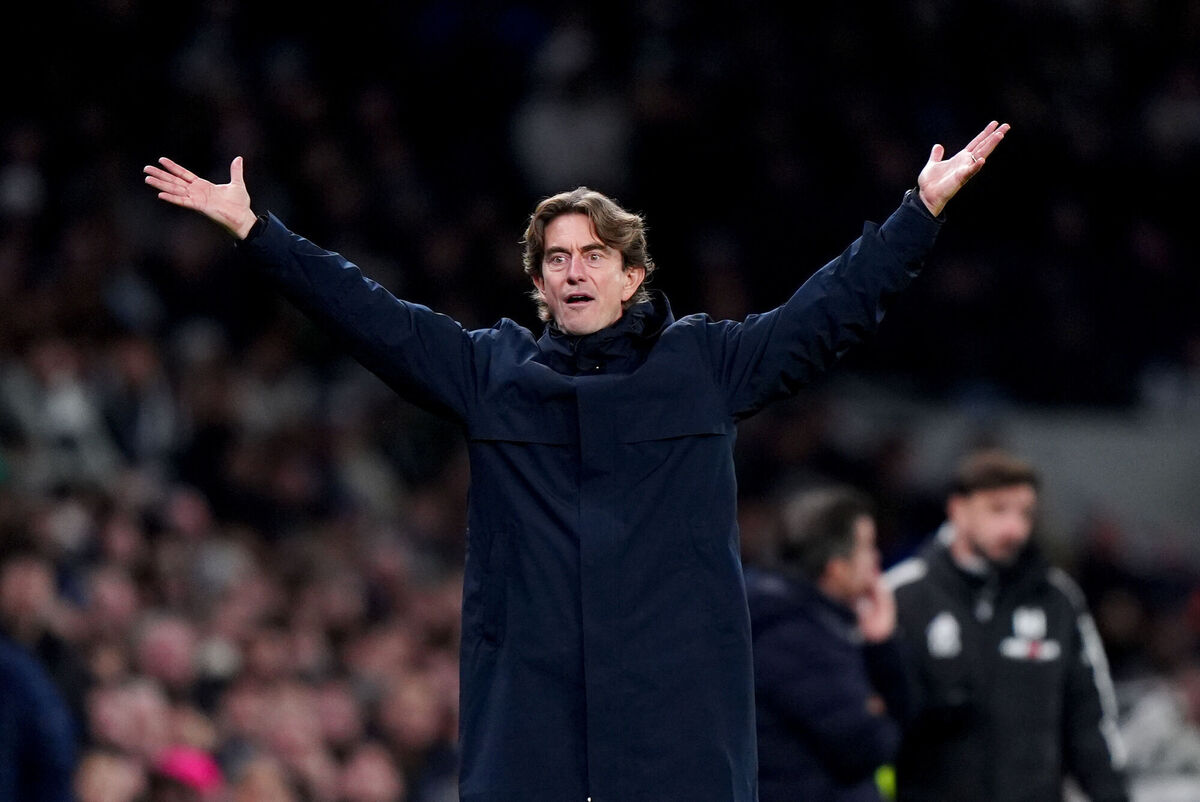
In Frank’s defence, this is also a club that will bend you out of shape. It did things to José Mourinho, who overnight became an overcoat and a scowl, a legacy meme. Ange Postecoglou went from amiable football-dad to depressed mountain bear. Antonio Conte was gripped with such feral rage in his final press conferences you expected to look down mid-rant and note that he was simultaneously taking bites from a hunk of dripping raw meat.
Frank was diminished very quickly. He seemed to become skinnier and smaller. He will be back, no doubt, energy restored. To put all of this at his door would be like blaming the Chernobyl nuclear scientists for melting into their lab coats next to the exposed reactor core. You know, we really should sack Under-Curator No 2. It might help for a while, but you’ve still got a mass radiation event with a half-life of a billion years. It is a stranger place now. The job was too big for Frank. But what is the job exactly? This week Spurs and Nottingham Forest have sacked a manager in circumstances that have generated long and fascinating reports on how the feelings of players and staff had a bearing on this.
The best summary of the Spurs situation involved a dizzying cast of characters. One executive said Frank should be sacked in November. Another executive rejected this. Frank dropped players for being late and some players liked this, while others did not. He backed Cristian Romero, and some liked this while others didn’t. The same cacophony surrounded Sean Dyche. Some of the players were spooked by his tellings-off. Some liked his style, then didn’t. Elliot Anderson has his eye on a £100m move. Morgan Gibbs-White could be an elite player. Will he be elite in a Dyche team?
How to survive this? The royal court dynamic, the competing agendas. It is in the nature of this level of Premier League club, places where vast amounts of money are being sluiced through, where profitable stasis is the goal. Meanwhile the only really achievable target for some very good players, who always need a target, is to move to a bigger club, become an A-lister, make the additional millions, become Kane, Mané, Semenyo.
So the better players will look at a manager and say: can this person help me do this? And managers such as Frank often don’t scale up. At a Spurs-level club this is now highly specialised. You need to create a story and a vibe. You have to feel big, look cool, talk well. Create moments. You basically have to seduce these players, who already have major contracts, who have the hope, if not always the final level of talent to reach the very top, into believing you can be their guide.
This is why some of the better players don’t want to play the Dyche style. It’s why Micky van de Ven might realise, on some level, that two years with Frank isn’t going to lead to Real Madrid. It’s why a Poch type will be more popular here than a capable data wonk. It’s also why, when that shared ambition fails, we get the spectacle of teams that just fall through the floor, a chemistry that has collapsed.
There are two obvious knock-on effects. The hierarchy escapes scrutiny. The real failing at Spurs lies in the executive responsible for some really vague recruitment, manager included. These people can now get lost in the corporate matrix, free to pronounce on the fate of their own hiring mistakes.
And second, there is a death of meaning here, a loss of structure. Can we trust this spectacle? Managers are often accused of having favourite players. It seems absurd. But then again, the players can also get you sacked. Are we playing games and picking teams to win at all costs every time? Or to secure the future, the brand, the job?
And does any of this really matter when even the unhappiness of fans is another drama beat? As ever supporters are caught in this process. What do Spurs fans want? A feeling. Fun days out. Familiar shapes and colours. A sense that this is a mutual relationship, albeit here even your pain is content, your frustration part of the story, evidence of demand, which is no doubt doubly useful when a sale may be in the air.
For Spurs instant uplift under a new manager seems inevitable. Motivation has never been so key to how teams perform. And even if Frank never really stood a chance, he still played a part in the ensemble, fuel for the fire, another hit of that same irresistible narrative substance.