

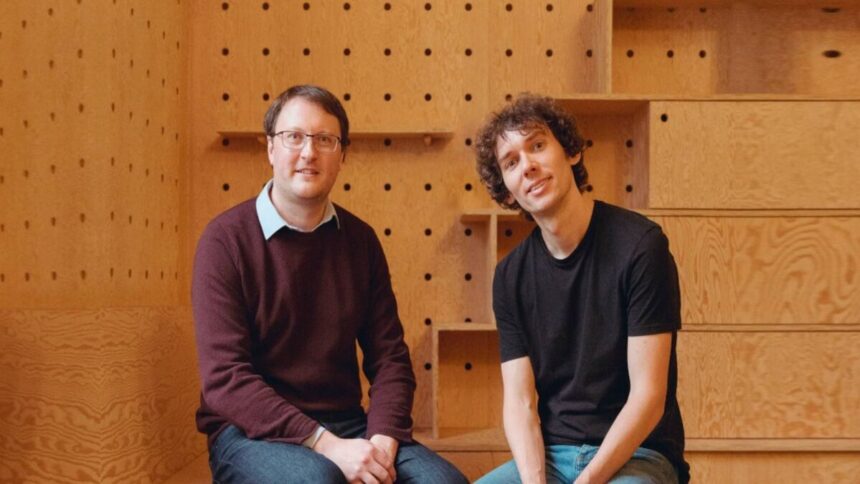
Twelve months have passed since Tines – the Dublin and Boston-headquartered workflow automation platform – achieved unicorn status.
In business terms, unicorns are startup companies valued at over US$1 billion, which remain privately owned and whose shares are not yet listed on a stock market.
In this Q&A, co-founder Thomas Kinsella, discusses the thinking behind Tines’ growth, the decisions that shaped its trajectory, and what building a global software company has taught him about scale, culture and focus.
“We co-founded Tines because we were living the problem ourselves. We’d spent years working in cybersecurity, and while we enjoyed the work, it was incredibly manual and fragmented.
“Security teams are expected to connect dozens of tools, handle constant alerts, and respond quickly, often ad-hoc, or with workflows stitched together under pressure. Automation was clearly the answer, but the tools available at the time were either too rigid or required heavy engineering support.
“What we wanted was a platform that security teams could use themselves, one that could easily connect to all the tools in a company and allow teams to build and run their own workflows. When it became clear that that product didn’t exist, we decided to build it.”
“Becoming a unicorn was an important milestone, but we’re careful not to equate fundraising with success. Capital gives you the opportunity to do more but it doesn’t guarantee outcomes. That said, raising a total of $275 million, including our most recent $125 million round led by Goldman Sachs, SoftBank, and others, has meaningfully raised our ambition and sharpened how we think about the future.
“Since then, we’ve doubled down on our position as a category leader in intelligent workflows, accelerated international expansion, and invested heavily in our teams in Ireland and the US. We’ve also deliberately expanded beyond our security roots into IT use cases, helping teams automate things like onboarding and offboarding, patching, and other high-volume operational work.
“AI has also become foundational to how we think about the future of workflows. We’ve invested heavily there, including building an agent builder and support for AI standards such as MCP servers and clients while staying focused on reliability, control, and security. Today, success looks like building an enduring company: supporting some of the largest organisations in the world, including multiple Fortune 10 customers, expanding into the US federal market, and delivering long-term customer impact rather than focusing on valuation alone.”
What cultural or business differences between the US and Ireland have most influenced how you run Tines?
“The US and Ireland have more in common than people often assume, but there are a few market dynamics that mattered early on. In the US, particularly on the West Coast, there’s a high concentration of cloud-native companies and teams that are very comfortable evaluating new technology and working with startups. Many have grown up alongside early-stage vendors, which made it easier to pilot, iterate, and learn quickly in our early years.
“What’s changed significantly is the pace of adoption across Europe. You’re now seeing a growing number of digital-native companies, alongside many large, established organisations investing heavily in modernisation, AI and automation. For us, that’s translated into strong and continued success across regions.
“At this stage, the differences matter far less than they used to. We support a wide range of customers globally, from highly digital-native organisations to some of the world’s largest enterprises, and the common thread is the same everywhere: teams want AI and automation that’s reliable, secure, and gives them control.”
“The perception has changed meaningfully. A generation of Irish-founded companies has shown it’s possible to build and scale truly global businesses, which has raised expectations and confidence. Irish tech is no longer seen as regional, it’s seen as ambitious and world-class.
“From a customer perspective, geography matters less. Customers care about buying the best product and working with a company they can trust to be around long-term. Seeing Irish companies scale successfully reinforces that confidence.
“For investors, success means building companies that can scale to hundreds of millions in revenue, endure over time, or can IPO or exit at scale. Irish companies increasingly understand that expectation and are building with that level of ambition from the start.”
“Irish companies benefit from a strong storytelling culture, a supportive diaspora, and organisations like Enterprise Ireland that help open doors early on. Those advantages can make a real difference in gaining initial traction and building relationships.Where companies often struggle is underestimating the focus and investment required.
“The US isn’t a single market, and success rarely comes from broad ambition. It comes from deep specialisation, clear positioning, and commitment. Scaling in the US also requires materially higher investment, in people, marketing, partners, legal and operational infrastructure. Companies that plan for that reality early and commit fully are far more likely to succeed.”
“The most important factor is experience compounding. We’re now seeing a cohort of Irish founded companies that have scaled successfully in the US, and that creates a much stronger base of pattern recognition, founders and operators who understand what the journey really involves and are less likely to repeat early mistakes.
“It’s also important that US expansion is treated as a business decision, not a milestone.
Companies that succeed tend to start with a very specific customer, a clearly defined problem, and a focused plan for who they’re selling to, rather than trying to “crack the US” all at once.
“Finally, maintaining identity doesn’t mean trying to turn a global company into an Irish company. What matters is preserving enough shared DNA for teams in the US, Ireland, and elsewhere in the world to work effectively together.
“That comes down to strong internal communication, clear operating rhythms, and intentional collaboration across regions. In distributed, asynchronous organisations, alignment has to be designed. When companies get that right, they can scale globally without cultural homogenisation, while still operating as one coherent business.”