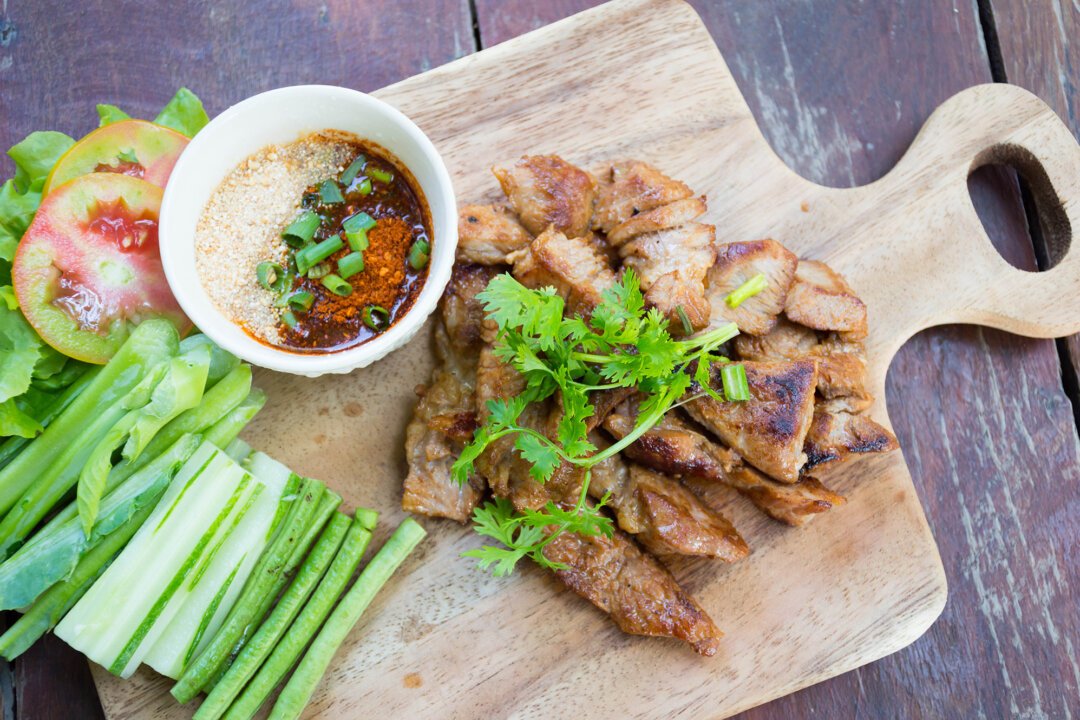
From time to time, I see deals on pork shoulder, the large cuts of 10 or more pounds of meat. I have often passed it over, thinking only of the pulled pork option for preparing it, and wondering how much freezer space I have for the leftovers after my wife and I have our fill of it. Then I learned to make carnitas—again, in large quantities. But when I stumbled upon a Thai cook using it to make one of our favorite street foods, that settled it: Get the pork shoulder. Make all three. Freeze the leftovers. If it includes the flat scapula blade bone, even better—save it for making soup broth!
Thai restaurants may have kor moo yang on the menu, often as a small plate to be shared with the table (as many Thai meals are, in fact). Still, it is also popular as a street food, and you can find vendors grilling it right at their carts, often serving it with som tam, a spicy green papaya salad.
These are dishes from northeastern Thailand, a region called Isan. The traditional cuisine there differs from that of other regions. They are not big on coconut milk-based curries, and rather than the staple jasmine rice, they serve glutinous “sticky” rice, often alongside grilled meats. Many of the foods and dipping sauces tend toward a sour or fermented flavor, and are similar to Lao food, right over the border. (My Thai friends contend that the Lao versions of the same dishes are a bit sweeter.)
Kor moo yang translates to “grilled pork neck,” although that is slightly misleading. This is not strictly the neck bone, an item useful for making broth, but rather the pork jowl, prized for its rich fattiness, or at least the pork collar, the area from the lower neck across the upper shoulder. In a general grocery store, it’s better translated as Boston butt or upper pork shoulder; Asian stores may sell actual pork collar butt. What makes this meat so great is that it is tender, well-marbled, and not prone to overcooking.
If you are buying the upper shoulder, you will be cutting thin steaks from the top. I typically cut off a pound or two for this dish and leave the rest for the crockpot or Instant Pot.
Trivia note: The term “pork butt” sounds like someone got his pig anatomy confused. But the name originated from colonial days, when butchers stored cheap cuts in a barrel, also known as a butt (and thus the term “a buttload” of something).
Related Stories
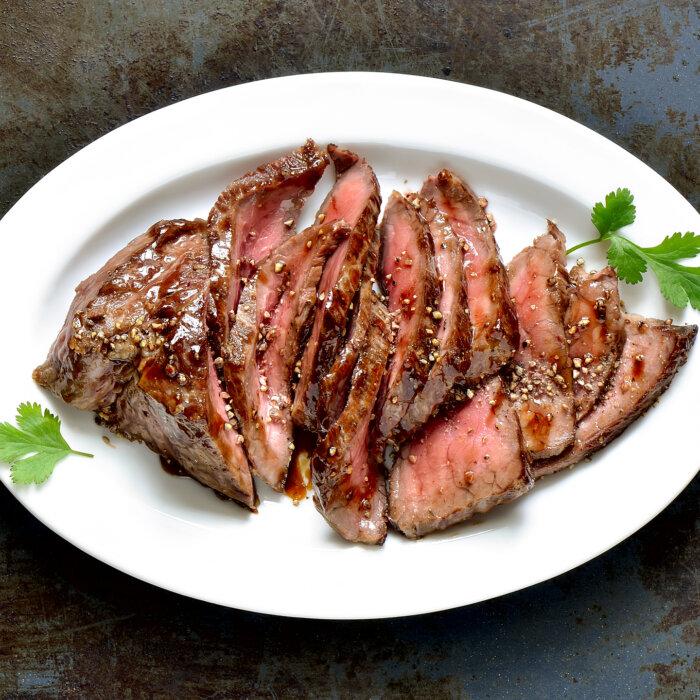

Pork shoulder is tender and well-marbled, making it ideal for grilling. Kevin Revolinski
Cutting Steaks
Use a long, sharp knife and slice the meat either around the bone or after completely deboning the roast. Make your cuts across the grain of the meat and aim for a thickness of about 3/4 inch, or even a bit less. They will cook through fairly quickly. A trick to make cutting easier is to put the meat in the freezer for 60 to 90 minutes, just enough to firm up. Otherwise, just be patient; let the blade do its job with each pass. No need to worry too much about the shapes; most of us are not professional butchers. They will be cut into strips for serving anyway. Do your best to make them all the same thickness.
Mix up the marinade ingredients, adding a dash or two of liquid smoke to mimic a grilled flavor, and marinate those cuts in the fridge for at least an hour or overnight if you are planning ahead. The marinade gives the meat a slightly darker color, and the sugar helps it brown, whether you are grilling or wok-frying.
In the meantime, make the special Isan-style dipping sauce, nam jim jaew, which combines sour, sweet, and umami with a mild, crunchy texture—perfect for complementing the rich, fatty, and lightly smoky meat. No law says it needs to be spicy, although no one’s saying you can’t add a Thai chili or red chili powder. These ingredients should be readily available at most grocery stores and, in particular, at an Asian-focused market. Sweet soy sauce has an almost molasses-like taste. Use it sparingly.
Toasted rice is often sold in a jar like a spice or seasoning, but it is very easy to make yourself. Use uncooked rice grains, and toast them over medium heat in a frying pan. Keep stirring them until they turn golden, then take them off the heat to cool. Once cooled, they can be run through a spice grinder or even a whirling blade coffee grinder. Avoid grinding them into a fine powder; you are not making flour. The pieces may be uneven, and the texture should be like coarse sand.
When you are ready to eat, heat a wok to medium-high (electric stove) or medium (gas stove). It should be hot enough to get a good sear, but not so hot that you start charring the meat before the center reaches medium. For these steaks, that should be about three minutes per side. Then serve it in finger-sized slices with the dipping sauce, and watch it all disappear quickly.