
NEW DELHI: Pakistan’s decision to boycott their Group A match against India at the ICC Men’s T20 World Cup 2026 has shifted the focus to how such a situation is handled under ICC playing conditions and what India must do to secure a walkover.Go Beyond The Boundary with our YouTube channel. SUBSCRIBE NOW!The boycott was announced through a social media post by the Government of the Islamic Republic of Pakistan, which stated that while the Pakistan team has been granted permission to participate in the tournament, it “shall not take the field” for the match scheduled against India on February 15 in Colombo. Pakistan’s players, who remain cleared to play the rest of the World Cup, learned of the decision through the same government communication.
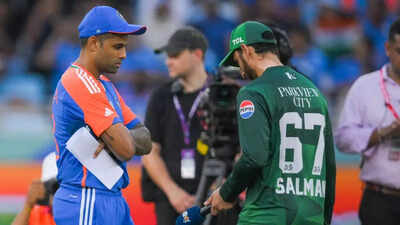
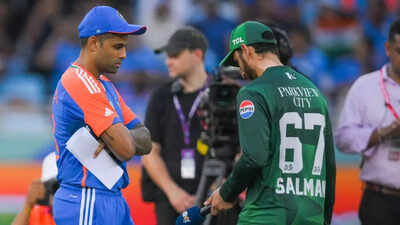
Under ICC playing conditions, a walkover is not granted simply because a team announces it will not play. For a match to be officially forfeited, one side must fail to present itself at the venue at the appointed time for the coin toss. Until that point, the fixture is treated as going ahead as scheduled.As a result, India are required to follow all match-day procedures. India captain Suryakumar Yadav is expected to arrive at the ground on time and walk out for the toss at the scheduled hour. If Pakistan do not appear for the toss, the match referee will formally award India a walkover, which carries two points in the group standings.India’s preparations will therefore mirror those for a normal fixture. According to sources cited by news agency ANI, the Board of Control for Cricket in India (BCCI) has confirmed that the team will travel to Sri Lanka, train as per schedule, attend the mandatory pre-match press conference and report to the R Premadasa Stadium on match day. Only the match referee has the authority to call off the game and confirm the walkover.The ICC, meanwhile, has acknowledged the Pakistani government’s statement but said it is still awaiting official communication from the Pakistan Cricket Board (PCB). In its response, the ICC noted that selective participation is difficult to reconcile with the principles of global tournaments, which are built on fairness, consistency and sporting integrity. It also warned that such a move could have wider implications for Pakistan cricket.Despite those concerns, the immediate process remains procedural rather than political. Unless Pakistan’s position changes before match day, the outcome will hinge on a single moment — whether their team appears for the toss. If they do not, India will be awarded the match without a ball being bowled, in line with ICC regulations.