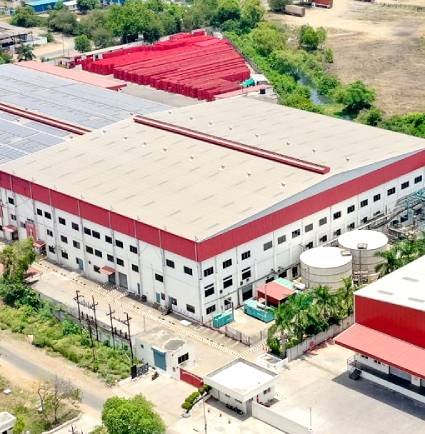
Superior Company : In today’s competitive global marketplace, the term “superior company” resonates deeply with consumers, investors, and industry analysts alike. But what does it truly mean for a company to be “superior”? It transcends beyond just financial performance; it encompasses a commitment to quality, innovation, sustainability, and community impact. This comprehensive guide explores the multifaceted dimensions of a superior company, drawing insights from industry leaders like the Superior Group of Industries, while providing a detailed roadmap for what makes an organization truly exceptional.
1. Defining the “Superior Company” in the Modern Era
The concept of a “superior company” has evolved significantly over the past few decades. It is no longer solely defined by profit margins or market share. A superior company is one that harmonizes profitability with purpose. It leads its industry through cutting-edge technology, fosters a culture of employee empowerment, and maintains an unwavering commitment to social responsibility.
The Three Pillars of a Superior Company
-
Operational Excellence: This involves optimizing processes, supply chains, and production to deliver high-quality products or services efficiently. For instance, companies in the fast-moving consumer goods (FMCG) sector invest heavily in advanced machinery to ensure precision and consistency .
-
Innovation and Adaptability: Superior companies are not static; they evolve with changing consumer needs. This includes investing in Research and Development (R&D), embracing digital transformation, and adopting sustainable practices.
-
Human-Centric Approach: At the core of every superior company is its people. This includes fair labor practices, providing growth opportunities, and engaging in Corporate Social Responsibility (CSR) to uplift the communities they serve.
As one industry leader noted, innovation must be “inclusive before it is industrial,” ensuring that the benefits of growth reach the grassroots level .
2. The Journey of a Superior Group: A Case Study in Excellence
To truly understand what a superior company looks like, we can study the evolution of entities like the Superior Group of Industries (SGI) . Its journey from a small enterprise to a multinational powerhouse illustrates the principles of strategic growth and resilience.
2.1. Humble Beginnings and Rapid Expansion
The foundation of SGI was laid by Late Professor M.M. Agrawal Ji, a distinguished parliamentarian and philanthropist, in 1964 . The group’s industrial journey began in earnest in 1989-90 with the establishment of Superior Drinks Pvt Ltd (SDPL) in Nagpur . This was followed by a series of strategic expansions:
-
1991-92: Narmada Drinks Pvt Ltd (NDPL) was established in Bilaspur, Chhattisgarh .
-
1998-99: Entry into the beer manufacturing sector with Superior Industries Ltd (SIL) by acquiring a unit from United Breweries .
2.2. Strategic Partnerships and Capacity Building
A key turning point for the group was its partnership with global giants. SDPL and NDPL became franchise bottlers of The Coca-Cola Company, allowing them to manufacture popular brands like Thums Up, Coke, and Sprite . This partnership required them to meet global standards of quality and efficiency.
The group expanded its footprint to include a Greenfield project in Jabalpur (Udaipur Beverages Ltd) completed in a record 117 days, earning a place in the Limca Book of Records . They also established Indo-European Breweries Ltd (IEBL) in Maharashtra under a co-pack agreement with Coca-Cola India .
3. The “Superior” Approach to Manufacturing and Technology
Superior companies view manufacturing not just as a means to an end, but as a competitive advantage. They integrate advanced technology to ensure product quality, reduce waste, and respond quickly to market demands.
3.1. State-of-the-Art Infrastructure
The manufacturing facilities of a superior company are a testament to its commitment to quality. For example, the plants operated by the Superior Group feature:
-
High-Speed Production Lines: Facilities like SDPL and IEBL are equipped with advanced lines from global leaders like KRONES and KHS. These can produce 600+ bottles per minute (BPM), ensuring high efficiency .
-
Specialized Packaging Capabilities: The ability to handle diverse packaging—including RGB lines, PET CSD lines, Tetra Packs, and SIG lines—allows for catering to various consumer segments, from urban markets to rural areas .
3.2. Research and Development (R&D) and Innovation
Innovation is the lifeblood of a superior company. At the heart of modern bottling plants is a dedicated R&D unit focused on refining processes and improving sustainability . Recent innovations include:
-
“Thums Up X Force” Launch: The introduction of a zero-sugar variant of a popular beverage, responding to the growing health-conscious demographic .
-
ASP Technology: Investing in Affordable Small-sized Packaging (ASP) technology, which coats PET bottles with silicon dioxide. This extends shelf life from 2 to 6 months—a game-changer for tropical markets like India where logistics and seasonality are complex .
-
Ethanol Production: Diversifying into renewable energy through ethanol production supports the national energy transition and provides a stable market for farmers, reducing agricultural waste .
3.3. Digital and Data-Driven Transformation
The modern superior company is powered by data. With over 659 million smartphone users in India, digital platforms shape consumer behavior. Superior companies are embedding digital intelligence into every process:
-
AI-based forecasting.
-
IT-enabled production.
-
Real-time supply chain visibility .
4. Expanding Horizons: Diversification and Vertical Integration
A hallmark of a superior company is its ability to diversify and integrate its operations to control quality and reduce costs.
4.1. Diversification Across Sectors
While many start in a single niche, superior companies spread their risks and capabilities across multiple sectors. The Superior Group, for instance, is not just in beverages. It has expanded into:
-
Polymers: Superior Polymers India Pvt Ltd (SPIPL) in Kathua produces high-capacity preforms (unblown PET bottles) for backward integration .
-
Transport Services: Superior Transport Services India Pvt Ltd (STSIPL) operates a fleet of 120 commercial carriers, ensuring efficient distribution .
-
Power and Ethanol: Chandrika Power Private Limited produces 100 kiloliters of ethanol per day, marking a significant step into renewable energy .
4.2. Backward Integration
By manufacturing their own packaging materials, superior companies reduce dependency on external vendors. This “backward integration” ensures that quality is maintained from the plastic bottle to the final product . It also helps in optimizing costs, allowing the company to offer products at affordable prices (like the 72ml juice pack) that reach rural consumers .
5. Sustainability and Social Responsibility: The CSR Imperative
In the 21st century, a company cannot be considered “superior” without a robust commitment to Corporate Social Responsibility (CSR). This extends beyond compliance to genuine community engagement and environmental stewardship.
5.1. Environmental Impact and Green Initiatives
Superior companies are leading the charge in reducing their environmental footprint. This includes:
-
Ethanol Blending: Supporting the government’s E20 vision (blending 20% ethanol with petrol) to reduce carbon emissions and enhance energy security .
-
Waste Management: Recycling initiatives, such as the production of RPET fabric from plastic bottles, turning waste into a resource .
-
Energy Efficiency: Retrofitting older facilities with LED lighting and motion detectors to reduce energy demands .
5.2. Community Development and Philanthropy
A superior company invests in the communities it operates in. The Superior Group of Companies has demonstrated this through:
-
Skill Development: Launching Industrial Training Programs under the “Skill India Mission,” offering practical exposure to students from various backgrounds (B.Tech, MBA, ITI) across multiple states .
-
Healthcare Initiatives: Supporting cancer awareness walks, blood drives (over 1,000 pints donated), and programs for children with cancer in El Salvador .
-
Rural Empowerment: Adopting villages and providing farming skills training to combat malnutrition and foster self-sustainability .
6. Achieving the “Superior” Status in Global Markets
The global landscape is competitive. To be recognized as a superior company, businesses must navigate financial prudence and global trends.
6.1. Financial Health and Performance
Financial stability is a key indicator of superiority. Companies like Superior Industrial Enterprises Ltd (listed on BSE) demonstrate performance through metrics like revenue growth, EBITDA, and PAT . However, superior companies balance profit with reinvestment into R&D and employee welfare.
6.2. The Role of Leadership
Leadership drives culture. The transition from a family-led enterprise to a professionally managed entity often marks a shift towards greater scalability. In the case of SGI, the leadership of figures like Mr. Pradeep Agarwal and Mr. Vishal Agrawal has been pivotal in guiding the group toward modern business practices and sustainable growth .
7. How to Identify a Superior Company (For Investors and Consumers)
For the average consumer or investor, identifying a “superior company” involves looking beyond the headlines. Here is a checklist:
-
Check Certifications and Awards: Look for ISO certifications, food safety awards, or recognitions like the Limca Book of Records for operational excellence .
-
Supply Chain Transparency: Does the company control its supply chain? Backward integration often signifies quality control.
-
Innovation Pipeline: Look for companies that launch new products (like zero-sugar beverages) or adopt patented technologies (ASP).
-
CSR Reports: Authentic companies publish detailed CSR reports showing their impact on environment and society.
-
Employee Satisfaction: Companies that invest in training (like the Industrial Training program) tend to have better employee morale and lower attrition .
8. Top 5 Ways a “Superior Company” Leads the FMCG and Beverage Sector
Based on the case studies above, here is how a superior company dominates in the FMCG space:
-
Rural Penetration: Launching products in affordable packaging (e.g., 72ml juice packs) to reach rural India where clean drinking water is scarce .
-
Global Partnerships: Aligning with global brands like Coca-Cola to ensure international quality standards are met .
-
Green Energy Transition: Investing in grain ethanol and ENA to support India’s clean energy transition .
-
Record-Setting Speed: Delivering projects like the greenfield plant in 117 days to capture market quickly .
-
Community Welfare: Combining business goals with social goals, such as providing employment to rural youth.
9. Case Study: Superior Industrial Enterprises Ltd
It is important to note that “Superior” is a name used across multiple independent industries. Superior Industrial Enterprises Ltd (SIEL) is one such entity specializing in the packaging industry, primarily manufacturing corrugated boxes for mineral water and soft drinks . Established in 1991, this entity showcases how a company in a niche sector can focus on quality and tailor-made solutions to create value for shareholders .
While SIEL operates in a specific segment, its focus on customization and profitability aligns with the broader ethos of a “superior company” .
Conclusion: The Blueprint for Becoming a Superior Company
Becoming a “superior company” is a journey, not a destination. It requires a relentless focus on quality, a willingness to innovate for the masses, and a heart that cares for the community and the planet. As illustrated by the journey of groups like SGI, the path involves leveraging technology, diversifying operations, and maintaining a human-centric approach.
Whether you are a business leader aiming to elevate your organization or an investor seeking the next big opportunity, the principles remain the same:
-
Innovate for Inclusion: Ensure your products and services are accessible.
-
Invest in Technology: Stay ahead of the curve with digital and green technology.
-
Empower People: Your employees and community are your greatest assets.
10. Frequently Asked Questions (FAQ)
1. What defines a superior company?
A superior company is defined by its operational excellence, commitment to innovation, strong corporate governance, and positive social and environmental impact .
2. Is the Superior Group of Industries the same as Superior Industrial Enterprises?
No. The Superior Group of Industries (SGI) is a diverse conglomerate involved in beverages, ethanol, and polymers. Superior Industrial Enterprises Ltd (SIEL) is a separate public limited company focused on packaging solutions, listed on the BSE .
3. Why is innovation important for a superior company?
Innovation allows a company to adapt to changing consumer needs, improve efficiency (like ASP technology extending shelf life), and stay ahead of competitors .
4. How do superior companies contribute to sustainability?
They engage in recycling programs, renewable energy (ethanol), reduce plastic waste, and support biodiversity initiatives .
5. What is ASP technology in packaging?
ASP (Affordable Small-sized Packaging) involves a breakthrough innovation that coats PET bottles with a thin layer of silicon dioxide, extending shelf life from 2 to 6 months, which is crucial for tropical markets .
Summary: This blog has broken down the true meaning of a “superior company” using real-world examples. By focusing on technology, sustainability, human values, and strategic growth, any organization can strive to achieve the “superior” status.