

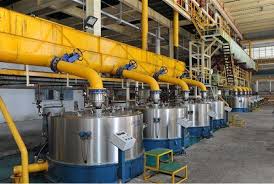
The Complete Sugar Manufacturing Process Step by Step
Sugar. It’s a staple in kitchens worldwide, a fundamental ingredient in countless foods, and a commodity traded globally. But have you ever wondered how that granulated sugar in your pantry gets made? The journey from a towering sugarcane plant or a humble sugar beet to the fine, white crystals is a fascinating and complex feat of engineering and chemistry.
In this comprehensive guide, we will take you through the sugar manufacturing process step by step. Whether you’re a student, a professional in the food industry, or simply a curious mind, this deep dive will cover everything from the field to the final product. We’ll explore the nuances of processing both sugarcane and sugar beets, the machinery involved, and the byproducts created along the way.
What is Sugar?
Before we delve into the process, it’s important to understand what we’re making. Chemically speaking, the sugar we consume is sucrose, a disaccharide composed of two simpler sugars: glucose and fructose. Its chemical formula is C₁₂H₂₂O₁₁. This pure, sweet, crystalline substance is found naturally in the sap of many plants, but it is economically viable to extract it from just two main sources: sugarcane and sugar beets.
While the end product—pure sucrose—is nearly identical, the sugar manufacturing process step by step differs slightly at the beginning depending on the raw material.
Sugarcane vs. Sugar Beets: The Raw Materials
-
Sugarcane: A giant perennial grass that grows in tropical and subtropical regions. It stores sucrose in its stalks. The manufacturing process involves cutting the stalks, crushing them to extract the juice, and then purifying and crystallizing the sugar.
-
Sugar Beets: A root vegetable that grows in temperate climates. The sucrose is stored in the beet’s white root. The process involves washing, slicing the beets into thin strips (cossettes), and then diffusing the sugar out with hot water.
For the purpose of this guide, we will focus primarily on the sugarcane manufacturing process, as it is the source for the majority of the world’s sugar, while noting key differences where they exist.
Why is Sugar Refining Important?
The juice extracted directly from sugarcane or beets is far from the pure white sugar we know. It’s a dark, murky liquid containing water, sucrose, and a host of impurities. This is where refining comes in. The importance of sugar refining can be summarized in four key points:
-
To Remove Impurities: Raw juice contains soil, plant fibers, proteins, gums, and minerals. These must be removed to produce pure sugar.
-
To Remove Color: Natural pigments (like chlorophyll in cane and melanin in beets) give the raw juice a dark green or brown color. Decolorization is crucial for the white, sparkling appearance consumers expect.
-
To Remove Non-Sucrose Substances: Many impurities, if left in the sugar, can affect its flavor, crystallization, and shelf life. Removing them ensures a stable, high-quality product.
-
For Consumer Acceptability: Ultimately, sugar is judged by its appearance, taste, and purity. A rigorous refining process ensures the final product meets these high standards.
Now, let’s break down the sugar manufacturing process step by step.
Step 1: Harvesting and Preparation
The journey begins in the fields.
-
Sugarcane Harvesting: In many parts of the world, sugarcane is still harvested by hand, a labor-intensive process where workers cut the canes close to the ground and strip the leaves. Increasingly, large mechanical harvesters are used, which cut the cane, chop it into consistent lengths (called billets), and load it directly into haulage vehicles. Speed is critical after harvest, as the sugar content in the cut cane begins to deteriorate.
-
Beet Harvesting: Sugar beets are harvested mechanically, typically in the autumn. A harvester lifts the beets from the soil, cuts off the leaves (which are often left in the field as fertilizer), and loads the roots into trucks for transport to the factory.
Upon arrival at the factory, both sugarcane and beets undergo initial preparation:
-
For Cane: The cane is fed onto a conveyor belt and passes through powerful revolving knives and shredders. This process tears the stalks into fine chips and shreds without extracting the juice. The goal is to break open the tough outer rind and internal cells, making it easier to extract the sucrose in the next stage.
-
For Beets: The beets are washed to remove all traces of soil, stones, and weeds. They are then fed into machines that slice them into long, thin, V-shaped strips called cossettes. This creates a large surface area for efficient sugar extraction.
Step 2: Juice Extraction
This is the first major step where the sugar is physically separated from the plant material.
-
Sugarcane – Milling: The shredded cane is passed through a series of heavy-duty roller mills. This is typically a multi-stage process involving 4 to 7 sets of rollers. As the cane passes between the rollers, immense pressure is applied to crush the cells and squeeze out the juice. To maximize extraction, water or thin juice from a later stage is sprayed onto the cane mat before it enters each mill, a process called imbibition. This helps to leach out more sugar. The leftover fibrous material is called bagasse.
-
Sugar Beets – Diffusion: Unlike cane, beets are not crushed. Instead, the cossettes are fed into a large, rotating tank called a diffuser. They move in one direction while hot water (around 70°C) flows in the opposite direction (counter-current flow). This process allows the sugar to diffuse out of the beet cells and into the water through osmosis. The resulting sugary liquid is called raw juice, and the depleted beet slices, now called pulp, are removed for processing into animal feed.
Step 3: Juice Purification (Clarification)
The juice from the mills or diffuser is acidic (pH around 5.5), turbid, and dark greenish-gray. It contains not only sucrose but also soluble and insoluble impurities. The goal of clarification is to remove these impurities to create a clear juice suitable for evaporation.
This process relies on a few key techniques, often used in combination:
-
Liming: Milk of lime (a suspension of calcium hydroxide in water) is added to the raw juice. This serves two primary purposes:
-
Neutralization: It raises the pH of the acidic juice to near-neutral (around pH 7.0 to 7.5). This is crucial to prevent the inversion of sucrose (breaking it down into glucose and fructose) in later heating steps.
-
Impurity Precipitation: The lime reacts with phosphates and other impurities naturally present in the juice, forming insoluble calcium phosphate and other compounds. These flocculent precipitates trap suspended particles like proteins, gums, and soil as they form.
-
-
Heating and Sedimentation: The limed juice is then heated to near boiling point. This step serves several purposes: it sterilizes the juice, drives off trapped air, and encourages the flocculated particles to coagulate and settle. The heated juice is pumped into a large vessel called a clarifier. Over time, the solid precipitates (now called mud) settle to the bottom, while the clear, amber-colored juice (called clarified juice) overflows from the top.
-
Sulphitation/Carbonation: Depending on the desired quality of the final sugar and the factory setup, additional purification steps may be used.
-
Sulphitation: Sulfur dioxide (SO₂) gas is bubbled through the limed juice. This has a strong bleaching effect, decolorizing the juice and helping to reduce its viscosity. It also helps in the precipitation of more impurities. This is very common in mills producing raw or plantation white sugar.
-
Carbonation: Carbon dioxide (CO₂) gas is bubbled through the limed juice. The CO₂ reacts with the excess lime to form insoluble calcium carbonate (chalk) crystals. These crystals are dense and trap a large amount of impurities as they form and settle, resulting in a very pure, light-colored juice. Carbonation is a key step in the production of high-quality refined white sugar.
-
Step 4: Filtration
The mud that settled in the clarifier is not just waste; it still contains a significant amount of sugary juice trapped within it. To recover this sugar and to dispose of the mud efficiently, it undergoes a filtration process.
The mud is pumped onto rotary vacuum filters. These filters consist of a large cylindrical drum covered with a filter cloth. As the drum rotates, a vacuum is applied from inside. The mud is drawn onto the drum’s surface, forming a cake, while the liquid juice is pulled through the cloth. This recovered juice, which is still turbid, is sent back to the beginning of the clarification process to be reprocessed.
The remaining filter cake, now relatively dry and called press mud or filter cake, is removed from the drum by a scraper blade. This material is rich in organic matter, calcium, and other minerals and is often sold to farmers as a valuable soil conditioner and fertilizer.
Step 5: Evaporation
The clarified juice from the top of the clarifier is still about 85% water. Boiling off all this water under atmospheric pressure would be incredibly energy-intensive. This is where a principle of physics is used to the factory’s advantage: multiple-effect evaporation.
The clarified juice is pumped through a series of large, vertical closed vessels (usually 4-5) called evaporators. The steam produced in one vessel is used to heat the next one, which is kept at a lower pressure. By lowering the pressure, the boiling point of the juice is also lowered.
-
Effect 1: The juice is heated with high-pressure steam from the factory’s boilers. The juice boils, and the water turns into steam.
-
Effect 2: The steam from Effect 1 is used to heat the juice in Effect 2, which is at a slightly lower pressure. The juice here boils at a lower temperature, using the heat from the steam, which then condenses. The steam produced in Effect 2 is then used for Effect 3, and so on.
This clever system allows a single unit of steam to evaporate nearly 4-5 units of water. By the time the juice exits the last evaporator, it has been concentrated into a thick, viscous liquid called syrup. This syrup contains about 60-65% sucrose and 35-40% water.
Step 6: Crystallization
The syrup from the evaporators is still not ready to become sugar crystals. It needs to be further concentrated and “seeded” to initiate crystal growth. This is done in large, open vessels called vacuum pans.
The syrup is pumped into a vacuum pan, where a high vacuum is applied, significantly lowering the boiling point of the syrup. The syrup is gently heated until it becomes supersaturated, meaning it holds more dissolved sugar than it normally could.
To initiate crystallization, the pan is “seeded” with tiny, pre-formed sugar crystals (called fondant or magma), or the supersaturation is controlled to a point where crystals form spontaneously (nucleation). Once tiny crystals appear, more syrup is fed into the pan to provide material for them to grow on.
The process of crystallization occurs in three stages, often referred to as “strikes”:
-
Nucleation: The initial formation of microscopic sugar crystals.
-
Initiation: The crystals begin to grow as sucrose molecules from the syrup deposit onto their surfaces.
-
Elongation: The crystals continue to grow in size as more and more syrup is added and evaporated under carefully controlled conditions.
This is both an art and a science. The pan operator must carefully control temperature, vacuum, supersaturation, and circulation to grow uniform, high-quality crystals. When the crystals have grown to the desired size (typically 0.5 to 1.0 mm), the mixture, now called a massecuite (a thick mixture of sugar crystals and molasses), is ready to be discharged.
Step 7: Centrifugation
The massecuite is a thick, heavy mass, like a dark, wet concrete. To separate the beautiful sugar crystals from the dark, sticky molasses, we use a machine called a centrifuge.
Imagine the spin cycle of a washing machine, but on an industrial scale. The massecuite is fed into a perforated cylindrical basket that spins at a very high speed (typically 1000 to 2000 rpm). The powerful centrifugal force throws the liquid molasses through the fine mesh screen, while the sugar crystals are retained inside the basket.
-
The Molasses: The dark liquid that spins out is called molasses. This first molasses still contains a lot of recoverable sugar, so it is usually sent for further processing in another set of vacuum pans and centrifuges (a second and sometimes third “strike”) to extract more sugar. The final, exhausted syrup from which no more sugar can be economically crystallized is called blackstrap molasses, a valuable byproduct.
-
The Sugar: The sugar left in the centrifuge basket is a golden-brown color, still coated with a thin film of molasses. This is raw sugar. For raw sugar mills, the process might end here. The raw sugar is then shipped to a refinery for further purification.
Step 8: Sugar Refining (for White Sugar)
If the goal is to produce the pure white, free-flowing sugar found on most dinner tables, the raw sugar must be refined. This process essentially repeats the purification steps at a higher level of precision. The raw sugar crystals are first washed and then dissolved back into a liquid to create a melt. This melt is then subjected to even more rigorous purification:
-
Phosphatation or Carbonation: Similar to the earlier clarification step, these processes are used again but with more precise control to remove the last traces of color and impurities.
-
Decolorization: The melt is passed through columns filled with activated carbon (bone char or granular activated carbon). This material acts like a powerful magnet for color molecules, absorbing them and allowing the pure, colorless sugar solution to pass through.
-
Recrystallization: The purified, clear syrup is then sent back to vacuum pans for another round of crystallization. The resulting crystals are pure white.
-
Drying and Cooling: The wet, refined sugar crystals from the centrifuges are still moist. They are transported to a large, rotating drum dryer where they are tumbled in a stream of warm, dry air. After drying, they are cooled in a similar drum with cool air.
-
Grading and Packaging: The cooled sugar is then passed through vibrating screens to separate crystals by size (granulated, fine, powdered, etc.). Finally, it is sent to massive hoppers for packaging into consumer-sized bags, bulk containers, or industrial totes, ready for shipment.
Byproducts of the Sugar Industry
The sugar manufacturing process is a model of efficiency, generating valuable byproducts at nearly every stage.
-
Bagasse: The fibrous residue from sugarcane milling. This is an excellent biofuel. Most sugar factories are energy self-sufficient, burning bagasse in high-pressure boilers to generate steam and electricity for their own operations. Excess bagasse can be used to generate electricity for the local grid or as a raw material for making paper, building boards, and even biodegradable cutlery.
-
Molasses: The thick, dark syrup from which sugar can no longer be economically crystallized. It is a key ingredient in:
-
Animal Feed: As a nutritious and palatable energy source for livestock.
-
Rum Production: Molasses is the primary raw material for fermenting and distilling rum.
-
Industrial Fermentation: It is used as a feedstock for producing yeast, citric acid, and industrial alcohol (ethanol).
-
-
Press Mud (Filter Cake): As mentioned, this nutrient-rich organic material is a fantastic soil amendment, improving soil structure and providing essential minerals for agriculture.
-
Beet Pulp: The exhausted cossettes from beet processing. They are pressed and dried to produce a high-fiber, nutritious feed pellet for cattle and other livestock.
Conclusion
The sugar manufacturing process step by step is a remarkable journey of transformation. It begins with a simple plant in a field and, through a series of sophisticated physical and chemical processes—including milling, clarification, evaporation, crystallization, and centrifugation—ends with the pure, sweet crystals that are a cornerstone of our modern world. From the energy-efficient use of bagasse to the creation of valuable byproducts like molasses, the industry exemplifies how industrial processes can be designed for both high efficiency and minimal waste.
Understanding this process gives us a deeper appreciation for the complex journey behind one of the world’s most ubiquitous and essential ingredients.
Frequently Asked Questions (FAQs)
1. What is the main difference between making sugar from cane and beets?
The main difference is in the initial extraction step. Sugarcane is crushed in roller mills to squeeze out the juice, while sugar beets are sliced and soaked in hot water (diffusion) to leach the sugar out. Once the raw juice is obtained, the subsequent purification, evaporation, and crystallization steps are very similar.
2. What is raw sugar?
Raw sugar is the product obtained after the first crystallization and centrifugation. The crystals are still coated with a film of molasses, giving them a golden-brown color and a slightly different flavor. It is not yet the white refined sugar used in most households.
3. Is brown sugar healthier than white sugar?
Nutritionally, they are very similar. Brown sugar is essentially white sugar with some molasses added back in (or less refined, retaining some molasses). It contains trace amounts of minerals from the molasses, but the amounts are negligible compared to what you get from other foods. Both should be consumed in moderation.
4. What happens to the leftover plant material after processing?
Nothing is wasted! Sugarcane fiber (bagasse) is burned to power the factory. Sugar beet pulp is dried and sold as animal feed. The mud from the clarifier (press mud) is used as a valuable fertilizer. And the final molasses is used for animal feed, rum, and industrial fermentation.
5. Why is sugar sometimes yellow or brown?
The color is due to the presence of molasses. Brown sugar is either less refined, meaning some molasses is left on the crystals, or it is refined white sugar with molasses added back to it. The amount of molasses determines whether it is light or dark brown sugar.