


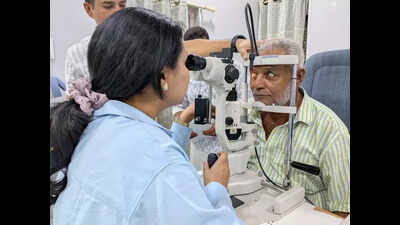
Pune: Medical units of the Indian Army’s Southern Command, in a first-of-its-kind healthcare initiative, recently delivered comprehensive eye care services to more than 2,500 people in 120 remote villages across the border districts of Lakhpat and Bhuj in Gujarat’s Kutch region.Among the beneficiaries of an eye screening and cataract care programme were ex-servicemen, their dependants and local residents, who often face delays in medical treatment due to distance, harsh terrain and limited healthcare infrastructure.
Officials said 150 patients were identified for advanced cataract and ocular surgeries. They will undergo procedures free of cost at the Military Hospital in Bhuj between Feb 3 and 5.The programme was organised in coordination with district health authorities, primary and community health centres, and ASHA workers. Mobile teams travelled deep into remote areas to conduct eye examinations, diagnose vision-related disorders and counsel patients on further treatment options.The surgeries will be carried out under the supervision of Brigadier Sanjay Kumar Mishra, consultant and head of the department of ophthalmology at the Army Hospital (Research & Referral), New Delhi. Brigadier Mishra has performed over one lakh successful eye surgeries.Local residents and veterans expressed gratitude for the initiative, saying vision problems often go untreated due to a lack of specialists and transportation challenges.“Travelling to cities for surgery is difficult for these villagers. The Army delivered this health service to them to send a message that they are also taken care of,” said a senior Army officer.The outreach programme highlighted the Army’s expanding role in military-civil fusion. The officer said, “Beyond its core defence responsibilities, the Army continues to emerge as a key partner in regional development and public welfare. It is crucial to establish a strong bond with the border population to get their help during crucial times. We do such camps regularly in northern border regions. Now, in the southern sector, such camps need to be done on a regular basis, and that is what we did in these remote districts.”