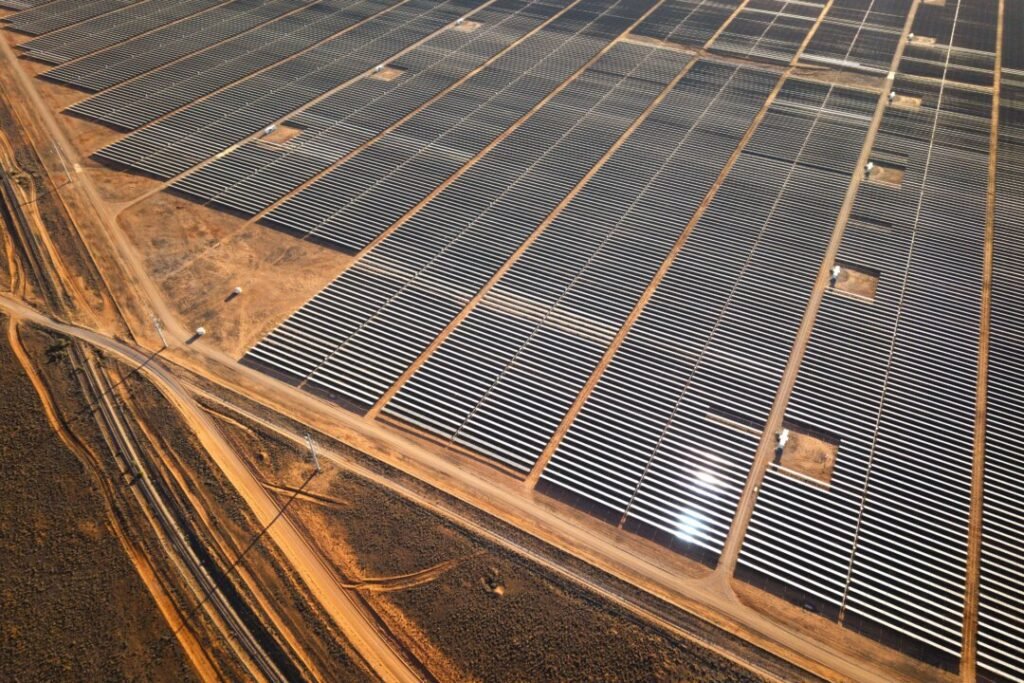

An aerial view of the Bungala Solar Farm in Port Augusta, South Australia, on Feb. 25, 2025. Brook Mitchell/Getty Images
The federal government must introduce four legislative changes to ensure the future viability of the solar panel recycling industry in Australia, according to the chief executive of Envirostream Australia.
Simon Linge said the company is the leading recycler of lithium-ion batteries in Australia, with enterprise clients such as BYD, LG Energy Solutions, CATL, Hyundai, Sig Energy, and Ferrari.
Encouraged by its clients, it says it’s making early inroads into recycling solar panels and permanent magnets from wind turbines, to recover the valuable rare earth elements.
“To date, we have diverted over 7 million kilograms of batteries from landfill, and this year we’re expecting to process the equivalent of 2,500 EV batteries, ensuring their contents can be captured as part of Australia’s sovereign resources, adding economic value to Australia as well as improving circularity and sustainability benefits,” he told the House Standing Committee on Climate Change, Energy, Environment and Water.

Simon Linge, CEO of Envirostream Australia, gives evidence to the House Committee on Climate Change, Energy, Environment and Water. (Screen Capture from Parliament livestream).
“Like batteries, solar panels contain important, critical materials that add to Australia’s sovereign capacity if … recycled in Australia. The needed elements include silver, silicon, antimony, and copper.”
Related Stories
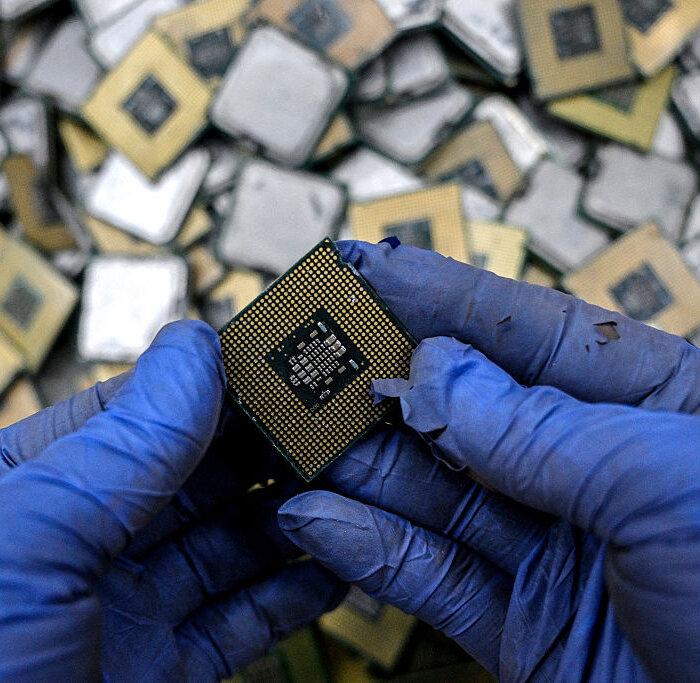

“With the right settings, we have the capacity to establish a solar panel reuse and recycling industry that can match or exceed the forecast economic battery benefits of the battery recycling industry,” Linge said.
But before those gains can be realised, the federal government must implement changes to existing laws governing the solar panel recycling sector, Linge told the committee.
Sending them to landfill ought to be explicitly illegal, which is only the case in Victoria at present.
Since commodity prices of recyclable materials are less than the cost of recovering them, there needs to be a fee imposed for recycling solar panels to help recyclers build sustainable businesses.
“Recycled materials can be more expensive than virgin materials, so requiring recycled content, like solar panel glass as a [component of] road base, is important in ensuring the materials other than silver can be put to good use,” Linge said.
“Governments acting now on these changes [will give] Australia the chance to capture the opportunity around reuse and recycling,” he said.
It too supports a national product stewardship scheme.