

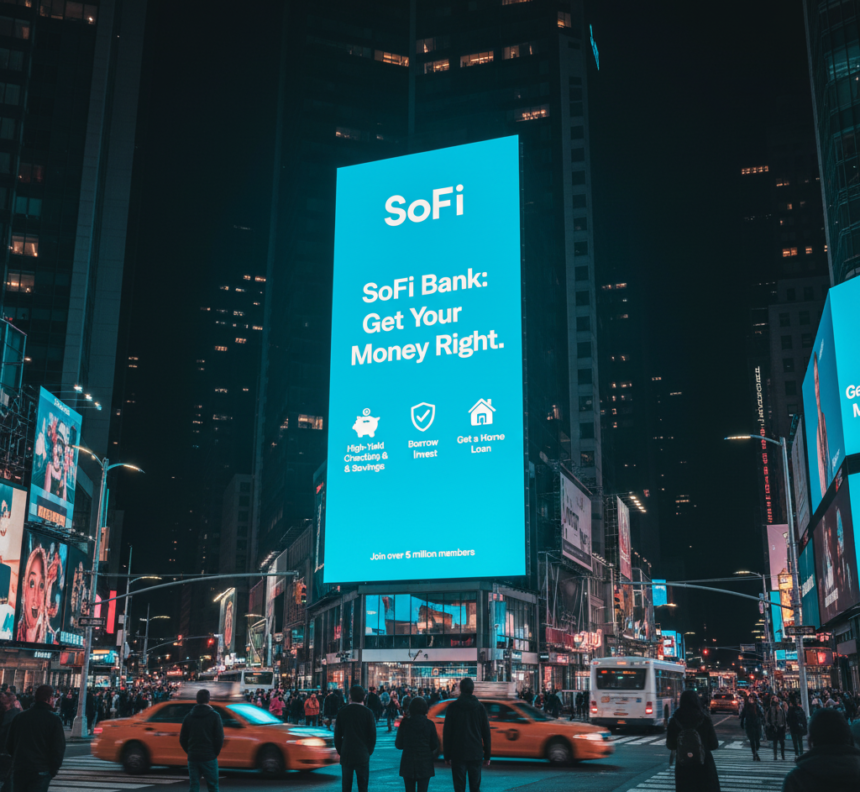
SoFi App Review 2026: n the ever-evolving landscape of personal finance, a new breed of company has emerged, challenging the traditional pillars of Wall Street and Main Street banking. At the forefront of this revolution is SoFi, short for Social Finance, Inc.. More than just a bank or a lender, SoFi has cultivated a comprehensive financial ecosystem designed to help its members “Get Your Money Right.” From its origins in student loan refinancing to its current status as an all-in-one financial super app, SoFi represents a paradigm shift in how we approach borrowing, saving, spending, investing, and planning for the future.
This ultimate guide dives deep into every facet of SoFi. We’ll explore its history, dissect its full suite of products, analyze its pros and cons, compare it to key competitors, and provide you with the insights needed to decide if becoming a SoFi member is the right move for your financial journey. With a commitment to competitive rates, innovative technology, and a unique emphasis on member community, SoFi isn’t just processing transactions—it’s aiming to build financial resilience and independence for millions.
Chapter 1: The SoFi Story – From Stanford Dorms to a Financial Giant
SoFi’s genesis is a classic tale of Silicon Valley innovation meeting a pressing societal need. Founded in 2011 by four students from the Stanford Graduate School of Business—Mike Cagney, Dan Macklin, James Finnigan, and Ian Brady—the company was born from the ashes of the 2008 financial crisis. The founders identified a critical pain point: high-quality, credit-worthy students from top universities were struggling to secure affordable loans due to frozen credit markets, while investors were starving for yield.
Their ingenious solution was to create a peer-to-peer (P2P) lending model that connected alumni investors with current students needing loans. This “social” funding model not only provided students with lower rates than federal loans but also gave alumni a tangible way to give back to their academic community while earning a return. The first pilot program at Stanford Business School raised $2 million in 40 days.
Key Evolutionary Milestones:
-
2012-2014: Rapid expansion of the student loan refinancing product to over 100 schools. The company quickly realized the power of its model and began scaling.
-
2015-2017: SoFi began its transformation from a single-product lender to a diversified fintech platform. It launched SoFi Wealth (robo-advisory investing), SoFi Money (cash management), and SoFi At Work (employer student loan benefits). This period also saw the introduction of its now-famous Member Benefits, including career coaching, financial planning, and exclusive social events, fostering a powerful sense of community.
-
2018-2020: A period of strategic expansion and regulatory evolution. SoFi acquired various companies, including API platform Galileo (a massive move into fintech infrastructure) and investing platform Invest. Most significantly, in 2020, it received a conditional bank charter from the OCC and the FDIC, paving the way for SoFi Bank.
-
2021-Present: The era of the “financial super app.” SoFi went public via a SPAC merger. It launched SoFi Bank, N.A., allowing it to offer its own high-yield savings and checking accounts. It rolled out SoFi Credit Card with robust rewards, integrated cryptocurrency trading, and continued to expand its product suite, aiming to be the single, primary financial relationship for its members.
The company’s ambition is symbolized by its $600 million+ naming rights deal for SoFi Stadium in Los Angeles, home to the NFL’s Rams and Chargers. This move signaled SoFi’s arrival as a major, mainstream financial brand.
Chapter 2: Deconstructing the SoFi Ecosystem – A Product-By-Product Analysis
2.1 SoFi Banking (Spend & Save)
At the heart of the SoFi experience is its banking suite, designed to replace your traditional checking and savings accounts.
-
SoFi Checking and Savings: This isn’t a traditional checking account with a separate savings account. It’s a unified Checking & Savings account structure. Your direct deposits go into “Checking,” and you can easily create separate, goal-oriented “Vaults” within Savings.
-
Key Features & Benefits:
-
High APY: SoFi is famous for offering a highly competitive Annual Percentage Yield on all savings balances and Vaults (e.g., 4.60% APY as of late 2024, but rates are variable). To qualify for the highest rate, you must set up direct deposit.
-
No Account Fees: No monthly maintenance, overdraft, minimum balance, or ATM fees (SoFi reimburses fees charged by other ATM operators worldwide).
-
Early Paycheck: With direct deposit, you can get your paycheck up to two days early.
-
Roundups: Automatically rounds up debit card purchases to the nearest dollar and transfers the spare change to your savings Vault.
-
Insured Funds: Deposits are FDIC-insured up to $2 million per customer through SoFi Bank’s network of partner banks (up to $250k per bank), exceeding the standard $250k coverage.
-
Verdict: SoFi Banking excels for those who live a digital-first financial life, want to maximize their cash’s earning potential, and appreciate fee-free access. It’s less ideal if you frequently need to deposit cash, as the network for this is limited.
2.2 SoFi Lending (Borrow)
SoFi built its reputation on lending, and it remains a core strength.
-
Student Loan Refinancing: The flagship product. SoFi refinances both federal and private student loans. They offer fixed and variable rates, with no origination or prepayment fees.
-
Pros: Potentially huge savings for high-degree, high-income borrowers with strong credit. Unemployment protection and career services are included.
-
Cons: Refinancing federal loans means losing access to federal protections like Income-Driven Repayment (IDR) and Public Service Loan Forgiveness (PSLF). This is a critical consideration.
-
-
Personal Loans: SoFi offers unsecured personal loans for purposes like debt consolidation, home improvement, or major purchases. Loan amounts range from $5,000 to $100,000.
-
Pros: Competitive rates for well-qualified borrowers, no fees, and fast funding. Unemployment protection is a rare and valuable benefit.
-
Cons: Requires excellent credit (typically 680+ FICO) for the best rates. Not for small, short-term loans.
-
-
Private Student Loans: For students currently in school, SoFi offers undergraduate, graduate, and professional program loans with a cosigner release option after 24 on-time payments.
-
Home Loans (Mortgages & Refinancing): SoFi provides a fully online mortgage experience for purchasing or refinancing a home.
-
Pros: Streamlined digital application, competitive rates, and a $500 discount for existing SoFi members.
-
Cons: Not available in all states. As a non-bank lender, it may not offer the same relationship-based service as a local bank or credit union.
-
2.3 SoFi Invest (Grow)
SoFi’s investing platform aims to demystify the markets for beginners while offering tools for active traders.
-
Active Investing (SoFi Invest): A commission-free brokerage account for trading stocks and ETFs. Fractional shares are available (“Stock Bits”), allowing investment in companies like Amazon with as little as $5.
-
Features: Simple interface, basic research tools, and IPO investing access for eligible members.
-
-
Automated Investing (SoFi Invest): A robo-advisor service. You answer questions about your goals, time horizon, and risk tolerance, and SoFi builds and manages a globally diversified portfolio of low-cost ETFs for you.
-
Features: Automatic rebalancing, goal-based planning, and no SoFi management fees.
-
-
SoFi Crypto: Allows users to buy, sell, and hold over 20+ cryptocurrencies like Bitcoin and Ethereum. It’s important to note this is a trading platform, not a crypto wallet you control the keys to.
-
Retirement Accounts (IRAs): Both Traditional and Roth IRAs are available, and can be managed via Automated Investing or self-directed Active Investing.
Verdict: SoFi Invest is excellent for beginner to intermediate investors. Its strength is simplicity, integration, and low barriers to entry. Advanced traders may find the charting and analysis tools limited compared to dedicated platforms like TD Ameritrade or Interactive Brokers.
2.4 SoFi Credit Card
-
Rewards Structure: A standout flat-rate cash-back card. You earn unlimited 3% cash back on all purchases for the first 12 months (then 2%) when you redeem rewards into a SoFi checking/savings, invest, or loan account. Redeeming for statement credit or other options yields 2% (then 1%).
-
Key Details: No annual fee. Mastercard World Elite benefits (cell phone protection, travel insurance, etc.).
-
Analysis: This card is phenomenally valuable for SoFi ecosystem users. The effective 3% everywhere is top-tier. Its value proposition diminishes if you don’t redeem into a SoFi product, making it a classic “ecosystem lock-in” tool.
2.5 The SoFi Member Experience: Beyond Banking
What historically set SoFi apart was its focus on the holistic member.
-
Career Coaching: Free access to one-on-one sessions with certified coaches for resume review, interview prep, and career strategy.
-
Financial Planners: Members can get complimentary sessions with credentialed financial planners for advice on budgeting, investing, taxes, and estate planning.
-
Member Events: Local and virtual events for networking, socializing, and learning (though the scale of these has evolved post-IPO).
-
SoFi Member Benefits Portal: Discounts on travel, entertainment, and fitness brands.
This community-centric approach, while more scaled-back today, built immense loyalty in SoFi’s early years and remains a differentiator.
Chapter 3: The Deep Dive – SoFi vs. The Competition
SoFi vs. Chime
-
Focus: Both are fintechs offering fee-free banking.
-
SoFi Advantage: Much higher savings APY, full investing & lending suite, physical debit card design (metal vs. plastic), stronger member benefits.
-
Chime Advantage: Simpler, earlier access to direct deposit (up to two days early is standard), larger fee-free ATM network (MoneyPass), Credit Builder secured credit card.
-
Verdict: SoFi is for those wanting a comprehensive financial hub. Chime is a streamlined, spending-focused checking account with credit-building tools.
SoFi vs. Ally Bank
-
Focus: Both are digital-first, high-yield banking leaders.
-
SoFi Advantage: Broader product suite (lending, active investing, crypto), member benefits/community, all-in-one app integration.
-
Ally Advantage: Pure-play bank with a longer track record, 24/7 live customer support, superior savings tools (buckets with goals), more robust checking features (check writing), and a full-service auto finance arm.
-
Verdict: Extremely close. Ally may edge out for pure banking excellence and customer service. SoFi wins for its “one-stop-shop” ambition and if you value its specific loan or credit card products.
SoFi Student Loan Refinancing vs. Earnest / Laurel Road
-
Common Ground: All target high-earning professionals with excellent credit.
-
SoFi Advantage: Largest lender, most brand recognition, unique member perks (unemployment protection, career coaching), offers Parent PLUS refinancing.
-
Earnest Advantage: May offer more flexibility with loan terms (customizable payment dates) and potentially lower rates for some applicants due to its nuanced underwriting (considers savings and investment accounts).
-
Laurel Road Advantage: Often competitive rates for medical and dental professionals.
-
Verdict: It’s crucial to get personalized rate quotes from all three. SoFi’s extra benefits can be the tiebreaker if rates are similar.
SoFi Invest vs. Robinhood & Betterment
-
vs. Robinhood: Robinhood pioneered commission-free trading and has more advanced charting, options trading, and a social feel. SoFi Invest is more integrated with banking and offers automated investing and loans in one app.
-
vs. Betterment: Betterment is a pure-play, top-tier robo-advisor with more sophisticated tax-loss harvesting, portfolio options, and linking of external accounts. SoFi’s automated investing is simpler and free, but less feature-rich.
-
Verdict: For integrated simplicity, choose SoFi. For advanced self-directed trading, consider Robinhood. For sophisticated automated investing, look at Betterment.
Chapter 4: The Pros and Cons – Is SoFi Right For You?
The Advantages (Pros)
-
The Super App Convenience: The primary draw. Managing cash, investments, loans, and credit cards in a single, clean interface is powerful and reduces financial fragmentation.
-
Competitive, Fee-Free Banking: The high-yield checking/savings hybrid with no hidden fees is a best-in-class offering that puts pressure on traditional banks.
-
Strong Value in Lending: For qualified borrowers, its loan rates (especially student refinancing) are highly competitive, and the unemployment protection benefit is genuinely valuable.
-
Excellent Credit Card for Members: The 3% flat cash-back rate (with proper redemption) is arguably the best no-annual-fee card on the market for general spending.
-
Financial Planning & Community Resources: The included access to career and financial advice adds tangible value beyond mere transaction processing.
The Disadvantages (Cons & Considerations)
-
The “Ecosystem Lock-in” Pressure: Many of the best rewards (credit card cash back, highest APY) require using multiple SoFi products. This can be great if you love the ecosystem, but it discourages using best-in-class products elsewhere.
-
Customer Service Growing Pains: As a rapidly growing tech company, customer service can be inconsistent. Reaching a live human for complex issues (especially with lending) can be more challenging than with an established bank.
-
Limited Physical & Cash Services: While it offers some solutions (Green Dot network), depositing cash is inconvenient. It is not a bank for those who handle significant physical cash.
-
Important Student Loan Refinancing Caveat: As emphasized, refinancing federal student loans is a major, irreversible decision that forfeits federal safety nets. It’s not right for everyone, particularly those pursuing PSLF or on IDR plans.
-
“Jack of All Trades” Trade-off: While good at everything, some dedicated platforms are master of one. Its investing tools aren’t as powerful as a dedicated brokerage; its robo-advisor isn’t as sophisticated as a pure-play robo.
Who is SoFi Ideal For?
-
Tech-Savvy Individuals who prefer managing finances via smartphone.
-
High-Earning Young Professionals with student debt to refinance.
-
Digital Banking Seekers who want to maximize interest earned on cash.
-
Financial Simplifiers who want an integrated view of their money in one app.
-
Beginning Investors looking for an easy, low-cost entry point.
Who Should Look Elsewhere?
-
Those who frequently deposit cash.
-
Advanced traders or investors needing sophisticated tools.
-
Individuals who prioritize in-person, relationship-based banking.
-
Federal student loan borrowers who are uncertain about forfeiting IDR or PSLF.
-
People who prefer to use “best-in-class” standalone products from different providers.
Chapter 5: Getting Started & Maximizing Your SoFi Experience
Step 1: Open SoFi Checking and Savings
This is your foundation. Even if you only use it as a secondary savings account for the high APY, it’s a no-brainer due to the lack of fees. Set up direct deposit to unlock the highest APY and early paycheck access.
Step 2: Create Organized Savings Vaults
Don’t just let money sit in the main savings bucket. Use Vaults for specific goals: Emergency Fund, Vacation, Down Payment, Taxes. This leverages the high APY while providing mental accounting clarity.
Step 3: Evaluate Your Debt
If you have high-interest private student loans or credit card debt, explore SoFi Personal Loans for debt consolidation. For federal student loans, consult with a non-commissioned student loan advisor before considering refinancing with SoFi or anyone else.
Step 4: Integrate the Credit Card
If you spend significantly, apply for the SoFi Credit Card. Set up automatic redemption of your cash back into your SoFi Invest account to effectively grow your rewards at 3%. This turns everyday spending into incremental investing.
Step 5: Dip Your Toe into Investing
Start with Automated Investing. Set up a small, recurring weekly transfer from your Checking & Savings into a goal (e.g., “Growth Portfolio”). Use Stock Bits in Active Investing to buy fractional shares of companies you believe in without major commitment.
Step 6: Leverage the Free Advice
Book a session with a financial planner to review your overall SoFi setup and ensure it aligns with your goals. Use career coaching if you’re contemplating a job change.
Chapter 6: Security, Trust, and The Future of SoFi
Is SoFi Safe?
Yes. Financially, deposits are FDIC-insured up to $2 million. Technologically, SoFi employs bank-level security: 256-bit encryption, two-factor authentication (2FA), biometric login (fingerprint/Face ID), and real-time transaction monitoring. As with any financial institution, you should always use strong, unique passwords and enable all available security features.
The Road Ahead: Challenges and Opportunities
SoFi faces the classic innovator’s dilemma: scaling while maintaining its member-centric culture. Its challenges include navigating a potentially volatile economic climate (affecting lending), managing customer service at scale, and competing with both legacy banks and agile new fintechs.
However, its opportunities are vast. The Galileo acquisition gives it a lucrative B2B revenue stream. The full bank charter allows for greater profitability and product control. Its brand recognition is at an all-time high. The future likely holds deeper integration of all products, expanded financial services (like insurance), and a continued push to be the primary financial relationship for the digital generation.
Conclusion: The Verdict on SoFi
SoFi is more than a company; it’s a statement about the future of finance. It successfully bundles essential financial services into a coherent, user-friendly package that is particularly compelling for a digitally-native, financially-ambitious audience.
Final Recommendation:
SoFi is an outstanding choice for your primary banking and spending hub, especially if you can leverage its high APY and excellent credit card. Its lending products are top-tier for well-qualified borrowers, with critical cautions noted for student loans. Its investing platform is a fantastic starting point for beginners.
It may not be the absolute best-in-class in every single category when compared to specialized competitors. But the power of integration—the whole being greater than the sum of its parts—is SoFi’s killer feature. For millions, the convenience, competitive rates, and holistic approach offer a path to greater financial control and clarity that traditional finance has long failed to provide.
If your financial life is ready for a modern, unified, and ambitious platform, stepping into the SoFi ecosystem is a move worth serious consideration.