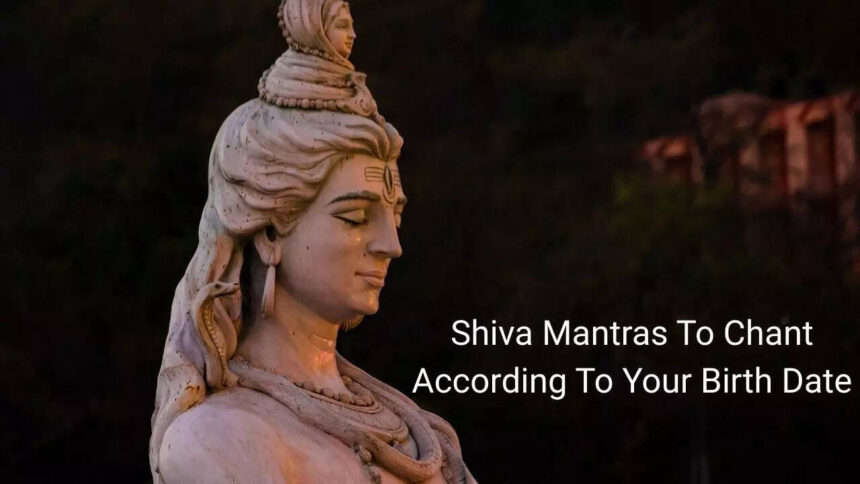
In the vast and profound landscape of Sanatana Dharma, the worship of Lord Shiva holds a unique and unparalleled position. He is the Adiyogi, the first yogi, and the source of all knowledge. He is also the destroyer, dissolving the old and the inert to make way for the new. Connecting with this powerful deity is made accessible through the potent vibrations of Shiva Mantras.
A mantra is far more than a mere prayer or a string of words. It is a precise combination of syllables that, when chanted with focus, intention, and devotion, creates specific energetic vibrations. These vibrations purify our inner environment, align our consciousness with higher frequencies, and help us invoke the very qualities the deity represents.
Whether you are a seasoned spiritual seeker or a curious beginner, the path of mantra chanting is open to all. It requires no special initiation, only a sincere heart. This comprehensive guide will explore the profound world of Shiva Mantras. We will delve into their meanings, benefits, and the correct ways to chant them, covering 15 of the most powerful mantras that can bring peace, prosperity, protection, and spiritual growth into your life. Get ready to embark on a sonic journey to the very heart of Lord Shiva.
Why Chant Shiva Mantras? The Science and the Spirit
Before we list the mantras, it’s important to understand why this practice is so transformative. The power of Shiva Mantras isn’t a matter of blind faith; it has both a spiritual and a practical basis.
-
Vibrational Alignment: Modern science acknowledges that everything in the universe is energy vibrating at different frequencies. Our thoughts and emotions are also vibrations. Mantras are scientifically crafted sound patterns that generate a positive, high-frequency vibration. Chanting them helps raise our own vibrational state, lifting us from dullness, anxiety, and negativity.
-
Focus and Mindfulness: In our chaotic modern lives, the mind is constantly jumping from one thought to another. The act of chanting requires focus. You must listen to the sound, feel its vibration, and bring your mind back when it wanders. This is a powerful form of mindfulness and meditation that trains the mind to be one-pointed.
-
Connecting with the Archetype: Lord Shiva is not just a god in the sky; he is an archetype of the ultimate consciousness—pure, undisturbed, benevolent, and powerful. By chanting his mantras, we are attuning our own consciousness to that archetype. We are invoking the “Shiva Tattva” (the principle of Shiva) within ourselves, awakening qualities like fearlessness, inner peace, and the power to overcome our own inner demons (ego, desire, anger).
-
Psychological Benefits: The very act of sitting in a quiet place, taking deep breaths, and chanting has a calming effect on the nervous system. It lowers cortisol levels (the stress hormone) and promotes the release of feel-good hormones. The positive affirmations embedded in the mantras also work on the subconscious mind, gradually changing our belief systems for the better.
How to Chant Mantras Correctly: A Beginner’s Guide
To maximize the benefits of your practice, following some basic guidelines can be very helpful.
-
Cleanliness and Posture: It’s traditional to bathe and wear clean, comfortable clothes before chanting. Sit in a comfortable posture, preferably on the floor on a mat or cushion, with your spine erect. This allows for the free flow of energy. The classic postures are Padmasana (Lotus Pose) or Sukhasana (Easy Pose) .
-
The Power of a Jaap Mala: A jaap mala, typically with 108 beads, is a powerful tool. It helps you keep count, allowing your mind to focus on the sound and vibration rather than numbers. It also acts as a physical anchor for your practice.
-
Pronunciation: Correct pronunciation is key to unlocking a mantra’s full potential. The sounds are designed to create specific vibrations. While perfection isn’t the goal for a beginner, do your best. Listen to audio recordings from authentic sources (like the ones we will link to) to get the phonetics right.
-
Three Modes of Chanting:
-
Vaikhari (Audible): Chanting loudly or at a normal speaking volume. This is great for beginners as it helps maintain focus and the vibration is physically felt.
-
Upanshu (Whispering): Chanting in a whisper, moving only the lips slightly. This is more internal and subtle.
-
Manasika (Mental): Chanting silently in the mind. This is the most advanced and powerful form, as it requires immense concentration.
-
-
Consistency is Key: It is far more beneficial to chant for 10-15 minutes every day than to chant for two hours once a week. Choose a specific time, preferably Brahma Muhurta (the period about 1.5 hours before sunrise), and make it a daily habit.
15 Powerful Shiva Mantras and Their Profound Meanings
Here is a curated list of Shiva Mantras, ranging from the most fundamental to those for specific purposes.
The Foundation: The Maha Mrityunjaya Mantra
The Mantra: ॐ त्र्य॑म्बकं यजामहे सु॒गन्धिं॑ पुष्टि॒वर्ध॑नम् । उ॒र्वा॒रु॒कमि॑व ब॒न्धना॑न् मृ॒त्योर्मु॑क्षीय मा॒मृता॑त् ।।
Transliteration: Om Tryambakam Yajamahe Sugandhim Pushti-Vardhanam | Urvarukamiva Bandhanan Mrityor Mukshiya Maamritat ||
Meaning: “We worship the Three-eyed Lord Shiva, who is fragrant and who nourishes all beings. May he liberate us from the bondage of death, just as a ripe cucumber is effortlessly separated from its vine, for the sake of immortality.”
Benefits: This is considered the most powerful mantra for healing and protection. It is chanted for physical, mental, and spiritual well-being, for overcoming fears, and for a peaceful transition.
The Universal Mantra: Om Namah Shivaya
The Mantra: ॐ नमः शिवाय
Transliteration: Om Namah Shivaya
Meaning: “I bow to Shiva.” It is the most direct and powerful way to surrender to the divine. The five syllables “Na-Ma-Shi-Va-Ya” represent the five elements (earth, water, fire, air, and ether) and the five chakras. Adding “Om” at the beginning represents the primordial sound of creation.
Benefits: It is a universal panacea. It calms the mind, purifies the heart, and helps one realize their own divine nature. It is a mantra of peace and self-acceptance.
For Protection and Fearlessness
The Mantra: ॐ हौं जूं सः ॐ भूर्भुवः स्वः ॐ त्र्यम्बकं यजामहे सुगन्धिं पुष्टिवर्धनम् उर्वारुकमिव बन्धनान्मृत्योर्मुक्षीय मामृतात् ॐ स्वः भुवः भूः ॐ सः जूं हौं ॐ
Meaning: This is a powerful combination of the Maha Mrityunjaya Mantra enclosed within Bija (seed) mantras and the Gayatri meter. It creates a formidable shield of positive energy around the chanter.
Benefits: It is chanted for ultimate protection from all kinds of negative energies, accidents, and untimely death. It invokes the fierce, protective aspect of Lord Shiva as Rudra.
For Removing Obstacles
The Mantra: ॐ नमो भगवते रुद्राय
Transliteration: Om Namo Bhagavate Rudraya
Meaning: “I bow to the Supreme Being in the form of Rudra.” Rudra is the fierce, storm-like aspect of Shiva who destroys all impurities and obstacles.
Benefits: This mantra is excellent for removing inner obstacles (like laziness, fear, and negative patterns) and outer obstacles (like problems in career, relationships, or finances). It clears the path for growth.
For Peace and Calm
The Mantra: ॐ शान्तः शिवम्
Transliteration: Om Shantah Shivam
Meaning: “Om, the peaceful and auspicious one.” This is a simple yet profound mantra for invoking the serene aspect of Shiva.
Benefits: Ideal for calming an overactive mind, reducing anxiety, and creating a deep sense of inner peace. It’s a great mantra to chant before sleeping.
For Prosperity and Abundance
The Mantra: ॐ ह्रीं शिवाय नमः
Transliteration: Om Hreem Shivaya Namah
Meaning: “I bow to Shiva, the Auspicious One.” The addition of the Bija mantra “Hreem” adds the energy of the heart center and attracts abundance, both material and spiritual.
Benefits: This mantra is chanted to attract wealth, success, and overall prosperity. It aligns you with the energy of receiving.
The Rudra Gayatri Mantra
The Mantra: ॐ तत्पुरुषाय विद्महे महादेवाय धीमहि तन्नो रुद्रः प्रचोदयात्
Transliteration: Om Tatpurushaya Vidmahe Mahadevaya Dhimahi Tanno Rudrah Prachodayat
Meaning: “We meditate on that Supreme Being. We contemplate on the Great God. May that Rudra direct our intellect and illuminate our path.”
Benefits: This mantra is for enhancing intellect, wisdom, and spiritual discrimination. It is particularly beneficial for students, artists, and anyone seeking clarity.
For Concentration and Memory
The Mantra: ॐ ऐं नमः शिवाय
Transliteration: Om Aim Namah Shivaya
Meaning: “I bow to Shiva.” The Bija mantra “Aim” is associated with Saraswati, the goddess of knowledge and learning.
Benefits: This combination is powerful for students. It improves focus, memory, and the ability to grasp and retain new information. It removes mental fog.
For Fulfilling Desires
The Mantra: ॐ ह्रीं नमः शिवाय
Transliteration: Om Hreem Namah Shivaya
Meaning: “I bow to Shiva.” The “Hreem” Bija is a mantra of transformation and manifestation.
Benefits: When chanted with a pure heart, this mantra can help manifest sincere desires. It purifies the desire itself, ensuring it is for the highest good.
Simple Mantra for Daily Chanting
The Mantra: ॐ नमः शिवाय (Om Namah Shivaya)
Why it’s ideal: As mentioned, it is the simplest and most complete mantra. It requires no complex rules, making it perfect for integrating into daily life. You can chant it while walking, doing chores, or during your commute.
For Family Harmony
The Mantra: ॐ शिवा शक्ति नमः
Transliteration: Om Shiva Shakti Namah
Meaning: “I bow to Shiva and Shakti.” This mantra honors the divine masculine and feminine principles. It represents the union of consciousness (Shiva) and energy (Shakti), which is the source of creation.
Benefits: Chanting this mantra brings balance and harmony to relationships. It is especially beneficial for married couples to chant together to strengthen their bond and foster understanding.
For Spiritual Growth
The Mantra: शिवोऽहम्
Transliteration: Shivo’ham
Meaning: “I am Shiva.” This is not a mantra of worship but one of self-realization. It is a declaration of one’s true nature as pure, blissful consciousness, which is no different from Shiva.
Benefits: This mantra is for advanced practitioners. It dissolves the ego and helps one experience the non-dual state of unity with the divine.
The Shiva Panchakshari Mantra
The Mantra: नमः शिवाय
Transliteration: Namah Shivaya
Meaning: “I bow to Shiva.” This is the core five-syllable mantra without the “Om.” It is powerful in its own right and can be chanted by anyone.
Benefits: It carries all the benefits of Om Namah Shivaya and is a wonderful, accessible mantra for daily practice. It represents surrender and devotion.
For Inner Strength
The Mantra: ॐ रुद्राय नमः
Transliteration: Om Rudraya Namah
Meaning: “I bow to Rudra.” This mantra directly invokes the fierce and powerful aspect of Shiva.
Benefits: This is the mantra to chant when you feel weak, vulnerable, or in need of immense inner strength to face a difficult situation. It instills courage and resilience.
For Enlightenment
The Mantra: ॐ नमः शिवाय शिवाय नमः ॐ
Transliteration: Om Namah Shivaya Shivaya Namah Om
Meaning: This is a two-way mantra, a “heart-moving” chant. It’s a salutation to Shiva that flows outward and then returns inward.
Benefits: This structure creates a complete cycle of energy, deepening the meditative state. It is chanted for dissolving the boundaries between the self and the divine, paving the way for higher states of consciousness.
How to Integrate Shiva Mantras into Your Daily Life
You don’t need to be in a temple or on a meditation cushion to benefit from these mantras. Here are simple ways to integrate them:
-
Morning Wake-Up: Start your day by chanting “Om Namah Shivaya” 9 times before you even get out of bed. It sets a positive and protected tone for the day.
-
Mindful Commute: If you drive, you can play a recording of Shiva mantras softly in your car. If you take public transport, you can mentally chant.
-
During Work Breaks: Take a 2-minute break from your screen, close your eyes, and take five deep breaths with the sound “Shi-va” on the exhale.
-
Before Sleep: Chant “Om Shantah Shivam” a few times to calm your nervous system and prepare for a restful sleep.
Conclusion: Your Journey with the Divine Sound
The path of mantra is a journey inward. It is a conversation with the deepest part of your being, which is none other than the universal consciousness we call Shiva. As you begin to chant these Shiva Mantras, do not just repeat the words; feel them. Let the sounds resonate within your chest, your mind, and your soul. Be patient, be consistent, and be open to the transformation.
Whether you seek peace, prosperity, protection, or the ultimate liberation, the great god Shiva, in his infinite compassion, is always listening. Start your practice today, and let the divine sound guide you home.