[ad_1]
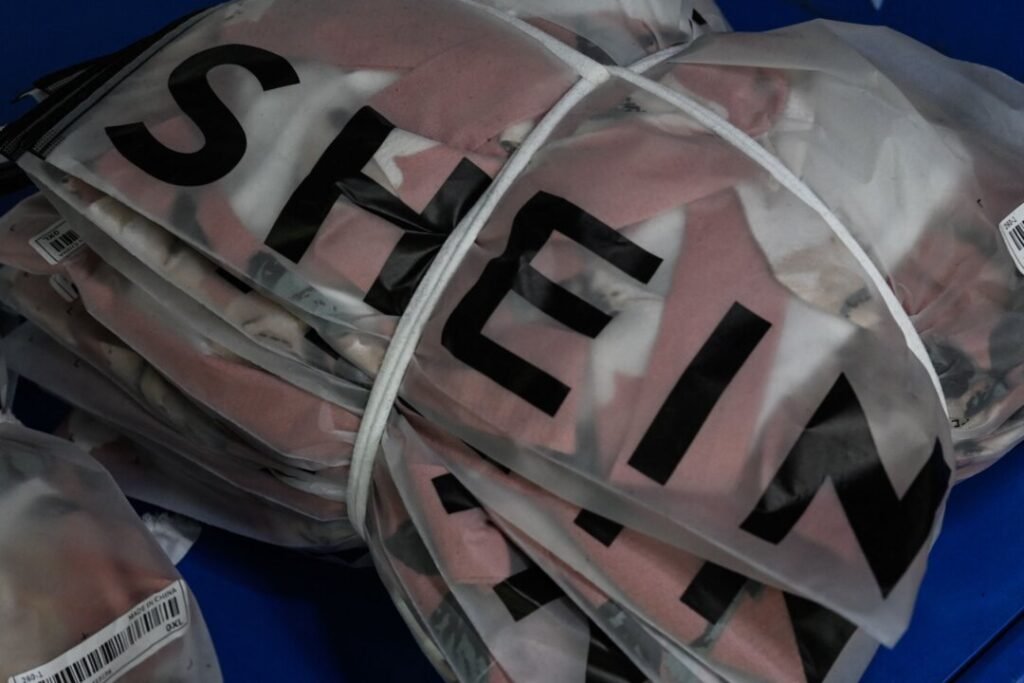
Shein closed Friday at HK$38.14 (US$4.86), about 21.5 percent below its HK$48.56 (US$6.19) initial public offering price after four days of trading in Hong Kong.
The China-founded fast-fashion retailer began trading Sept. 1 under stock code 625. The shares closed at HK$48.50 (US$6.19) on the first day, HK$46.00 (US$5.87) on Sept. 2, HK$42.00 (US$5.36) on Sept. 3, and HK$38.14 (US$4.86) on Friday. The sequence left Shein below its offer price at the end of every trading session and substantially lower by the end of its fourth day on the exchange.
Higher Costs in US and Europe
Shein has attributed part of the U.S. decline to the end of duty-free de minimis treatment for low-value shipments from China.
Related Stories


It has also shifted more inventory into the United States and changed customs procedures in response to the higher costs.
France began imposing environmental penalties on ultra-fast-fashion products on Sept. 1 under a law aimed at reducing the textile industry’s environmental impact.
Shein said in its listing documents that customers were presented with an average of about 4,700 new apparel styles a day during the first quarter.
France’s Environment Ministry said the system targets products characterized by very little incentive for repair and sold by brands offering unusually broad product ranges.
Penalties vary by product category and can reach 12 euros (about $14) per item in 2026, subject to a cap of 50 percent of the product’s pre-tax price. The maximum penalty is scheduled to rise to 19.50 euros (about $23) by 2030.
Beginning Jan. 1, 2027, paid and unpaid influencer promotion of ultra-fast-fashion products and brands will also be prohibited in France. Violations can result in administrative fines of up to 100,000 euros (about $116,000).
Shein has said new European trade measures could increase its costs and that it may raise prices to offset part of those expenses, as it has done in the United States.
US Scrutiny
Asked by The Epoch Times about the scope and status of the investigation, Juliana Gruenwald Henderson, deputy director of the FTC’s Office of Public Affairs, declined to comment. “FTC investigations are nonpublic, so we generally do not comment on them,” she said.
Shein also faces scrutiny over its expansion in the United States.
The Committee on Foreign Investment in the United States, or CFIUS, is reviewing Shein’s acquisition of U.S. clothing retailer Everlane, according to an August Bloomberg report.
Everlane CEO Alfred Chang confirmed the deal in May, saying the company would remain independent under Shein and gain greater financial stability and resources.
Shein, Everlane, and the Treasury Department did not respond to The Epoch Times’ request for comment as of publication.
CFIUS reviews certain foreign investments and acquisitions for national-security risks, including transactions involving some U.S. businesses that handle sensitive personal data.
The committee can negotiate measures intended to mitigate identified risks and refer unresolved cases to the president.
Federal law allows the president to suspend or prohibit covered transactions and to direct the attorney general to seek divestment relief.
[ad_2]
Source link