

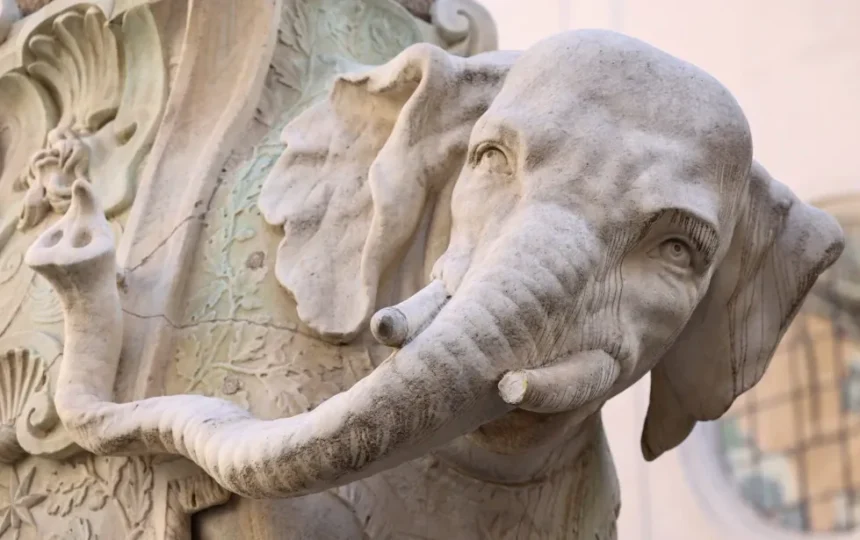
The tusk of a Renaissance marble elephant in Rome has been broken off in an “absurd act of barbarity”, Italy’s culture minister has said.
The four-inch-long piece of the 17th-century statue, designed by Baroque master Gian Lorenzo Bernini in 1667, was found lying at the base of the monument in Piazza della Minerva on Monday.
Police have launched an investigation to determine whether the damage to the “elefantino”, the second incident in which its tusk has been snapped off, was a deliberate act of vandalism or accidental damage following weeks of heavy rain.
Alessandro Giuli, the culture minister, said: “It is unacceptable that once again the nation’s artistic and cultural heritage must suffer such serious damage.
“One of the most significant symbols of the capital, struck by an absurd act of barbarity.”
Commissioned by Pope Alexander VII, the elephant was sculpted by Ercole Ferrata based on a design by Bernini and stands a short distance from the Pantheon.
It features an elephant adorned in ornate harnesses underneath an inscribed Egyptian obelisk found during an excavation of Roman ruins.
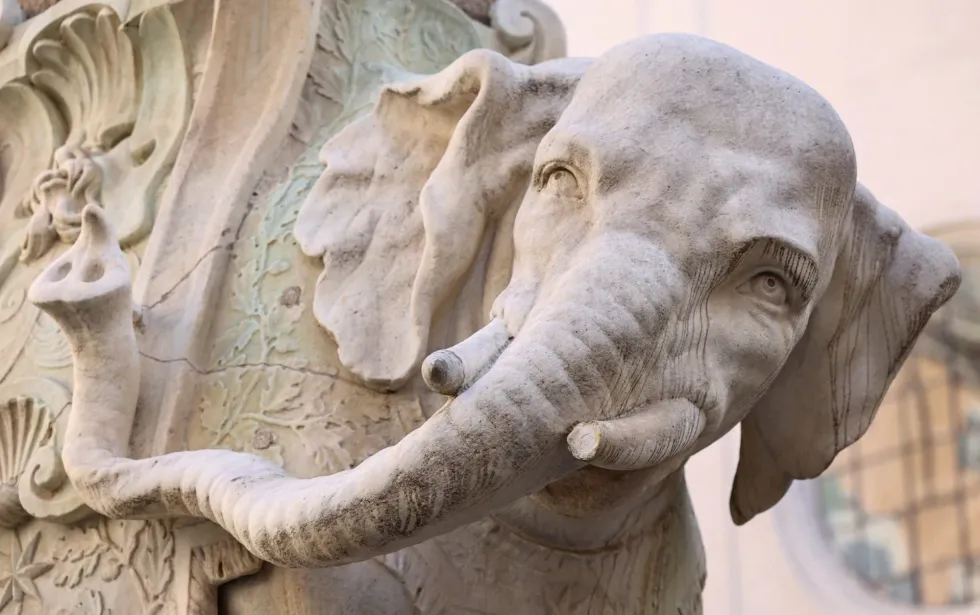
The famous statue has lost the tip of its left tusk for the second time
|
REUTERS
The tip of the same tusk was found broken off and left at the base of the statue in November 2016, prompting an outcry.
Police investigated but were unable to catch the suspects because nearby CCTV did not cover the statue, and it was later reattached.
Virginia Raggi, the former mayor, said at the time: “The defaced image of Gian Lorenzo Bernini’s elephant hurts all Romans. For us, the protection of the city’s heritage is crucial”.
The new damage comes as a major exhibition on Bernini opens at the Galleria d’Arte Antica in Palazzo Barberini, Rome, and will run until June.
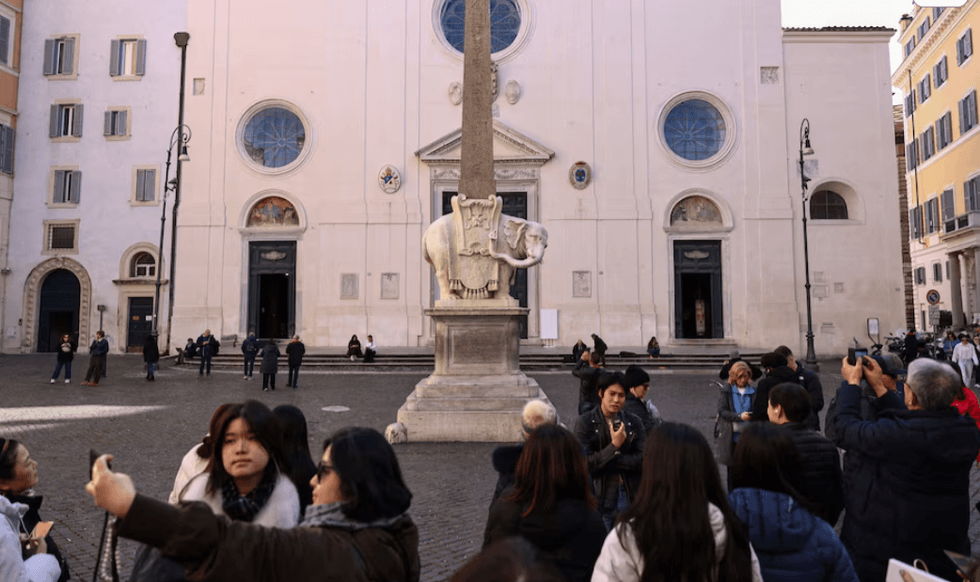
The famous statue has lost the tip of its left tusk for the second time
|
REUTERS
Pope Alexander VII commissioned Rome’s most famous Baroque sculptor, Bernini, to design it after Dominican friars discovered a small Egyptian obelisk in the grounds of their nearby convent, which the elephant now holds on its back.
Bernini and the friars disagreed about the work – the artist believed the weight of the obelisk could be borne by the elephant’s four legs, but the friars insisted the obelisk would be more stable with a stone support under its belly.
They won the argument, and the stocky look gave the elephant the nickname Minerva’s Piglet, because with such short legs and the central support, it looks more like a pig than an elephant.
According to popular legend, Bernini took his revenge against the friars by facing the rear of the elephant with its tail lifted towards their convent.
Earlier this month, it was announced that Rome would introduce charges for tourists hoping to get close to the Trevi Fountain.
The €2 fee comes in as the city of Rome works to control crowds at one of the world’s most celebrated sites, rolled out with a new €5 tourist ticket fee for some city museums.
In both cases, Rome residents are exempt from the fees and the extra revenue will actually expand the number of city-run museums that are free for registered Roman residents.
It is all part of the city’s efforts to manage tourist flows in a particularly congested part of town, improve the experience and offset the maintenance costs of preserving all of Rome’s cultural heritage.
Officials estimate it could net the city €6.5million extra a year.