Reform UK has said it would ban face coverings in public places, including burkas and balaclavas, if it won power at the next election.
Writing in the Telegraph,, external party leader Nigel Farage said facial coverings were “not the British way” and undermined the trust needed for a “free and open society”.
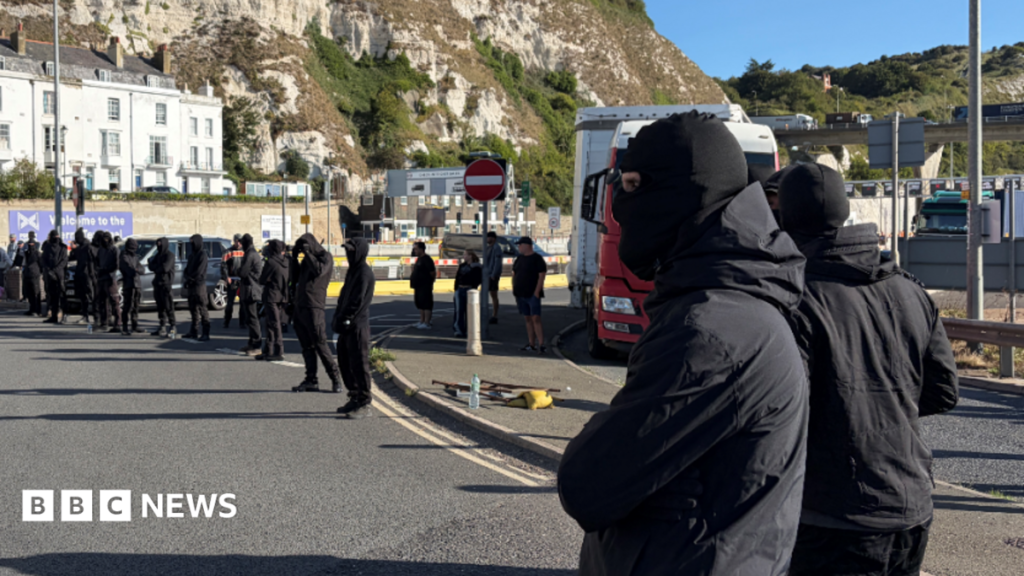
His comments come after protests over the weekend, described as spontaneous by police, when masked men chanting “stop the boats” blocked roads in Dover.
On Monday, Home Office minister Sarah Jones said police had powers over coverings at protests but added: “When people are going about their daily business, it is absolutely fine to wear them for religious reasons, and that will continue.”
In his article, Farage said he was “all for the protest” in Dover but added: “This is not the way to go about it.”
Arguing for a wider ban, he wrote: “Around city centres, balaclava-clad youths tear around neighbourhoods on e-bikes and scooters, terrorising residents, making them feel unsafe in their own communities.
“We’ve somehow accepted that seeing masked people in the streets is just part of modern Britain. It shouldn’t be.
“Which is why Reform UK is calling for a ban on all full-face coverings in public spaces. No ifs, no buts. And yes, that includes religious ones too.
“This is not a matter of targeting one group. It’s about saying that in a civilised society, people should be identifiable in public”.
Labour’s Crime and Policing Act, which took effect in April, gave police powers to create mask-free zones at protests, backed by fines of up to £1,000 or one month’s imprisonment, or both.
The power only only applies to people who are trying to conceal their identity, rather than those covering their face for reasons of religion, health or work, and officers must take reasonable steps to notify the public of the restriction.
Kent Police said on Saturday that officers made no arrests at the Dover demonstration and described it as a “spontaneous protest”. The force has said “specific statutory requirements” needed to be met for a ban.