
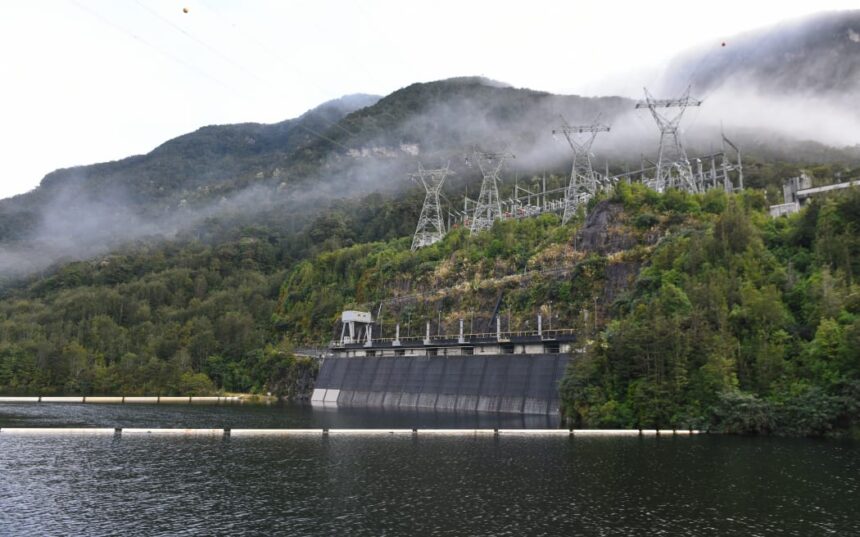

Meridian’s Manapouri Power Station.
Photo: 123rf
A wet spring season filling hydro storage lakes looks set to deliver bumper half-year earnings to the country’s big four generator-retailers.
A preview by investment firm Forsyth Barr suggests the four major companies – Contact, Genesis, Meridian and Mercury – will make combined operating earnings, before hedging and one-off costs, of $1.86 billion for the six months ended December.
That compares with a combined $1.28b in the same period in 2024 when the sector was struck by dry hydro conditions, a lack of gas and the need to rely on coal, sending wholesale prices surging.
Genesis has benefited from a marked reduction in burning coal and gas for generation, Contact from taking over Manawa Energy, Mercury from the full hydro lakes, and Meridian simply from not having a repeat of its dismal 2024 half-year.
“The key takeout is that the sector performs best financially when hydro generation is abundant,” Forsyth Barr said.
But no relief for consumers
Forsyth Barr director Andrew Harvey‑Green said lower wholesale electricity prices would not mean lower household power bills.
“North of 95 percent of all energy bought across residential as well as commercial customers is purchased at a fixed price, so what happens in the wholesale market in the short-term has no impact on those prices,” he said.
“It’s the same reason why, when prices were incredibly high in winter 2024, you didn’t see big profit increases for these companies.”
He said abundant hydro and renewable generation this year meant gentailers would not need to rely on high‑cost thermal generation, reducing wholesale costs – but not consumer prices.
Profit upgrades possible, dividends less so
While first‑half operating earnings were forecast to rise by an average of 45 percent, Forsyth Barr expected dividends to increase by only about 4.5 percent.
It noted that long‑dated wholesale electricity prices remain high at $159/MWh, still well above the cost of building new wind and solar generation – a clear signal from the market that more capacity was needed.
All four gentailers had major investment commitments under way or planned, and Harvey‑Green said most of the extra earnings would be earmarked for building new generation, rather than boosting shareholder returns.
Sign up for Ngā Pitopito Kōrero, a daily newsletter curated by our editors and delivered straight to your inbox every weekday.