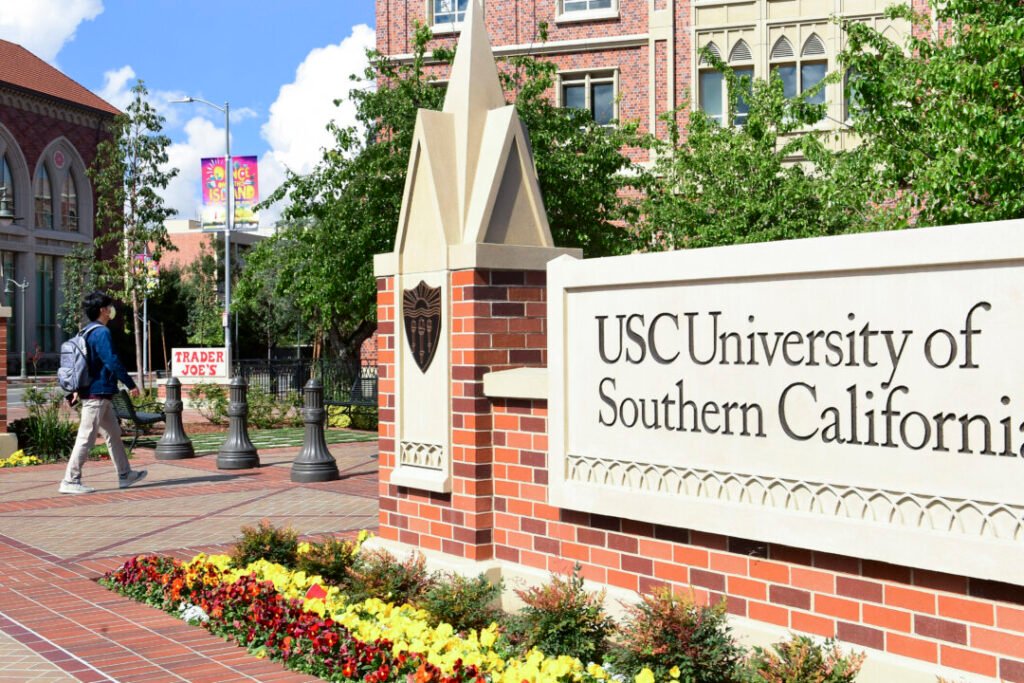

The University of Southern California (USC) in Los Angeles on March 11, 2020. Frederic J. Brown/AFP via Getty Images
The Pentagon announced on Oct. 19 that research security audits of 30 American universities resulted in more than 80 termination-related actions involving foreign research relationships considered potential national security risks.
All 30 institutions have addressed the relationships identified in the reviews, according to the Department of War, which ordered the audits in August amid concerns about foreign access to taxpayer-funded American research.
The actions included ending relationships with institutions on the Pentagon’s restricted research-security list, as well as precautionary terminations involving entities not on the list.
The Pentagon did not identify the foreign institutions involved, provide a country-by-country breakdown, or specify whether the reviews uncovered unauthorized access to sensitive research.
Seven universities received special recognition for taking additional measures: Oklahoma State University, Pennsylvania State University, the University of North Carolina at Chapel Hill, the University of South Carolina, the University of Southern California, the University of Texas at Austin, and Virginia Tech.
Chinese Military Research Concerns
Related Stories


The reviews focused on foreign institutions identified under Section 1286 of the fiscal 2019 National Defense Authorization Act, along with organizations associated with rebranded Confucius Institutes.
The audits followed mounting scrutiny of American universities’ connections to China’s military research system.
The contacts ranged from conferences and jointly authored research to formal joint laboratories in fields including aircraft engines, underwater sensing, and advanced communications.
Penn State, USC, and the University of Texas at Austin—three institutions commended in the Pentagon’s latest announcement—were among the universities appearing in the institute’s records.
The Pentagon has not publicly linked the specific relationships documented in that study to the termination actions announced on Oct. 19.
Congressional Response
Rep. John Moolenaar (R-Mich.), chairman of the House Select Committee on the Chinese Communist Party, welcomed the audit results and credited the Trump administration and Pentagon with addressing research-security risks at American universities.
“Americans’ tax dollars should never subsidize China’s military ambitions and our universities must do more to protect taxpayer-funded research,” Moolenaar said in an Oct. 19 statement.
Moolenaar has urged other federal research agencies to adopt similar restrictions.
Moolenaar said his committee would continue working with the administration to expand safeguards against the exploitation of U.S.-funded research, including through legislation that would apply restrictions across federal research agencies.