

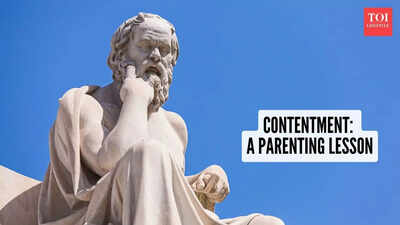
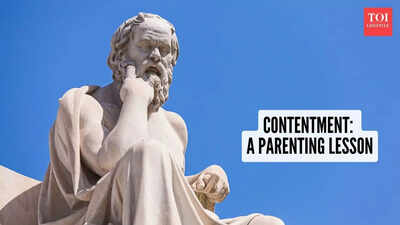
The quote by Socrates sounds simple, but it cuts deep: “He who is not contented with what he has, would not be contented with what he would like to have.” For parents, this line is not about settling for less. It is about learning how desire works, and how it shapes children every single day. Parenting happens less through advice and more through example. This thought becomes a mirror that shows what children absorb at home.
Why this quote matters in modern parenting
Children grow up in a world of constant upgrades. New toys, better grades, bigger homes, faster screens. When dissatisfaction becomes normal at home, children learn that nothing is ever enough. Socrates’ idea warns parents that unchecked wanting does not end with achievement. It only shifts its target. Parenting rooted in contentment builds emotional safety, not complacency.
Children copy emotions before habits
Children notice tone more than words. A parent who complains about money, time, or success teaches restlessness without meaning to. Even small remarks like “this is not enough” leave a mark. Contentment, when practiced quietly, teaches children emotional balance. It shows them how to stay steady even when life feels incomplete.
Contentment is not lowering ambition
This quote does not ask parents to stop dreaming for their children. It asks them to separate growth from greed. Ambition says, “Let’s improve.” Discontent says, “This is never good enough.” When parents praise effort instead of outcomes, children learn to grow without feeling broken. That lesson stays longer than any trophy.
How everyday comparisons harm children
Adult insecurity is at the root of comparing children to others. When parents seek societal approval, children feel compelled to perform for affection. Socrates’ remarks remind parents that comparing creates an everlasting thirst. A child who feels welcomed learns self-worth from within, rather than from rankings or relatives’ evaluations.
Teaching gratitude without preaching
Simple habits like sharing one good moment at dinner or acknowledging small wins build gratitude naturally. Contentment grows through practice, not speeches. These moments tell children that joy does not wait for perfect conditions.
The legacy parents leave behind
A content parent leaves behind calm, patience, and emotional resilience. Children raised this way face failure without panic and success without arrogance. Socrates’ wisdom becomes a gift that travels across generations, without ever being spoken aloud.