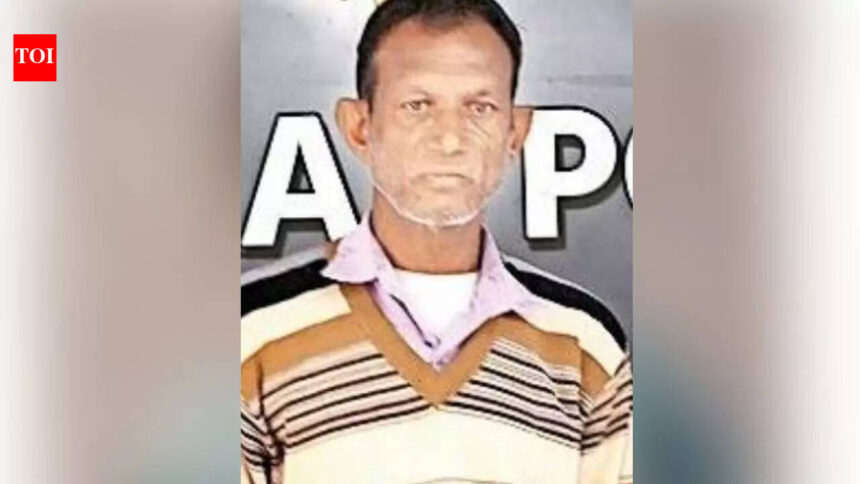
AHMEDABAD: The Banaskantha child trafficking case is not an isolated crime, as investigations have revealed. What first appeared to be the sale of just one child has unravelled into a far darker truth. At least 20 tribal children were trafficked and sold to buyers in Hyderabad over the past two years. The numbers speak not just to the scale of the racket, but of the exploitation of stigmatized and vulnerable young, unwed mothers and their families.Investigators confirmed that all 20 children hailed from tribal pockets of north Gujarat — Poshina, Kheroj, and Idar in Sabarkantha, and Danta and Deesa in Banaskantha.Senior crime branch officials said the children were not taken at random. Each victim came from the most fragile margins of society — families weighed down by poverty, social stigma. It was a crime aggravated by lack of healthcare and poor education, they said.Officials said shifting norms within these communities — particularly around family structures and social acceptance — were the cracks that traffickers exploited by offering an “opportunity”.“Till a couple of decades ago, unwed women bearing children was not unusual among tribals,” a senior crime branch officer told TOI. “But now, there is a shift in their belief system, which has made what once was normal, a taboo. Children out of wedlock are now bringing stigma, which traffickers exploited.”The racket came to light on Jan 29, when four accused driving from Himmatnagar were intercepted near Ahmedabad airport, carrying a 15-day-old baby to be ‘resold’ in Hyderabad. Their arrest widened the investigation net, leading to the nabbing of the key accused, Yunus Sindhi, from Danta recently. Officers say this could be just the tip of the iceberg.Sindhi’s associate Rami, from Banaskantha, methodically identified women who had delivered children out of wedlock, allegedly offering money to the mothers or relatives, bought the infants, and resold them to prospective buyers in Hyderabad through a larger inter-state network. The babies were priced based on their skin colour and gender — fair-skinned infants fetching up to Rs 7 lakh, while the darker ones were sold for Rs 2-3 lakh. Baby boys fetched a higher price than girls. The investigation is now focused on tracing money trails, identifying buyers in Hyderabad, and probing the role of IVF centres allegedly used to link childless couples with traffickers.Police said it wasn’t just the parents who sold the babies. In one case, police found that an infant was sold by his grandparents and uncle-aunt. “Health facilities, education, and awareness in these areas are lacking. With proper support, these families could have dealt with childbirth and social pressure differently,” he added, emphasizing that while social beliefs have changed, hospitals, counselling, welfare schemes, and legal awareness did not keep pace.