
Norah O’Donnell has interviewed a lot of people in her long career, including some of the most important women of our time, such as Secretary of State Hillary Clinton, Vice President Kamala Harris, activist Malala Yousafzai, singer Dolly Parton, and Supreme Court Justice Amy Coney Barrett. But when it came to women in history, she was shocked by how much she didn’t know.
“I went to a good, big, public high school in Texas; I went to Georgetown University,” she said. “And yet, my own understanding of women’s contribution to American history has been limited.”
Asked her reaction to things she had not known, O’Donnell replied, “You know that emoji that has the, like, head exploding? 🤯 It was sort of like that at every turn.”
Ballantine Books 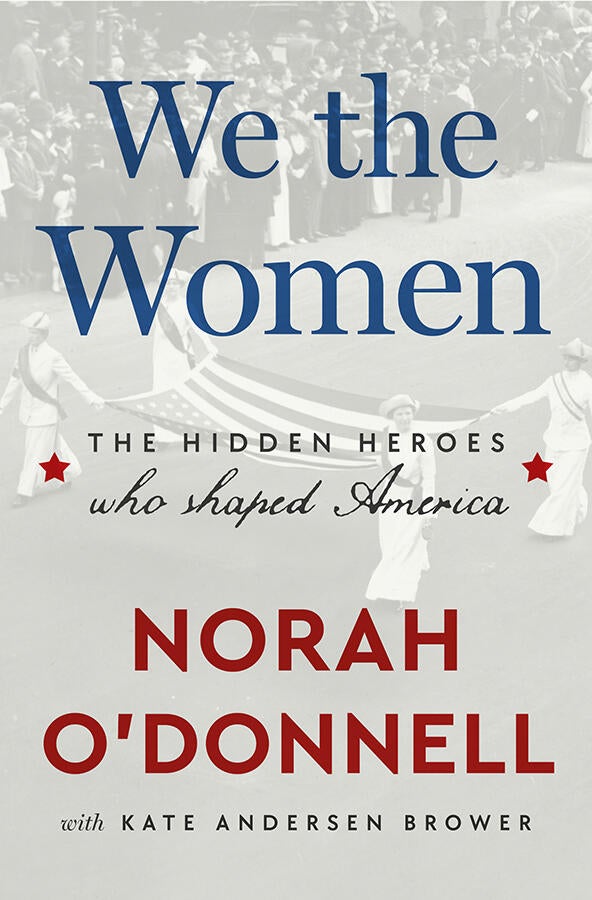
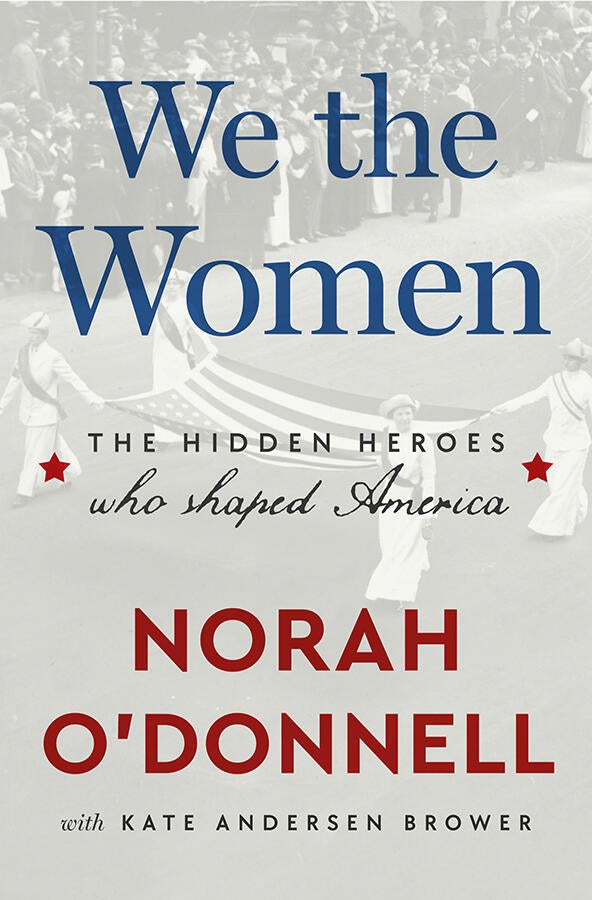
In her new book, “We the Women” (to be published Tuesday by Ballantine Books), O’Donnell tells the stories of many of these “hidden heroes,” from Civil War surgeon Dr. Mary Edwards Walker (the only woman to receive the Medal of Honor), to Congresswoman Patsy Mink, author of Title IX, which allowed legions of young women athletes to battle it out on the playing field.
O’Donnell kicks things off with America’s founding document – the one declaring independence and bearing the names of 56 founding fathers … and one very brave woman.
“When the founders decide they want the first official printing of the Declaration of Independence, with all the signatories’ name on it, who do they turn to? A printer in Baltimore, Mary Katharine Goddard,” said O’Donnell. “There’s a woman’s name on the Declaration of Independence. And remember too, putting your name on the Declaration of Independence was treasonous.”
At Philadelphia’s Museum of the American Revolution, director of collections and exhibitions Matthew Skic showed us what’s known as the Goddard Broadside, with Goddard’s name printed on the bottom.
“It’s showing that she has her own business,” said Skic. “It’s showing that she is a revolutionary, just like John Adams, just like John Hancock.”
CBS News 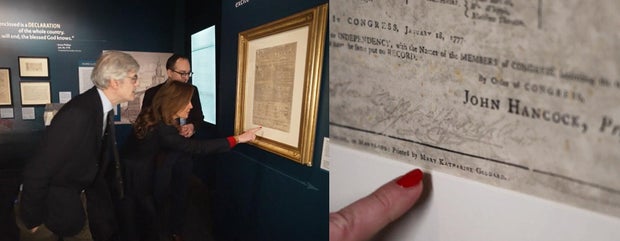
Yet a century after Goddard’s bold act, women still couldn’t vote. So, on July 4, 1876, a group led by Elizabeth Cady Stanton and Susan B. Anthony gathered at Philadelphia’s Independence Hall. They’d been denied speaking slots during America’s centennial celebration. “And what do these suffragists do since they weren’t included? They stormed the stage,” said O’Donnell.
They were armed with a “Declaration of the Rights of Women.” O’Donnell said, “They wanted to read aloud and make the point that women deserved the right to vote, and more.”
Still, it would take 44 more years before women won the right to vote in 1920. O’Donnell said, “This is why we have to study history. I mean, I’m 52 years old. It was just about 50 years ago that women could open up a credit card in their own name, could get a mortgage, to have financial freedom. Women couldn’t serve on juries in all 50 states until the early 1970s. Hello?”
Also in the book: Babe Didrikson, the first female sports superstar; Frances Perkins, the first female cabinet member; and Constance Baker Motley, the first Black woman to argue in front of the Supreme Court. Even so, when it came time to name a new director-counsel of the NAACP’s Legal Defense Fund, the job went to a man.
“She gets passed over, and guess what? Rejection, for her, becomes redirection,” said O’Donnell. “She gets elected to the New York State Senate, and then President LBJ makes her the first Black woman to serve on a federal bench. And because Constance Baker Motley becomes a federal judge, a young Ketanji Brown Jackson reads about her as a little girl in a magazine, and sees that they have the same birthday, and thinks maybe she could be a lawyer, too.”
If you can see it, you can believe it, O’Donnell says – which is why she thinks these stories aren’t just inspiring; they’re necessary.
“I cannot tell you how many times that I have experienced sexism,” she said.
CBS News 
One example she did share happened while she was interviewing at CBS News to cover the White House: “And I meet with this senior person at CBS, and he says, ‘So, you have three young children.’ And I said, ‘Yeah.’ Said, ‘Well, how are you gonna cover the White House with three young children at home?’ And I felt the blood rush up my neck, and I blurted out, ‘Do you ask men that question?’ But I did not allow his misogyny to change the path of my career. And if I had, I wouldn’t have sat in Walter Cronkite’s chair.”
O’Donnell would become the second woman to solo anchor the “CBS Evening News,” after Katie Couric. Connie Chung had co-anchored the evening news before at CBS, and Diane Sawyer at ABC. Today, though, the three networks’ news broadcasts are all anchored by men.
“I don’t think it’s a good thing,” O’Donnell said. “I certainly like all of the men that are in that position, and they deserve to be in that position. But I do think there should be a woman leading one of the evening news broadcasts. I do think it’s important to have representation.”
But when it comes to women and the future, O’Donnell is an optimist: “I think certainly in my generation there was a lot of, ‘Look, I’m sorry, but…’ or, ‘I hope I’m not offending anyone, but maybe we should…’ I think that’s starting to end. Younger women that I work with don’t do that. Younger women don’t apologize or wait for the men to finish speaking in a room. They just speak. They just say what needs to be done, and they do it efficiently, clearly, authoritatively, collaboratively, and then their record stands on its own. That is a sign of progress.”
READ AN EXCERPT: “We the Women” by Norah O’Donnell
For more info:
Story produced by Robbyn McFadden. Editor: Jason Schmidt.