


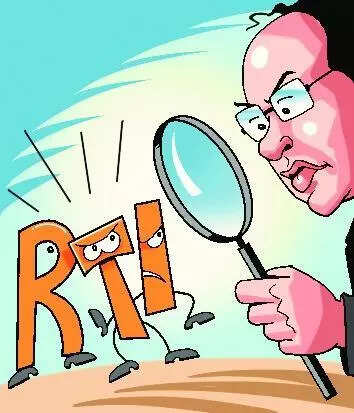
Kumbhar said file notings and internal debates form a crucial chain of accountability, and shielding them would only promote opacity and corruption.The Economic Survey argued that the RTI was “never intended as a tool for idle curiosity, nor as a mechanism to micro-manage the govt from the outside”.It warned that excessive transparency discourages candour among officials, pushing them towards cautious language and fewer bold ideas, thereby weakening effective governance. To support its case, the Survey cited transparency practices in Sweden, the US, and the UK, while maintaining that the proposal was “not an argument for secrecy by default”.Kumbhar recalled that a similar attempt was made in 2006, less than a year after the RTI Act came into force, when the Centre sought to exclude file notings, citing pressure on decision-making. “That proposal was rejected after widespread opposition from citizens, journalists, RTI activists, and civil society. Following Anna Hazare’s hunger strike, the govt was forced to withdraw it. What was rejected then is now being brought back in a more subtle but more dangerous form,” he said. He also dismissed international comparisons.Jayaram Venkatesan, convenor of Aappor Iyakkam, an anti-corruption movement based in Tamil Nadu, said transparency must be seen as a facilitator rather than an obstacle. “Transparency should be viewed as a catalyst for informed decision-making. In a functioning democracy, citizens must have the right to know about the govt’s deliberative processes, as this allows them to assess whether policies truly serve the public interest,” he told TOI.“To label such transparency a ‘hindrance’ to economic growth is misguided and akin to claiming that the Constitution itself is a barrier to economic progress. On the contrary, transparency fosters sustainable, pro-people growth by eliminating corruption and neutralising vested interests,” he added.New Delhi–based RTI activist and transparency campaigner Anjali Bharadwaj said there was no justification for amending the law. “It is ironic that the Economic Survey acknowledges the RTI as one of the most empowering laws, yet lists alleged problems without providing any evidence to justify its re-examination. Govts have tried this before, but in the absence of evidence, such amendments were rejected,” she said.Bharadwaj stated that the law contains robust exemptions under Sections 8 and 9, which are frequently invoked by public authorities to deny information. “Multiple studies show that the Act functions effectively. The RTI Act is considered one of the most progressive information-access laws globally, and what is needed is a stronger proactive disclosure regime,” she said.Former Chief Information Commissioner Shailesh Gandhi said there was no evidence that RTI constrained governance. “The Act, coupled with the amendment to Section 8(1)(j), which was inserted through the Digital Personal Data Protection Act, will become very weak. Citizens are the best vigilance monitors through RTI. This signals that citizens are no longer seen as the rulers of the nation,” he said.Congress president Mallikarjun Kharge criticised the proposal in a post on X, alleging that the Modi govt has systematically weakened the RTI through amendments affecting information commissioners, the Digital Personal Data Protection Act, and prolonged vacancies in the Central Information Commission. “After killing MGNREGA, is it RTI’s turn?” he asked.Venkatesh Nayak, director of Commonwealth Human Rights Initiative, a forum based in New Delhi said, “The latest Economic Survey (ES) revives a 20-year old idea of amending the RTI Act to keep file notings, records of internal deliberations and draft papers out of the citizenry’s reach. The UPA Govt had crafted an amendment proposal along similar lines in 2006 but could not muster enough support to table it in Parliament. The NDA, particularly, the BJP was most vocal in opposing the move along with civil society. It is strange that they have revived the idea now without producing a shred of evidence as to how many times draft papers and internal deliberations have been disclosed and what detriment such openness has caused to the government’s interests. The idea of ministerial veto over disclosure is also not a new one. Several Commonwealth countries like the UK, Australia, New Zealand and even Scotland have such provisions in their freedom of information laws. But have been used rarely and even when used, they are subject to strict judicial review. The most famous case of judicial correction of the abuse of veto power is the eventual disclosure of the correspondence between the then Prince of Wales, now King Charles III, and government departments. The Supreme Court of England and Wales overruled the veto holding that ministers cannot overrule an FoI appellate Tribunal’s decision simply because they do not agree with it. The ES is silent about when the ministerial veto will be applied- before the Information Commission decides an appeal or after a decision of disclosure is issued by the Commission. This idea of ministerial veto runs counter to the very grain of the people’s right to know as explained by Justice P N Bhagwati in the S P Gupta vs President of India Constitution Bench case in 1983 (also known as the first judges case). Justice Bhagwati said that protecting cabinet records and other official papers which contain internal deliberations within government, on the ground that it will promote candour and frankness among bureaucrats as they will not fear public disclosure of their views, is no longer sustainable in the 20th century. Disclosure cannot be withheld on the ground that it may embarass the government or the head of the department as that is not a public interest argument. Crown privilege which protected such interests until the 20th century has been replaced by the much stronger test of public interest immunity. Will the disclosure of records harm a legitimate public interest or not is the current test. This is exactly how the RTI Act especially Section 8(1) and the public interest override in Section 8(2) have been crafted. Will disclosure harm any of the protected interests in the ten exemption clauses or not is the test. And even if they do, the Information Commission can direct disclosure of even exempt information in the larger public interest. The ES does not account for these recent developments, instead it seeks public debate on ideas and practices that have long been discarded or are rarely used now. The government almost always being an interested party in a matter of information access dispute cannot decide what is or not in the public interest independently like the judiciary or an autonomous Information Commission. To float such ideas and to end that Chapter and the entire ES with a reference to the Late Mark Tully’s 9th Palkhivala Memorial Lecture whose title says “India…must move from a Ruler’s Raj to a very Citizen’s Raj” is a stark irony. This is just the last on the list of examples of contradictory ideas that pepper the ES which calls for the transformation of our welfare state into an entrepreneurial state where citizens are reduced to the status consumers of public services from being equal stakeholders in the world’s largest democracy. The DPDP Act amended the RTI Act in a retrograde manner by removing the parity between the citizenry and their elected representatives like MPs and MLAs/MLCs, in terms of information access. Now the ES seeks to initiate debate on more regressive measures that will curtail the contours of the transparency regime further. Strangely, the Chief Economist who authored the ES seeks to look upon the citizenry as the adversary of the State rather than the very reason and purpose for the latter’s continued existence.