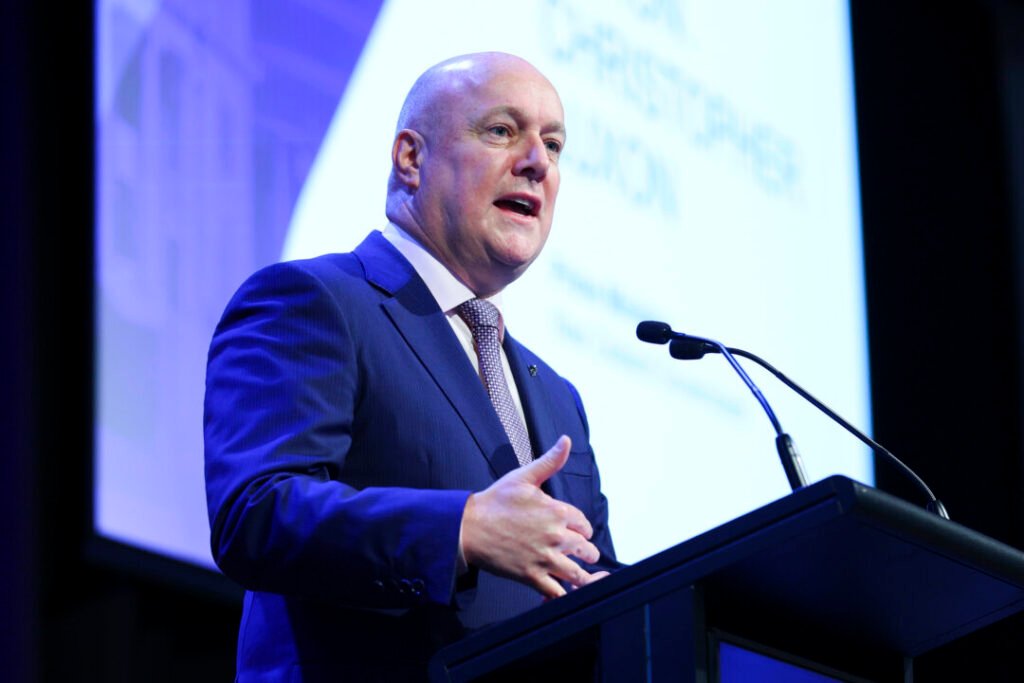

Prime Minister Christopher Luxon speaks during a Breakfast with the Prime Minister event at Te Papa in Wellington, New Zealand on April 10, 2025. Hagen Hopkins/Getty Images
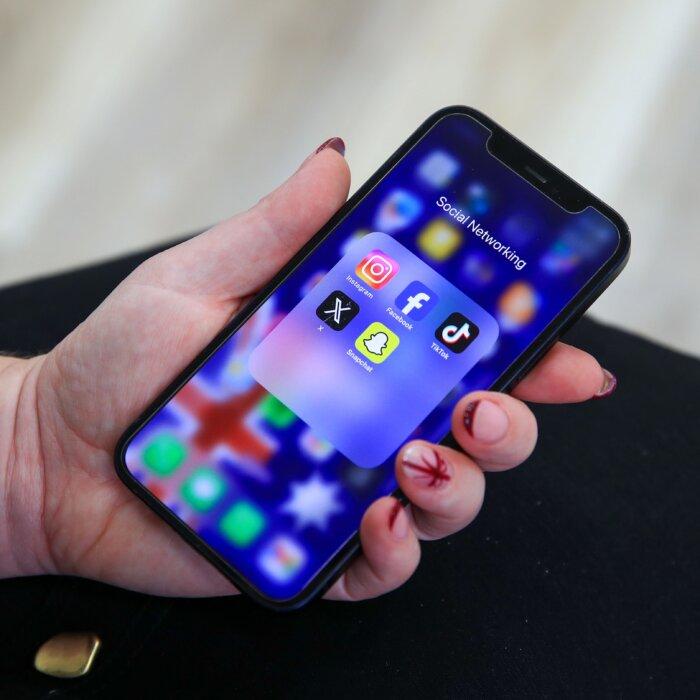
New Zealand is the latest country to try ban under-16-year-olds from accessing social media platforms, in addition to AI companion apps.
The Online Safety (Minimum Age and Child Safety Risk Assessment) Bill has yet to identify which platforms will be affected, leaving that to be decided by the regulator.
The regulator will consider features like algorithm-driven recommender feeds, endless scroll, “likes” and reaction counts, and disappearing stories.
Related Stories
Social media and AI firms will need to roll-out “age estimation” technology, by assessing the “biological or behavioural” characteristics of users through features like facial scanning.
Big Tech firms will also need to do an “age inference,” which requires examining existing user data and activity patterns.
Social media companies must produce a written child-safety risk assessment at least yearly, covering illegal content, bullying, self-harm, grooming, sexual content and misinformation—handing it to a new regulator: the Secretary for Internal Affairs.
The regulator gets a series of tools to control the tech giants’ behaviour including public warnings then civil penalties up to the greater of $40 million or 10 percent of global turnover.
As a last resort, courts can order “service restriction” (cutting off advertisers and payment processors) or “access restriction”—effectively ordering internet service providers and app stores to block a platform in New Zealand.
Children, parents and caregivers face no penalties at all.
“We simply cannot accept the harm being done to a generation of New Zealand children,” Prime Minister Luxon said.
However, passage of the law is uncertain given the opposition from two of the three governing coalition parties, NZ First and the libertarian-leaning ACT.
“Obviously, parents have a role to play in monitoring what social media platform their children are on, but so do social media companies. We have protections to keep children safe in the real world and we need them in the virtual world too,” Luxon said.
“We know that we will not get every single child off social media, but early evidence from Australia shows minimum age requirements are already changing behaviour.”
“This new report from eSafety commissioner shows that social media giants seem to be trying to get away with doing the bare minimum—I have serious concerns about their compliance with the law,” said Australian Communications Minister Anika Wells, in response to the regulator’s concerns.
The duties imposed on the platforms come into force six months after the New Zealand bill becomes law, and it must be formally reviewed within two years.