

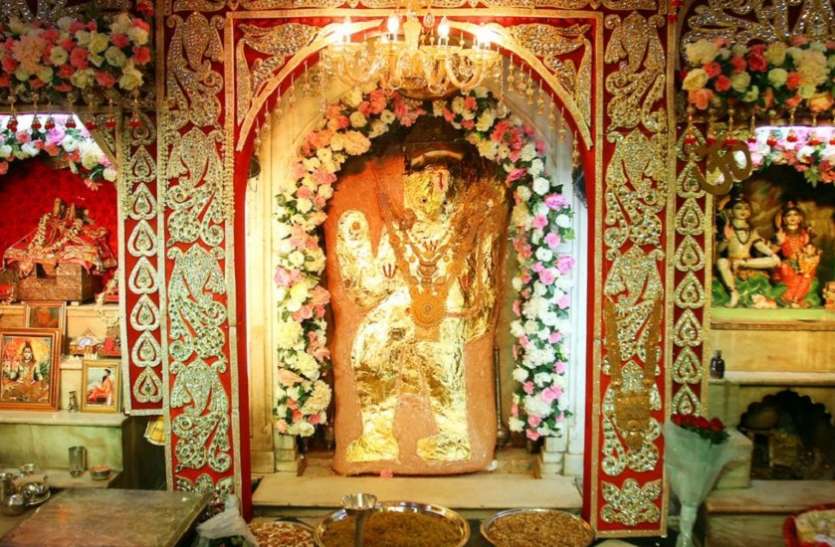
Mehandipur Balaji : The spiritual journey from the powerful temple of Mehandipur Balaji in Rajasthan to the revered shrine of Khatu Shyam in Sikar district represents more than mere geographical travel—it’s a pilgrimage between two of North India’s most spiritually significant destinations. Each year, thousands of devotees undertake this sacred route, seeking blessings, fulfillment of vows, and spiritual transformation. While the physical distance is measurable, the spiritual journey transcends kilometers, connecting two distinct yet complementary centers of faith that have drawn worshippers for centuries.
This comprehensive guide will not only provide precise details about the Mehandipur Balaji to Khatu Shyam distance by road but will also delve into the rich spiritual significance of both temples, offer practical travel advice, suggest optimal routes, and provide cultural insights to enhance your pilgrimage experience. Whether you’re planning your first visit or are a seasoned devotee, this guide serves as your complete companion for this sacred journey.
Understanding the Spiritual Significance: Why This Pilgrimage Matters
The Divine Protector: Mehandipur Balaji Temple
Nestled in the Dausa district of Rajasthan, the Mehandipur Balaji Temple is renowned not for architectural grandeur but for its extraordinary spiritual power. Dedicated to Lord Hanuman in his fierce Balaji form, this temple has gained legendary status as a center for spiritual healing, particularly for those believed to be afflicted by negative energies, supernatural disturbances, or mental ailments.
Unlike most Hindu temples, Mehandipur has unique rituals that involve confronting and dispelling negative forces. The temple’s practices date back centuries, with legends suggesting its powers were revealed to a priest in a dream. What makes this temple extraordinary is its approach to spiritual healing—elaborate exorcism rituals performed publicly, with devotees often undergoing intense experiences believed to cleanse them of possessing spirits or negative karma.
The temple complex includes three main shrines: Balaji Maharaj (the main deity), Pretraj Sarkar (king of spirits), and Bhairav Ji. The synergy between these three deities is believed to create a powerful spiritual ecosystem where negative energies can be neutralized and devotees can find relief from afflictions that often don’t respond to conventional treatments.
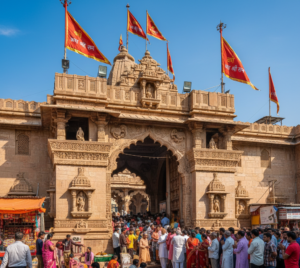
The Benevolent Bestower: Khatu Shyam Temple
Approximately 200 kilometers northwest lies the Khatu Shyam Temple in the village of Khatu, Sikar district. This temple venerates Barbarika, the grandson of Bhima (second Pandava), who became known as Shyam Baba or Khatu Shyam Ji after being blessed by Lord Krishna. According to Mahabharata legends, Barbarika had acquired such powerful weapons that he could have single-handedly won the Kurukshetra war, but Lord Krishna tested his devotion and eventually asked for his head as a donation.
Pleased with his unwavering devotion, Krishna granted him a boon: he would be worshiped in Kaliyuga by the name “Shyam.” The deity is particularly revered for granting wishes and fulfilling the desires of true devotees. The temple’s annual fair (Phalgun Mela) draws millions of visitors, making it one of Rajasthan’s largest religious gatherings.
The spiritual atmosphere at Khatu Shyam contrasts with Mehandipur—while both are powerful, Khatu Shyam emanates a gentler, more benevolent energy focused on blessing devotees with prosperity, health, and fulfillment of desires rather than confronting negative forces.
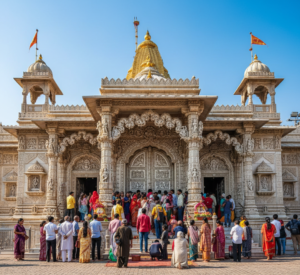
The Practical Pilgrimage: Mehandipur Balaji to Khatu Shyam Distance by Road
Exact Distance Measurements
The road distance between Mehandipur Balaji Temple and Khatu Shyam Temple varies slightly depending on the specific route taken, but the most commonly traveled and efficient route covers approximately 195 to 210 kilometers.
-
Shortest possible route: 195 km (via NH21 and SH23)
-
Most commonly used route: 203 km (via NH21 and RJ SH-23)
-
Route with best road conditions: 208 km (via NH21 and NH52)
-
Practical driving distance (accounting for temple approach roads): 200-205 km
These distances are measured from temple to temple, accounting for the actual starting point at Mehandipur Balaji Temple (located in Mehandipur village, Dausa district) to Khatu Shyam Temple (in Khatu village, Sikar district). It’s important to note that many mapping applications might show slightly varying distances due to different algorithm calculations and road updates.
Travel Time: More Than Just Kilometers
While the distance is significant, the travel time depends heavily on multiple factors:
-
Optimal conditions: 4 to 4.5 hours non-stop driving
-
Realistic pilgrimage travel: 5 to 6 hours (including brief stops)
-
With significant traffic/conditions: Up to 7 hours
-
Devotee pace (frequent stops for prayers/meals): 6-8 hours
The travel duration is influenced by:
-
Road conditions (which vary between excellent highways and occasional rural patches)
-
Vehicle type (private car vs. bus vs. hired taxi)
-
Time of day (daylight vs. nighttime travel)
-
Season (festival seasons see significantly more pilgrim traffic)
-
Weather conditions (Rajasthan’s extreme temperatures can affect travel)
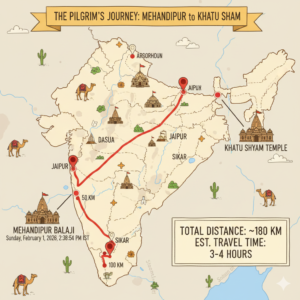
Detailed Route Analysis: Choosing Your Path
Primary Route: NH21 and RJ SH-23 (203 km)
This is the most recommended route for pilgrims, balancing good road conditions with reasonable distance.
Segment 1: Mehandipur to Dausa (25 km, 35-45 minutes)
-
Start from Mehandipur Balaji Temple onto local village roads
-
Join the Dausa-Lalsot Road
-
Navigate through Dausa city (can be congested during peak hours)
-
Road quality: Moderate, with some patches requiring careful driving
Segment 2: Dausa to Sikar via NH21 (135 km, 2.5-3 hours)
-
Join NH21 at Dausa—this is the major highway section
-
Pass through towns: Kotputli, Narnaul (Haryana border area)
-
Excellent four-lane highway for majority of this stretch
-
Multiple fuel stations, decent food options available
-
Toll plazas: Approximately 2-3 tolls along this segment
Segment 3: Sikar to Khatu via RJ SH-23 (43 km, 45-60 minutes)
-
Exit NH21 at Sikar toward Khatu
-
State highway with generally good conditions
-
Pass through rural Rajasthan landscape
-
Final approach to Khatu village can be congested during peak pilgrimage seasons
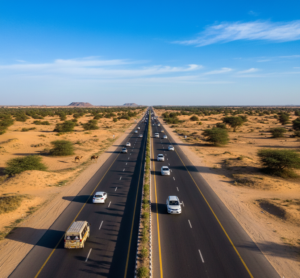
Alternative Route: Via NH21 and NH52 (208 km)
Slightly longer but often preferred during festival seasons when Khatu approaches are crowded.
Advantages:
-
Better bypass around Sikar city congestion
-
More consistent highway conditions
-
Additional facilities along the route
-
Often faster despite longer distance due to reduced congestion
Disadvantages:
-
5-8 km additional distance
-
Possibly higher toll charges
Scenic Route: Via Rural Roads (195 km, shortest but slowest)
Only recommended for those familiar with rural Rajasthan roads and not time-constrained.
Characteristics:
-
Passes through authentic Rajasthani villages
-
Opportunities to see rural life and smaller temples
-
Poor to moderate road conditions
-
Minimal facilities (fuel, food, repairs)
-
Signage can be inadequate in places
-
Potentially beautiful but challenging drive
Mile-by-Mile Breakdown: Key Landmarks and Stops
0-50 km: The Mehandipur Departure
0 km: Start at Mehandipur Balaji Temple. Take blessings before departure.
8 km: Reach the outskirts of Mehandipur village. Last point for basic supplies from the temple area.
25 km: Arrive at Dausa city. Considered a major milestone. Good place for:
-
Fuel refill (multiple petrol pumps)
-
Breakfast/meal options (local dhabas and restaurants)
-
ATM facilities
-
Vehicle check if needed
Landmark: Dausa is known as the “City of Stones” with several historical attractions, though most pilgrims continue directly.
45-50 km: Join NH21 properly after navigating Dausa outskirts. This marks the beginning of the highway section.
50-150 km: The Highway Stretch
75 km: Approaching Kotputli area. Notable for:
-
Large dhabas (highway restaurants)
-
Major fuel stations
-
Rest area facilities
110 km: Narnaul region (touching Haryana border). Historical significance as birthplace of Sher Shah Suri’s finance minister.
125 km: Midpoint region. Good psychological milestone. Several pilgrim groups stop for prayers or short breaks.
140-150 km: Approaching Sikar district. Landscape begins changing with more agricultural areas visible.
150-203 km: The Final Approach
160 km: Sikar city outskirts. Major urban center with all facilities:
-
Hospitals (in case of emergency)
-
Numerous dining options
-
Shopping for pilgrimage items
-
Last major fuel stop before Khatu
175 km: Turnoff toward Khatu on RJ SH-23. Distinct change from national highway to state highway.
190 km: Begin seeing signs for Khatu Shyam. Increasing religious signage and shops selling pilgrimage items.
195-200 km: Enter Khatu village. Traffic slows significantly. Follow signs/police directions to temple or parking.
203 km: Arrive at Khatu Shyam Temple. Specific drop-off points exist; parking may require additional walking.
Transportation Options: How to Travel
Private Vehicle
Advantages:
-
Flexibility in timing and stops
-
Comfort and privacy
-
Ability to carry pilgrimage items
-
Can visit additional sites en route
Considerations:
-
Driver fatigue on 4-5 hour journey
-
Parking challenges at both temples (especially during festivals)
-
Fuel costs: Approximately ₹1500-2000 for round trip (petrol)
-
Toll charges: Approximately ₹300-400 one way
Recommended vehicle types:
-
SUV/MPV for comfort on varied roads
-
Sedan with good ground clearance
-
Avoid very low ground clearance vehicles
Taxi Services
Availability:
-
Local taxis available at Dausa and Sikar
-
Pre-booked cabs from Jaipur (additional cost)
-
Online cab services may operate in urban areas
Cost estimates:
-
One-way taxi: ₹3500-5000
-
Round trip with waiting: ₹7000-9000
-
Tempo travelers (larger groups): ₹8000-12000
Tips for hiring:
-
Negotiate clearly including all tolls, parking, and driver charges
-
Confirm vehicle condition before departure
-
Prefer drivers familiar with pilgrimage route
Bus Services
Direct options: Limited direct buses; usually requires changes
Common route: Mehandipur to Sikar, then Sikar to Khatu
Bus types:
-
Rajasthan State Road Transport Corporation (RSRTC)
-
Private deluxe/volvo buses (more comfortable)
-
Local buses (most economical but least comfortable)
Approximate costs:
-
State bus: ₹300-400 per person
-
Private bus: ₹500-700 per person
-
Total travel time: 6-8 hours with changes
Group Pilgrimage Tours
Many religious tour operators organize packaged tours including:
-
Transportation
-
Accommodation
-
Temple guidance
-
Meals
These can be ideal for first-time pilgrims or elderly travelers.
Optimal Travel Times: When to Make the Journey
Seasonal Considerations
Winter (October-March):
-
Best time for pilgrimage
-
Pleasant daytime temperatures (15-25°C)
-
Cool nights
-
Peak pilgrimage season around festivals
-
Consider: December-January mornings can be very cold (2-10°C)
Summer (April-June):
-
Extremely hot (35-45°C, can exceed 48°C)
-
Travel recommended only in early morning or evening
-
Carry ample water (5+ liters per person)
-
Vehicle air conditioning essential
-
Road surfaces can become very hot
Monsoon (July-September):
-
Moderate temperatures but high humidity
-
Occasional heavy rainfall
-
Some rural road sections may become difficult
-
Beautiful green landscapes
-
Fewer crowds
Time of Day Recommendations
Early Morning Departure (4:00-5:00 AM):
-
Advantages: Avoid heat, less traffic, reach Khatu by midday
-
Disadvantages: Very dark on rural roads, temple not open for darshan at departure
Morning Departure (7:00-8:00 AM):
-
Balanced option
-
Daylight for entire journey
-
Arrive Khatu by early afternoon
-
Temple darshan possible same day
Avoid:
-
Midday summer departure (extreme heat)
-
Late evening arrival at Khatu (difficult to find accommodation)
Festival Periods: Special Planning Required
Mehandipur Festivals:
-
Hanuman Jayanti (March-April): Very crowded
-
Tuesdays and Saturdays: Regular weekly crowds
Khatu Shyam Festivals:
-
Phalgun Mela (February-March): Millions of visitors
-
Shyam Jayanti (Kartik month): Major celebration
-
Ekadashis: Weekly crowds
During festivals:
-
Road traffic increases dramatically
-
Travel time can double
-
Accommodation must be booked months in advance
-
Special traffic management implemented
Spiritual Preparation: Beyond the Physical Journey
Rituals Before Departure from Mehandipur
-
Complete the prescribed rituals:
-
Morning aarti if staying overnight
-
Offer prasad to Balaji Maharaj
-
Seek permission (aashirwad) for safe journey
-
Complete any prescribed remedies if undergoing treatment
-
-
Make appropriate offerings:
-
Typically includes coconut, red cloth, flowers, and besan ladoo
-
Monetary donation as per vow or capacity
-
-
Receive blessings from temple priests:
-
Particularly important if you’ve come for specific spiritual reasons
-
Can request protective prayers for the journey
-
Mental and Spiritual Mindset
Transitioning energies: Moving from Mehandipur’s intense, confrontational spiritual energy to Khatu Shyam’s gentle, benevolent energy requires mental preparation. Some devotees observe silence during part of the journey to facilitate this transition.
Setting intentions: Clarify what you seek at Khatu Shyam—whether gratitude, specific blessings, or general darshan.
Pilgrimage mindset: Remember this is tirtha yatra (pilgrimage), not tourism. Maintain respectful thoughts and actions throughout.
Physical Items for Spiritual Journey
-
Prasad for Khatu Shyam: Typical offerings include:
-
Mishri (crystal sugar)
-
Seasonal fruits
-
Chunri (red ceremonial cloth)
-
Flowers (particularly marigold)
-
-
Personal prayer items:
-
Mala (prayer beads)
-
Religious texts or prayer books
-
Personal deities or pictures
-
-
Protective items (as per belief):
-
Raksha sutra (protective thread from Mehandipur)
-
Holy water from Mehandipur
-
Vibhuti (sacred ash)
-
Practical Travel Guide: Ensuring a Smooth Journey
Documentation and Essentials
Must carry:
-
Valid photo ID (Aadhar, Driver’s License, Passport)
-
Vehicle documents if driving (RC, Insurance, DL)
-
Emergency contact numbers
-
Temple authorities contact (if arranged special darshan)
Recommended:
-
Physical maps (network can be unreliable in rural areas)
-
Printed hotel reservations
-
Pilgrimage group contact details if applicable
Packing List for Pilgrimage
Spiritual items:
-
Prayer materials
-
Offerings for temples
-
Appropriate clothing for temple visits
Comfort items:
-
Light shawl/wrap (for temple and cool mornings/evenings)
-
Comfortable walking shoes
-
Small sitting mat (for temple queues)
-
Umbrella/hat for sun protection
Health and safety:
-
Basic first aid kit
-
Personal medications
-
Hand sanitizer
-
Water purification tablets/filter bottle
Vehicle essentials (if driving):
-
Spare tire and tools
-
Jump cables
-
Basic tool kit
-
Extra water for radiator
Navigation Tips
Technology aids:
-
Google Maps works reasonably well but download offline maps
-
Maps.me provides good offline navigation
-
Local pilgrimage apps may offer temple-specific guidance
Traditional navigation:
-
Follow NH21 signage consistently
-
Ask locals for confirmation at major junctions
-
Follow pilgrim buses/groups heading same direction
Landmarks to watch for:
-
Dausa bypass (confirmation you’re on right route)
-
Kotputli toll plaza (major milestone)
-
Sikar fort (visible from distance, confirms correct approach)
-
Khatu Shyam hoardings (increase as you near destination)
Image Prompt: A pilgrim’s bag open showing essential items for the journey including prayer beads, water bottle, first aid kit, maps, and traditional offerings wrapped in cloth.
Road Conditions and Safety Considerations
Highway Conditions (NH21)
Quality: Generally excellent four-lane divided highway
Maintenance: Regularly maintained by NHAI
Safety features:
-
Adequate signage in English and Hindi
-
Periodic emergency call boxes
-
Reflectors and lane markings generally good
-
Some sections have animal crossings (cattle, wildlife)
Concerns:
-
Occasional potholes after monsoon
-
Stray animals on road, especially near villages
-
High-speed traffic requires constant attention
-
Limited street lighting if traveling at night
Rural Road Conditions (Approach to Khatu)
Variable quality: Can range from good to poor
Common issues:
-
Narrow sections requiring careful passing
-
Unexpected speed breakers (often unmarked)
-
Local traffic including tractors, animals, pedestrians
-
Reduced signage in rural areas
Safety Recommendations
-
Driving safety:
-
Avoid night driving on rural stretches
-
Maintain moderate speed (80-90 kmph on highway)
-
Watch for unexpected speed breakers
-
Use horns at blind curves (common practice)
-
-
Vehicle safety:
-
Check tires, brakes, lights before departure
-
Ensure adequate fuel (fill at Dausa and Sikar)
-
Keep windows closed in rural areas (dust, insects)
-
-
Personal safety:
-
Keep valuables secured and not visible
-
Travel with companions when possible
-
Share location with family members
-
Have emergency cash separate from main funds
-
Emergency Information
Medical facilities:
-
Dausa: Government Hospital, private clinics
-
Kotputli: Several nursing homes
-
Sikar: Multiple hospitals including government facility
-
Khatu: Basic medical facilities, larger hospitals in Sikar
Police assistance:
-
Highway patrol on NH21
-
Local police stations in all towns
-
Emergency number: 100 (police), 108 (ambulance)
Vehicle assistance:
-
Multiple mechanic shops along NH21
-
Major fuel stations often have basic assistance
-
Roadside assistance numbers (keep handy)
Accommodation Options Along the Route
Near Mehandipur Balaji
Temple guest houses:
-
Basic facilities, often crowded
-
Priority for those undergoing treatment
-
Advance booking difficult
Private accommodations in Dausa:
-
Budget hotels: ₹800-1500/night
-
Mid-range options: ₹1500-3000/night
-
Generally basic but clean facilities
En Route Stops
Kotputli area:
-
Highway hotels/motels
-
Designed for traveler stops
-
Typically ₹1000-2000/night
Sikar city:
-
Wide range of options
-
Budget to mid-range hotels
-
Recommended for breaking journey if needed
-
Prices: ₹1200-4000/night
Near Khatu Shyam
Temple accommodations:
-
Various dharamshalas (pilgrim rest houses)
-
Often free or minimal charge
-
Basic facilities, high demand during festivals
-
Booking through temple trust (advance sometimes possible)
Private hotels in Khatu:
-
Limited options, book well in advance
-
Prices increase dramatically during festivals
-
Range: ₹1500-5000/night
Sikar as base: Many pilgrims prefer staying in Sikar (30-40 minutes from Khatu) where accommodation options are better and visiting Khatu for day darshan.
Culinary Journey: Food and Water Considerations
Traditional Temple Food
Mehandipur: Simple vegetarian food available in temple area
-
Satvik meals (no onion/garlic)
-
Often included in accommodation packages
-
Local shops sell basic snacks
Khatu Shyam: Famous for temple prasad
-
Special laddu prasad
-
Langar (community kitchen) during festivals
-
Local shops sell pilgrim-friendly snacks
En Route Dining Options
Dausa: Good selection of Rajasthani cuisine
-
Traditional dhabas
-
Local restaurants with thali options
-
Recommended: Try dal baati churma if time permits
NH21 Highway Stops:
-
Standard highway dhabas every 20-30 km
-
Quality varies; busier ones typically better
-
Typical options: paratha, curry, rice, snacks
-
Recommended chains: Haveli, Highway King, etc.
Sikar: Best variety of food options
-
Local Rajasthani restaurants
-
North Indian cuisine widely available
-
Some multi-cuisine options
-
Sweet shops for traditional treats
Health and Dietary Considerations
Water safety:
-
Drink only sealed bottled water
-
Avoid ice in drinks
-
Use water purifiers if carrying
Food safety:
-
Eat freshly prepared hot food
-
Avoid uncooked items (salads, chutneys) unless sure of water source
-
Pilgrims often carry simple home food for journey
Special diets:
-
Jain food options available in larger towns
-
Gluten-free options limited (rice-based diets safest)
-
Diabetics should carry appropriate snacks
Recommended Food Stops
-
Morning departure: Breakfast at Dausa (25 km point)
-
Mid-journey: Lunch at Kotputli area (75-80 km point)
-
Pre-Khatu stop: Light refreshments at Sikar (160 km point)
-
At Khatu: Temple prasad as first food upon arrival
Cultural Insights: Understanding Local Customs
Temple Etiquette at Mehandipur
Unique aspects:
-
Photography restrictions in certain areas
-
Specific procedures for those seeking treatment
-
May witness intense spiritual practices (maintain respectful distance)
-
Follow priest instructions precisely
Dress code:
-
Modest clothing covering shoulders and knees
-
Traditional Indian wear appreciated but not mandatory
-
Remove shoes at designated areas only
Behavioral norms:
-
Maintain solemn demeanor
-
Avoid loud conversations
-
Do not interfere with rituals
-
Women may be asked to observe certain restrictions during specific rituals
Temple Etiquette at Khatu Shyam
General practices:
-
Longer queues common; practice patience
-
Special queues may exist for elderly/disabled
-
Prasad collection after darshan
Offering rituals:
-
Specific procedures for offering chunri
-
Monetary donations in temple hundi
-
Flower offerings at specific points
Cultural nuances:
-
Local devotees may engage in bhajan/kirtan
-
Joining respectfully is appreciated
-
Circumambulation (parikrama) of temple is common
Interacting with Locals
Language considerations:
-
Hindi widely understood
-
Rajasthani dialects in rural areas
-
Basic English in tourist areas
-
Learning a few phrases appreciated:
-
“Jai Shyam” or “Jai Balaji” (greetings)
-
“Dhanyavad” (thank you)
-
“Kripya” (please)
-
Cultural sensitivity:
-
Seek permission before photographing people
-
Respect local customs even if unfamiliar
-
Bargain politely if shopping
-
Temple areas are conservative; dress and behave accordingly
Regional Variations in Practice
Mehandipur area:
-
More intense devotional practices
-
Emphasis on spiritual healing
-
May encounter devotees in various states of spiritual practice
Khatu area:
-
Joyful, celebratory devotion
-
Focus on blessing and prosperity
-
Community participation stronger
Cost Breakdown: Budgeting Your Pilgrimage
Transportation Costs
Private car (round trip from Jaipur area):
-
Fuel: ₹1800-2500 (depending on vehicle)
-
Tolls: ₹600-800
-
Parking: ₹100-200
-
Total: ₹2500-3500
Taxi services (full trip):
-
One-way: ₹3500-5000
-
Round trip with waiting: ₹7000-10000
-
Total: ₹7000-10000
Public transportation:
-
Bus to Dausa: ₹100-200
-
Bus Dausa to Sikar: ₹150-250
-
Bus Sikar to Khatu: ₹50-100
-
Local transport: ₹200-300
-
Total: ₹500-850 per person
Accommodation Costs
Budget pilgrimage:
-
Dharamshalas: ₹0-200/night
-
Basic hotels: ₹800-1200/night
-
Total (2 nights): ₹1600-2800
Comfort pilgrimage:
-
Mid-range hotels: ₹1500-2500/night
-
Total (2 nights): ₹3000-5000
Luxury options (in Sikar/Jaipur):
-
Better hotels: ₹3000-5000/night
-
Total (2 nights): ₹6000-10000
Food and Miscellaneous
Food costs:
-
Simple meals: ₹150-300 per meal
-
Temple donations: ₹101-501 (typical)
-
Prasad/offerings: ₹200-500
-
Total per person: ₹1500-2500 for 2-3 days
Additional costs:
-
Shopping for religious items: ₹500-2000
-
Emergency funds: ₹2000-5000 recommended
-
Photography charges (if applicable): ₹50-200
Sample Budgets
Economy pilgrim (per person):
-
Transport: ₹800
-
Accommodation: ₹400 (dharamshala)
-
Food: ₹1200
-
Temple offerings: ₹300
-
Total: ₹2700 for 2 days
Comfort pilgrim (per person sharing):
-
Transport: ₹2000 (taxi share)
-
Accommodation: ₹1200 (hotel share)
-
Food: ₹2000
-
Temple offerings: ₹500
-
Total: ₹5700 for 2 days
Family trip (4 people, private car):
-
Transport: ₹3500 (car)
-
Accommodation: ₹4000 (2 rooms)
-
Food: ₹6000
-
Temple offerings: ₹2000
-
Miscellaneous: ₹2000
-
Total: ₹17500 for 2 days
Image Prompt: A budget breakdown infographic showing percentage distribution of costs for a typical Mehandipur to Khatu Shyam pilgrimage including transport, accommodation, food, and offerings.
Special Considerations for Different Travelers
Elderly Pilgrims
Planning considerations:
-
Break journey at Sikar (160 km point)
-
Pre-book accommodations with ground floor access
-
Arrange for wheelchair if needed (available at temples)
-
Carry all medications with prescriptions
Travel adjustments:
-
Avoid peak heat hours
-
Schedule extra time for temple darshan (use special queues if available)
-
Consider hiring private vehicle for comfort
Health precautions:
-
Carry medical records
-
Identify hospitals along route
-
Travel with companion if possible
-
Stay hydrated consistently
Families with Children
Child-friendly planning:
-
Schedule more frequent breaks
-
Carry snacks children prefer
-
Plan for toilet stops (not all highway stops have clean facilities)
-
Entertainment for travel time
Temple visit tips:
-
Prepare children for crowds and waiting
-
Explain temple etiquette in advance
-
Dress children in easily identifiable clothing
-
Establish meeting points if separated
Safety measures:
-
Keep recent photos on phone
-
Write contact information on child’s clothing or wristband
-
Teach children to identify police/temple security
International Visitors
Documentation:
-
Carry passport copies at all times
-
Keep embassy contact information
-
Have digital and physical copies of documents
Cultural preparation:
-
Research temple customs thoroughly
-
Learn basic Hindi phrases for pilgrimage context
-
Understand appropriate dress codes
-
Be prepared for different hygiene standards
Practical considerations:
-
International driving permit if driving
-
Local SIM card for navigation/communication
-
Currency exchange in cities (limited in rural areas)
-
Travel insurance covering health emergencies
Solo Travelers (Especially Women)
Safety recommendations:
-
Share itinerary with trusted contacts
-
Check in regularly during journey
-
Choose accommodations with good reviews from solo travelers
-
Avoid traveling after dark
Social strategies:
-
Join pilgrimage groups for parts of journey
-
Connect with other devotees at temples
-
Use women-only accommodations if available
Practical tips:
-
Dress conservatively to avoid unwanted attention
-
Carry personal safety devices if comfortable
-
Trust instincts about people/situations
Spiritual Integration: Combining the Two Pilgrimages
Theological Connections
While Mehandipur Balaji and Khatu Shyam represent different deities and traditions, they share important theological connections in the broader Hindu framework:
Complementary aspects of divinity:
-
Mehandipur: Fierce protective aspect (Hanuman as guardian)
-
Khatu Shyam: Benevolent granting aspect (Shyam as wish-fulfiller)
-
Together representing protection and provision
Dharma and Bhakti:
-
Both emphasize righteous living and devotion
-
Mehandipur often addresses dharma through overcoming obstacles
-
Khatu Shyam emphasizes bhakti (devotion) as path to blessings
Karma and Grace:
-
Mehandipur deals with negative karma/energies
-
Khatu Shyam represents divine grace overcoming karma
-
Sequential visit can symbolize transformation from bondage to grace
Ritual Connections Between Temples
Some devotees follow specific practices connecting both pilgrimages:
Sequential offerings:
-
Begin specific vow at Mehandipur
-
Complete or give thanks at Khatu Shyam
-
Example: Offering red chunri at both temples
Prayer continuity:
-
Special prayers started at Mehandipur continued to Khatu Shyam
-
Mantra or japam practice maintained throughout journey
Physical connections:
-
Carrying holy ash from Mehandipur to offer at Khatu Shyam
-
Using same prayer items at both temples
Personal Transformation Journey
Many pilgrims report the sequential visit creates a powerful spiritual trajectory:
From cleansing to blessing:
-
Mehandipur addresses removal of obstacles
-
Khatu Shyam invites positive blessings
-
Psychological movement from problem-solving to receiving
Intensity gradient:
-
Mehandipur experience can be intense
-
Khatu Shyam provides gentle conclusion
-
Allows emotional and spiritual integration
Community observation:
-
Different types of devotees at each temple
-
Broader understanding of Hindu devotional practices
-
Appreciation for diversity within unity
Environmental and Sustainable Pilgrimage Practices
Responsible Travel Considerations
Waste management:
-
Carry reusable water bottles
-
Avoid plastic prasad containers
-
Dispose of waste properly (limited facilities en route)
-
Participate in temple cleanliness if possible
Resource conservation:
-
Share transportation when possible
-
Choose accommodations with environmental practices
-
Minimize water usage in desert region
-
Support local eco-friendly businesses
Cultural sustainability:
-
Respect local customs and traditions
-
Support authentic local artisans
-
Learn about regional conservation efforts
-
Follow temple guidelines for environmental protection
Temple Environmental Initiatives
Mehandipur practices:
-
Natural materials in rituals where possible
-
Community efforts for temple cleanliness
-
Water conservation in arid region
Khatu Shyam initiatives:
-
Large-scale waste management during festivals
-
Water conservation measures
-
Tree planting around temple complex
Pilgrim participation:
-
Join cleanliness drives if organized
-
Follow environmental guidelines
-
Educate fellow pilgrims about sustainable practices
Carbon Footprint Considerations
Transportation choices:
-
Full vehicles are more efficient than partially filled
-
Public transportation has lower per-person footprint
-
Consider carbon offset if concerned
Accommodation impacts:
-
Dharamshalas often have lower environmental impact
-
Larger hotels may have more resources for sustainability
-
Inquire about environmental policies when booking
Personal practices:
-
Minimalist packing reduces vehicle weight/fuel use
-
Vegetarian diet on pilgrimage has lower environmental impact
-
Reusable items reduce waste generation
Technology and Modern Pilgrimage
Digital Resources for the Journey
Navigation apps:
-
Google Maps (download offline maps)
-
Maps.me (excellent offline functionality)
-
Official Rajasthan tourism apps
-
Temple-specific apps for darshan information
Pilgrimage apps:
-
Bhakti app for devotional content
-
Temple-specific apps for virtual darshan
-
Religious calendar apps for auspicious timing
Travel utility apps:
-
Weather apps for Rajasthan forecasts
-
Currency converter if international traveler
-
Language translation apps
-
Emergency service locators
Online Services
Advance bookings:
-
Hotel reservations through various platforms
-
Special darshan bookings (if available)
-
Transportation tickets online
-
Pilgrimage tour packages
Information resources:
-
Temple websites for current information
-
Social media groups for pilgrim experiences
-
YouTube channels showing temple rituals
-
Blogs with updated travel information
Digital payments:
-
UPI widely accepted in urban areas
-
Credit/debit cards in larger establishments
-
Temple donation digital options sometimes available
-
Still carry sufficient cash for rural areas
Connectivity Along the Route
Mobile network coverage:
-
Good coverage on NH21 (major networks)
-
Variable coverage in rural areas between towns
-
Khatu area generally has decent coverage
-
Consider dual SIM with different providers
Internet availability:
-
4G in towns and on highway
-
3G in most rural areas
-
Limited connectivity in some remote stretches
-
Temple areas often have free WiFi (crowded/slow)
Charging facilities:
-
Carry power banks for devices
-
Vehicle chargers if traveling by car
-
Accommodations generally have charging points
-
Public charging limited
Image Prompt: A smartphone showing navigation app with the route from Mehandipur to Khatu Shyam mapped, alongside pilgrimage information apps and digital payment apps.
Historical Context: The Evolution of This Pilgrimage Route
Ancient Pathways
While the current road infrastructure is modern, pilgrimage between these sites has older origins:
Traditional routes:
-
Foot pilgrimage paths used for centuries
-
Camel and horse routes in historical times
-
Village-to-village pathways connecting religious sites
Historical accounts:
-
References in local folklore and songs
-
Mention in regional historical texts
-
Older pilgrims recounting traditional journeys
Development of Modern Infrastructure
Road development timeline:
-
Pre-independence: Basic village connectors
-
1970s-80s: Initial state highway development
-
2000s: NH21 development and improvement
-
2010s-present: Current four-lane highway
Impact on pilgrimage:
-
Reduced travel time from days to hours
-
Increased accessibility for all devotees
-
Changed nature of pilgrimage experience
-
Increased volume of pilgrims
Cultural Evolution of the Journey
Changing practices:
-
From walking pilgrimage to vehicle-based
-
From seasonal travel to year-round
-
From local devotees to national/international
Consistent elements:
-
Spiritual purpose remains central
-
Traditional rituals preserved
-
Community aspects maintained despite technological changes
Future trends:
-
Increasing organization of pilgrimage tours
-
Technology integration in pilgrimage experience
-
Environmental consciousness growing
-
International interest increasing
Comparative Analysis: Other Similar Pilgrimage Routes
Within Rajasthan
Salasar Balaji to Khatu Shyam:
-
Distance: ~180 km
-
Similar deities (both Hanuman related)
-
Different spiritual focus
Jehnagar to Khatu Shyam:
-
Distance: ~250 km
-
Different regional traditions
-
Varying road conditions
National Context
Similar dual pilgrimages:
-
Vaishno Devi to Jammu
-
Puri to Konark in Odisha
-
Shirdi to Shani Shingnapur in Maharashtra
Unique aspects of Mehandipur-Khatu route:
-
Contrasting spiritual energies
-
Specific healing-to-blessing progression
-
Strong regional cultural identity
Why This Route Stands Out
-
Therapeutic to transformative journey
-
Unique combination of deity types
-
Strong narrative connection potential
-
Manageable distance for multi-day pilgrimage
-
Rich cultural experiences en route
Common Challenges and Solutions
Navigation Challenges
Problem: Inadequate signage in rural areas
Solution:
-
Use GPS with offline maps
-
Ask locals for confirmation at junctions
-
Follow pilgrim vehicles/buses
Problem: Unmarked diversions or road work
Solution:
-
Check road condition updates online before departure
-
Allow extra time for unexpected delays
-
Have alternative route pre-planned
Physical Challenges
Problem: Fatigue on long journey
Solution:
-
Schedule adequate breaks (every 1.5-2 hours)
-
Share driving if multiple drivers
-
Consider breaking journey at Sikar
Problem: Extreme temperatures
Solution:
-
Travel during cooler hours
-
Ensure vehicle AC functioning
-
Carry ample water and electrolytes
Spiritual Challenges
Problem: Overwhelming experiences at Mehandipur
Solution:
-
Prepare mentally through research
-
Allow processing time before traveling to Khatu
-
Seek guidance from temple priests if needed
Problem: Managing expectations at both temples
Solution:
-
Understand each temple’s unique nature
-
Don’t compare experiences
-
Focus on personal spiritual goals
Practical Challenges
Problem: Lack of facilities in rural stretches
Solution:
-
Use facilities at towns before rural sections
-
Carry emergency supplies
-
Travel with basic necessities
Problem: Festival season crowds
Solution:
-
Book everything well in advance
-
Consider visiting just before/after peak periods
-
Have extreme patience and flexibility
Post-Pilgrimage Integration
Bringing the Experience Home
Spiritual practices:
-
Continue prayers/mantras learned
-
Maintain devotional practices begun
-
Create home altar incorporating elements from both temples
Lifestyle integration:
-
Implement spiritual insights in daily life
-
Share experiences with family/community
-
Plan ongoing connection to pilgrimage sites
Community sharing:
-
Document experiences to help future pilgrims
-
Support others planning similar journeys
-
Participate in local groups connected to temples
Ongoing Connection
Digital engagement:
-
Follow temple social media
-
Participate in virtual darshan when possible
-
Join online devotee communities
Return planning:
-
Consider annual or periodic return
-
Plan different seasons for varied experiences
-
Involve family/friends in future visits
Supporting temples:
-
Regular donations if possible
-
Volunteering during visits
-
Supporting temple initiatives remotely
Conclusion: The Journey Continues
The road from Mehandipur Balaji to Khatu Shyam represents far more than the approximately 200 kilometers of Rajasthan highway. It’s a journey between different aspects of the divine, between spiritual healing and blessing, between confronting obstacles and receiving grace. Each pilgrim’s experience will be unique, yet all share in the ancient tradition of yatra—journeying toward the sacred.
As you plan your pilgrimage, remember that the distance by road is merely the physical framework for a much deeper journey. The highways will guide your vehicle, but your heart and faith will guide your experience. The landscapes will change from the arid plains around Mehandipur to the slightly greener fields approaching Khatu, mirroring perhaps the inner transformation many pilgrims experience.
Whether you’re seeking relief from suffering at Mehandipur or blessings for prosperity at Khatu Shyam, whether you travel in faith, curiosity, or tradition—this journey offers something profound. The road has been traveled by countless devotees before you, each with their own prayers, each contributing to the spiritual energy that makes this more than just a route on a map.
May your journey be safe, your darshan be blessed, and your pilgrimage be transformative. Jai Balaji! Jai Shyam!
Additional Resources:
-
Official Rajasthan Tourism Website: For current travel advisories and regional information [External Link: https://www.tourism.rajasthan.gov.in/]
-
Indian National Highways Authority: For road condition updates and construction information [External Link: https://www.nhai.gov.in/]
-
Spiritual India Guide: For broader context on Hindu pilgrimage traditions [External Link: https://www.spiritualindia.org/]
Final Image Prompt: A panoramic view of the road at sunset between Mehandipur and Khatu Shyam, showing a pilgrim vehicle traveling toward the horizon with a spiritual, hopeful atmosphere.