
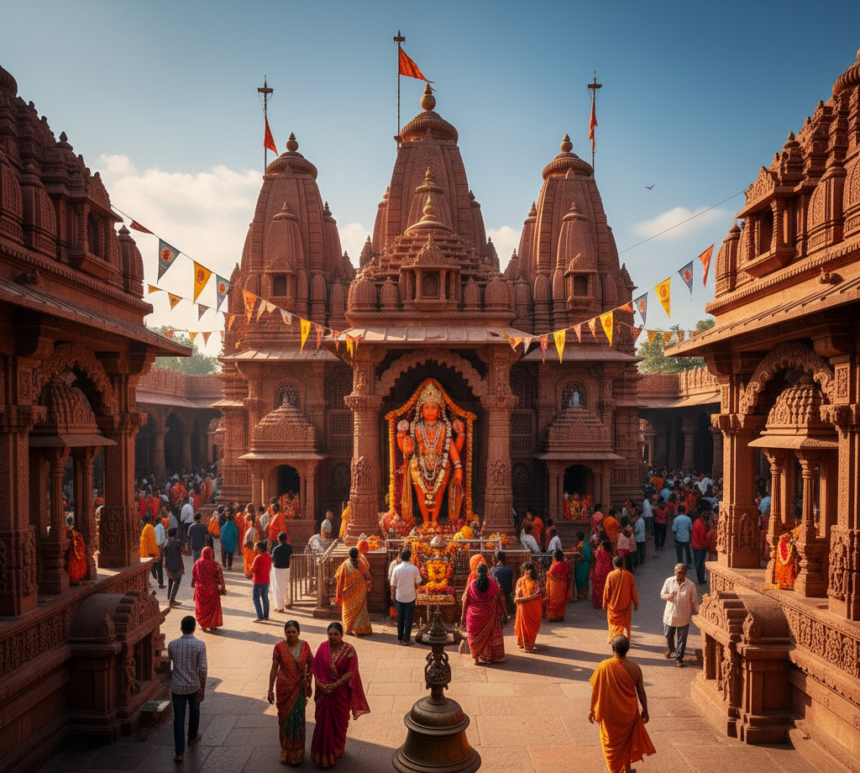
The spiritual journey from Khatu Shyam Ji Temple in Rajasthan to Mehandipur Balaji Temple in Dausa represents one of North India’s most significant pilgrimages. Every year, thousands of devotees traverse this sacred route seeking blessings, healing, and divine intervention from two of Hinduism’s most revered deities—Khatu Shyam (a manifestation of Barbarika, grandson of Bhima) and Balaji (a powerful form of Hanuman known for exorcising evil spirits). Understanding the distance, travel options, and spiritual significance of this journey is essential for pilgrims planning this transformative trip. This comprehensive guide provides everything you need to know about traveling between these powerful spiritual centers, from practical logistics to cultural insights that will enrich your pilgrimage experience.
Understanding the Sacred Destinations
Khatu Shyam Ji Temple: The Divine Warrior
Located in the Sikar district of Rajasthan, the Khatu Shyam Ji Temple is dedicated to Barbarika, known as Shyam Baba. According to legend, Barbarika was granted a boon by Lord Krishna to be worshipped in the Kali Yuga. The temple’s history dates back to the early 18th century when the idol was discovered and enshrined. The distinctive black stone idol is adorned with silver ornaments and draws millions of devotees annually, especially during the Phalguna Mela (March) when the temple celebrates Shyam Baba’s appearance day.
The temple’s spiritual significance lies in Shyam Baba’s reputation as a granter of wishes and protector of devotees. Unlike many deities associated with specific blessings, Khatu Shyam is believed to fulfill any sincere prayer offered with devotion. The temple complex includes a sacred pond called Shyam Kund where devotees take holy dips, and a museum showcasing the deity’s history. The atmosphere is one of joyful devotion, with continuous chanting of “Shyam Baba, Jai Shree Krishna” echoing throughout the premises.
Mehandipur Balaji Temple: The Healer of Afflictions
The Mehandipur Balaji Temple in Dausa district presents a different but equally powerful spiritual atmosphere. This temple is dedicated to Lord Hanuman in his fierce form as Balaji, renowned for healing spiritual and mental afflictions, particularly cases of supposed spirit possession or “bhoot-pret badha.” Unlike conventional temples, Mehandipur has facilities for what devotees believe are “exorcism rituals,” where affected individuals undergo specific procedures under temple supervision.
The temple complex comprises three main shrines: the Balaji Maharaj temple (main Hanuman temple), the Pret Raj Sarkar court (where rituals for liberation of troubled spirits are performed), and the Bhairon Temple. The rituals performed here follow ancient tantric traditions and draw people from across India seeking relief from inexplicable sufferings. The atmosphere is intense, with the sounds of bells, chanting, and occasional distressed cries creating a unique spiritual environment focused on liberation from negative forces.
The Practical Distance: How Far Apart Are They?
According to multiple sources including transportation providers, the direct road distance between Khatu Shyam Temple and Mehandipur Balaji Temple is approximately 187 kilometers (about 116 miles). This distance can vary slightly depending on the specific starting and ending points within each town, but the standard measurement used by bus operators and travel services consistently reports this figure.
The journey typically takes 4 to 6 hours by road, depending on several factors:
-
Time of day (night travel is usually faster with less traffic)
-
Mode of transportation (private vehicles vs. buses with scheduled stops)
-
Road conditions (some sections may have ongoing construction)
-
Weather conditions (monsoon season can slow travel)
It’s important to note that this is a point-to-point road distance. The actual travel distance might be slightly longer if you’re starting from a specific location in Khatu Shyam or need to reach a particular point in Mehandipur Balaji. For planning purposes, however, the 187 km measurement provides an accurate baseline for estimating travel time and costs.
Comprehensive Travel Options Between Khatu Shyam and Mehandipur Balaji
By Road: Buses – The Most Popular Choice
Buses represent the most economical and widely used transportation between these pilgrimage sites. Multiple operators provide regular services with varying amenities to suit different budgets and preferences.
Bus Operators and Services
According to transportation data, over 63 bus services operate daily between Khatushyamji and Mehandipur Balaji mandir, offered by approximately 40 different bus operators. These include:
-
GV Tours: Offers services from 13:25 to 20:30 with approximately 4 hours 57 minutes travel time
-
Mahalaxmi Travels: Operates from 18:00 to 21:15 with approximately 5 hours 22 minutes journey
-
Gajraj Bus Service: Runs from 14:30 to 20:30 taking about 4 hours 27 minutes
-
Shree Shakti Travels and Cargo: Evening departure at 18:50 with 5 hours 20 minutes travel time
-
GK Travels: Late afternoon service at 16:10 taking 3 hours 35 minutes
-
Vijay Tour and Travels: Offers premium Volvo 9600 Multi-Axle A/C Sleeper services
Bus Types and Amenities
Pilgrims can choose from various bus categories based on comfort needs and budget:
-
A/C Sleeper Buses (2+1 configuration): Premium option with lie-flat beds, ideal for overnight travel. Operators include Shree Choudhary Travels, Mahalaxmi Travels, and Neelam Travels.
-
A/C Seater Buses: Comfortable seated travel with climate control. Offered by GK Travels, Gayatri Rao Travels, and Samay Shatabdi Travels.
-
Non-A/C Buses: Most economical option, often with more frequent stops.
-
Volvo Multi-Axle Buses: Top-tier comfort with enhanced suspension, spacious seating, and premium amenities.
Bus Timings and Frequency
The first bus typically departs around 10:30 AM, while the last bus leaves around 11:45 PM, providing flexibility for pilgrims. The frequency is highest during evening hours when many devotees prefer to travel overnight to arrive early morning for darshan.
Average Journey Duration: Most buses complete the journey in approximately 4 hours 31 minutes, though this can vary from 3 hours 30 minutes to over 6 hours depending on the service type and number of stops.
Fare Structure
Bus fares vary significantly based on service type:
-
Cheapest tickets: Start at approximately ₹399 for non-A/C services
-
Standard A/C services: Range from ₹600 to ₹1,199
-
Premium sleeper/Volvo services: Can cost ₹1,050 to ₹1,199 or more
-
Maximum fare: Can reach up to ₹9,999 for last-minute bookings on premium services during peak seasons
Boarding and Dropping Points
In Khatushyamji:
-
Primary boarding point: Alambagh area near the temple
-
Additional pickup points may be arranged depending on the operator
In Mehandipur Balaji:
-
Primary dropping point: Bengali Square area
-
Most buses stop within walking distance of the temple complex
Booking Tips and Recommendations
-
Advance Booking: Reserve tickets 3-5 days ahead to secure preferred timings and seats, especially during festivals and weekends.
-
Seat Selection: Most booking platforms allow real-time seat selection—opt for front seats if prone to motion sickness or aisle seats for easier mobility.
-
Cancellation Policies: Consider operators offering free cancellation (often available on premium services) since pilgrimage plans can change unexpectedly.
-
Verified Operators: Choose bus services with good ratings and reviews, particularly if traveling alone or overnight.
-
Seasonal Considerations: During major festivals like Holi (associated with Khatu Shyam) or Hanuman Jayanti, book at least 2 weeks in advance as services fill quickly.
By Private Vehicle: Flexibility at a Cost
For pilgrims preferring flexibility, private vehicles offer advantages worth considering:
Route Details
The most common route follows:
-
Khatu Shyam to Ringas (approximately 20 km on RJ-57)
-
Ringas to Dausa (approximately 120 km via NH52 and SH24)
-
Dausa to Mehandipur Balaji (approximately 47 km on local roads)
Total Distance: Approximately 187 km
Estimated Time: 4-5 hours without significant stops
Toll Charges: Approximately ₹200-300 for the entire journey
Fuel Cost: ₹1,500-2,500 round trip depending on vehicle efficiency
Advantages of Private Transport
-
Flexibility to stop at other sacred sites along the way
-
Ability to carry more luggage, including ritual items
-
Comfort and privacy for families or groups
-
Option to visit at your own pace without fixed schedules
Challenges and Considerations
-
Navigation: Rural sections may have limited signage; GPS is essential
-
Road Conditions: Some stretches may be narrow or under repair
-
Parking: Both temple towns have limited parking, especially during festivals
-
Driver Fatigue: Consider breaking the journey if traveling alone
Alternative Transportation Options
Train Connectivity
While there is no direct train route between Khatu Shyam and Mehandipur Balaji, a combination of train and road transport is possible:
-
Train from Ringas Junction (nearest to Khatu Shyam) to Dausa Junction
-
Local transport (taxi/auto) from Dausa to Mehandipur Balaji (approx. 47 km)
This option is generally less convenient than direct bus services but may appeal to those with train preferences or concessions.
Shared Taxis and Cabs
Local taxi unions offer shared taxi services between the two towns, though these are less structured than bus services. Costs are comparable to premium bus services but offer door-to-door convenience. Pre-negotiate fares before commencing the journey.
Best Time to Visit: Seasonal Considerations
Weather Patterns and Travel Conditions
October to March (Winter):
-
Best time for pilgrimage with pleasant temperatures (10°C to 25°C)
-
Clear skies and minimal rainfall
-
High tourist season—book transport and accommodation well in advance
-
Special festivals: Khatu Shyam Janmotsav (Phalguna Mela) in February/March
April to June (Summer):
-
Extremely hot in Rajasthan (30°C to 45°C)
-
Travel during early morning or evening recommended
-
Carry ample water and sun protection
-
Fewer crowds at temples
July to September (Monsoon):
-
Moderate temperatures but high humidity
-
Road conditions can be challenging with occasional flooding
-
Lush green landscapes
-
Check transport status during heavy rains
Festival Periods and Special Considerations
-
Phalguna Mela (Khatu Shyam Temple): February/March—extremely crowded, book months in advance
-
Hanuman Jayanti (Mehandipur Balaji): March/April—special rituals, larger crowds
-
Shri Krishna Janmashtami: August/September—celebrated at both temples
-
Saturdays and Tuesdays: Traditionally busy at both temples any time of year
-
New Moon Days: Particularly crowded at Mehandipur Balaji for special rituals
Pilgrimage Preparation: What to Know Before You Go
Temple Timings and Rituals
Khatu Shyam Ji Temple:
-
Summer: 5:30 AM to 1:00 PM, 5:00 PM to 9:30 PM
-
Winter: 6:00 AM to 1:00 PM, 5:30 PM to 9:00 PM
-
Special Rituals: Mangla Aarti (pre-dawn), Shringar Aarti, Bhog Aarti, Sandhya Aarti
-
Darshan Waiting Time: 1-3 hours normally, 4-8 hours during festivals
Mehandipur Balaji Temple:
-
Opening Hours: Approximately 5:00 AM to 10:00 PM (subject to change)
-
Special Rituals: Morning Aarti, Bhog, Evening Aarti
-
Exorcism Sessions: Typically mornings and afternoons (not for casual observation)
-
Darshan Waiting Time: 2-4 hours, longer during special days
Accommodation Options
Near Khatu Shyam Temple:
-
Dharamshalas: Free or nominal charge (Shyam Baba Dharamshala, etc.)
-
Budget Hotels: ₹500-₹1,500 per night
-
Mid-Range Hotels: ₹1,500-₹3,000 per night
-
Booking Tip: Reserve at least a week in advance, month ahead for festivals
Near Mehandipur Balaji Temple:
-
Dharamshalas: Several available but basic facilities
-
Guest Houses: ₹800-₹2,000 per night
-
Important Note: Accommodation fills quickly due to limited options
What to Pack for the Journey
Essential Items:
-
Valid ID proof (required for bus tickets and some accommodations)
-
Comfortable walking shoes (both temple complexes require extensive walking)
-
Traditional clothing for temple entry (most temples require modest dress)
-
Water bottles and snacks for the journey
-
Basic first aid kit with prescribed medications
-
Power bank for mobile devices
-
Cash in smaller denominations (for offerings, local transport, vendors)
Spiritual Items:
-
Offerings for temples (flowers, prasad, etc.)
-
Personal prayer items
-
Small bag for carrying shoes (removed before temple entry)
-
Shawl or stole for head covering if required
Spiritual Significance of the Combined Pilgrimage
Theological Connection Between the Deities
The journey from Khatu Shyam to Mehandipur Balaji represents more than just geographical travel—it symbolizes a spiritual progression from devotion to liberation. Khatu Shyam (Barbarika) represents the fulfillment of worldly desires and protection in material life, while Mehandipur Balaji (Hanuman) represents the conquest of spiritual obstacles and liberation from unseen afflictions.
Many devotees believe that visiting both temples in sequence creates a complete spiritual circuit:
-
First, seeking blessings for material and familial well-being from Khatu Shyam
-
Then, seeking purification and protection from negative influences at Mehandipur Balaji
This sequence reflects the Hindu spiritual path of first establishing stability in worldly life (through Shri Krishna’s blessings via Khatu Shyam) before addressing deeper spiritual challenges (through Hanuman’s protective power at Mehandipur).
Ritual Continuity Between Temples
Experienced pilgrims often follow specific ritual continuities:
-
Carrying prasad from Khatu Shyam to offer at Mehandipur Balaji
-
Maintaining vow continuity between temples (e.g., if a vow was made at Khatu Shyam, its completion might be acknowledged at Mehandipur Balaji)
-
Sequential prayer intentions: First praying for specific needs at Khatu Shyam, then praying for the strength and protection to handle those needs at Mehandipur Balaji
Health, Safety, and Practical Considerations
Travel Safety Tips
-
Night Travel: If opting for overnight buses, choose premium operators with good safety records. Keep valuables secure and maintain awareness of surroundings.
-
Local Transport: When using auto-rickshaws or local taxis at either destination, agree on fares before boarding to avoid disputes.
-
Crowd Management: Both temples experience significant crowding. Establish meeting points with travel companions in case of separation.
-
Hydration and Nutrition: Carry water purification tablets or bottled water. Be cautious with street food if you have a sensitive stomach.
-
Emergency Contacts: Save local emergency numbers: Police (100), Ambulance (102), and temple administration offices.
Health Considerations
-
Climate Adjustment: Allow time to acclimate to Rajasthan’s dry climate if coming from humid regions
-
Sun Protection: Essential during daytime travel and temple queues
-
Foot Care: Temple complexes require extensive barefoot walking on sometimes hot surfaces
-
Mental Preparation: The intense atmosphere at Mehandipur Balaji can be overwhelming for some visitors
Special Needs Accessibility
Both temples present significant challenges for mobility-impaired pilgrims:
-
Extensive walking required in temple complexes
-
Steps and uneven surfaces throughout
-
Limited wheelchair accessibility
-
Crowds make navigation difficult
Consider contacting temple administrations in advance for special assistance arrangements if needed.
Budget Planning for the Pilgrimage
Estimated Cost Breakdown (Per Person)
| Expense Category | Budget Option | Mid-Range Option | Premium Option |
|---|---|---|---|
| Transport (Round Trip) | ₹800-₹1,200 (Bus) | ₹1,500-₹2,500 (AC Bus/Train) | ₹4,000-₹6,000 (Private Taxi) |
| Accommodation (2 Nights) | ₹200-₹500 (Dharamshala) | ₹1,500-₹3,000 (Hotel) | ₹4,000+ (Premium Hotel) |
| Food & Water | ₹300-₹500 | ₹800-₹1,500 | ₹2,000+ |
| Temple Offerings | ₹100-₹300 | ₹500-₹1,000 | ₹2,000+ |
| Incidentals | ₹200-₹500 | ₹1,000-₹2,000 | ₹3,000+ |
| Total Estimate | ₹1,600-₹3,000 | ₹5,300-₹10,000 | ₹15,000+ |
Money-Saving Tips for Pilgrims
-
Group Travel: Form groups of 4-6 to share taxi costs or get group discounts on buses
-
Off-Peak Travel: Visit just before or after major festivals for lower transport and accommodation costs
-
Advance Booking: Secure bus tickets 7-14 days early for best prices
-
Dharamshalas: Consider temple-operated accommodations which are often cheaper
-
Local Eateries: Eat at temple community kitchens or local vegetarian restaurants rather than tourist establishments
Cultural Etiquette and Temple Protocols
Khatu Shyam Temple Etiquette
-
Dress Code: Conservative clothing preferred—covered shoulders and knees
-
Queue Discipline: Follow the designated lines without attempting to jump ahead
-
Photography: Typically prohibited in inner sanctum—observe posted signs
-
Offerings: Purchase from authorized shops within temple complex
-
Behavior: Maintain quiet reverence despite crowded conditions
Mehandipur Balaji Temple Special Protocols
-
Exorcism Areas: Observe from a distance unless participating—do not photograph or disturb rituals
-
Intense Environments: Prepare for potentially distressing sights or sounds
-
Ritual Participation: Only engage in rituals under proper guidance
-
Respectful Distance: Give space to those undergoing intense spiritual experiences
-
Following Instructions: Carefully follow guidelines from temple volunteers and priests
Extended Pilgrimage: Adding Nearby Sacred Sites
If time permits, consider extending your pilgrimage to include these nearby sacred sites:
From Khatu Shyam Temple Region
-
Jhunjhunu Temples (approx. 80 km): Known for beautiful havelis and Rani Sati Temple
-
Salasar Balaji (approx. 110 km): Another important Hanuman temple
-
Rani Sati Temple at Jhunjhunu (approx. 85 km): Historic temple dedicated to a revered figure
From Mehandipur Balaji Region
-
Abaneri Stepwell (approx. 60 km): Architectural marvel and historic site
-
Bhandarej (approx. 70 km): Ancient stepwells and temple ruins
-
Dausa City Temples (approx. 45 km): Various historic temples
Digital Resources and Helpful Apps
Navigation and Transport
-
Google Maps: Offline download recommended for areas with poor connectivity
-
redBus: For bus ticket booking with real-time seat selection (as referenced in transportation data)
-
IRCTC Rail Connect: For train ticket bookings if using combined transport
Temple Information
-
Official Temple Websites: Check for current timings and special announcements
-
Utsav App: For Hindu festival calendars and temple information
-
Spiritual Journey Planners: Various apps help coordinate multi-temple pilgrimages
Regional Information
-
Rajasthan Tourism App: Official government tourism information
-
Weather Apps: For climate forecasts during travel planning
Environmental Considerations for Responsible Pilgrimage
Reducing Your Environmental Impact
-
Waste Management: Carry reusable water bottles and dispose of waste properly
-
Offerings: Choose biodegradable offerings when possible
-
Transport Choices: Consider group travel to reduce per-person carbon footprint
-
Water Conservation: Be mindful of water usage in Rajasthan’s arid climate
Supporting Local Communities
-
Local Businesses: Purchase from small vendors near temples
-
Fair Compensation: Pay appropriate rates for services without excessive bargaining
-
Cultural Respect: Honor local customs and traditions
-
Community Engagement: Consider small donations to temple community services
Personal Stories: Experiences of Past Pilgrims
Devotee Testimonials
Ramesh Sharma from Delhi: “I’ve made this journey five times now. The first time, I took an overnight sleeper bus and arrived just before dawn. Watching the sunrise while waiting for Khatu Shyam temple to open was magical. By afternoon, I was at Mehandipur Balaji. The contrast between the joyful atmosphere at Khatu Shyam and the intense spiritual energy at Mehandipur creates a complete experience.”
Priya Patel from Gujarat: “As a woman traveling alone, I was initially nervous. But I found the bus services safe and well-organized. I recommend the mid-afternoon buses—you avoid the extreme heat and arrive with enough time to settle before next day’s darshan. The fellow pilgrims became like family during the journey.”
The Mehta Family from Mumbai: “We traveled with our elderly parents and two children. We hired a private van, which gave us flexibility. We broke the journey at Dausa for lunch and rest. At both temples, we found volunteers who helped our parents with special darshan arrangements. The journey strengthened our family bonds.”
Lessons from Experienced Pilgrims
-
Flexibility is Key: Schedules may change; maintain a flexible attitude
-
Community Support: Fellow pilgrims often help each other
-
Spiritual Preparation: The journey is as important as the destination
-
Physical Readiness: Prepare for considerable walking and waiting
Conclusion: A Transformative Journey of Faith
The pilgrimage from Khatu Shyam to Mehandipur Balaji represents much more than covering 187 kilometers. It’s a journey between different dimensions of devotion—from the benevolent, wish-fulfilling grace of Khatu Shyam to the protective, liberating power of Mehandipur Balaji. With proper planning using the information in this guide, your journey can be comfortable, meaningful, and spiritually rewarding.
Whether you choose an economical overnight bus, a comfortable AC sleeper, or a private vehicle, the road between these sacred sites has been traveled by millions of devotees before you. Each carries their hopes, prayers, and faith. As you join this continuous stream of devotion, may your journey be safe, your darshan fulfilling, and your spiritual aspirations realized through the blessings of both Khatu Shyam and Mehandipur Balaji.
Remember that the true distance covered is not measured in kilometers alone, but in the transformation that occurs within as you move from seeking divine assistance in worldly matters to seeking liberation from all that binds the spirit. This is the deeper significance of traveling from Khatu Shyam to Mehandipur Balaji—a journey that mirrors the soul’s progression toward ultimate freedom.
Useful External Resources:
-
For comprehensive information on Hindu pilgrimage sites across India: Incredible India – Spiritual Tourism
-
For understanding temple rituals and their significance: Harvard University’s Religious Literacy Project – Hinduism
-
For responsible travel practices at sacred sites: UNWTO Global Code of Ethics for Tourism